- Asia University
- Faculty
- Faculty of Health and Sport Science
- Faculty of Health and Sport Science TOP
Faculty of Health and Sport Science TOP
PAGE SECTIONS

Faculty of Health and Sport Science
Department of Health and Sport Science
Opening in April 2026
Opening in April 2026



Faculty of Health and Sport Science NOW!
"Faculty of Health and Sport Science" introduction video
"Laboratory Work Practicum Building" 3DCG video
 Sports will solve the future
Sports will solve the future
Sports x DX = Well-being Society
Let's create a future where sports solve social issues
*DX: an abbreviation for digital transformation. The use of digital technology to bring about change and create a better society and lifestyle.
"DX" is becoming increasingly important in modern society
Digital transformation holds the key to solving complex social issues related to health and sports, such as healthy life expectancy, declining birthrates and an aging population, home medical care, and the decline of communities. As new methods for data collection and analysis emerge, things that were previously mysterious are becoming clearer. The ability to analyze data and use the results to solve problems for people and society is the skill that society needs.
Sports x DX is a promising field both domestically and internationally
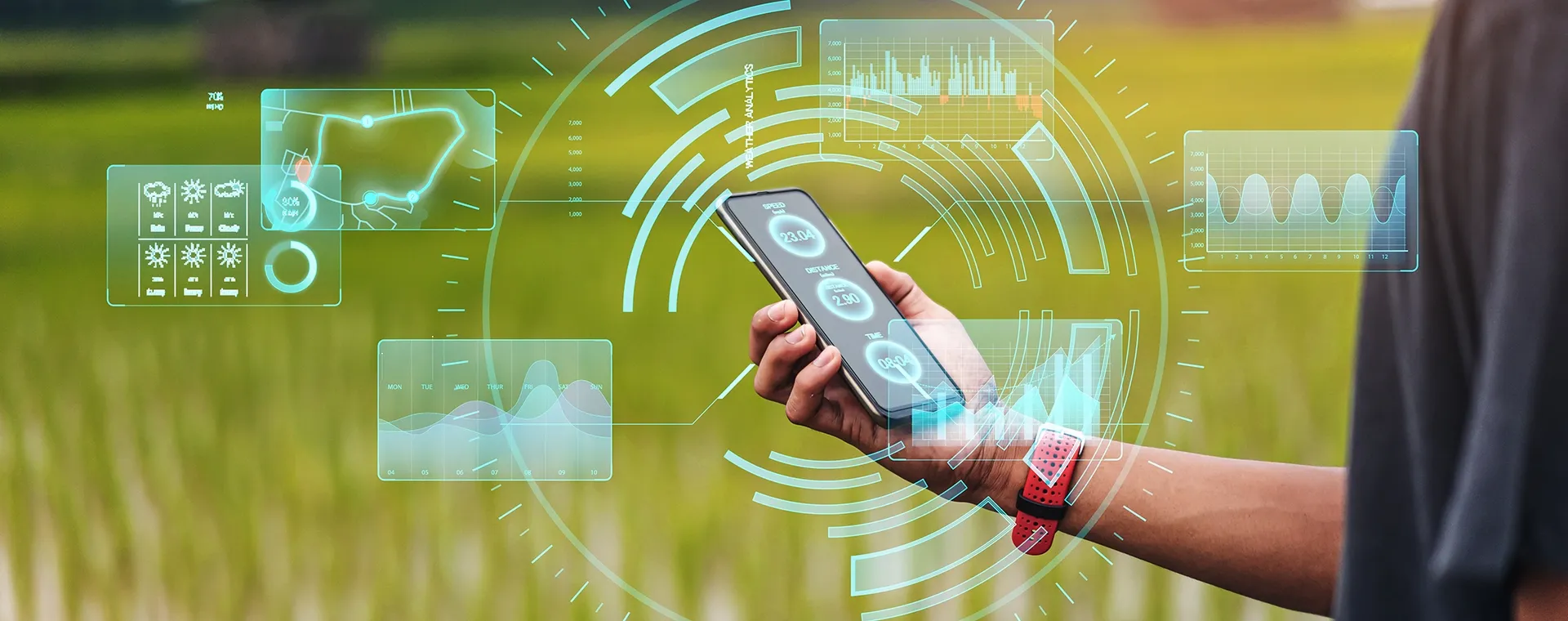
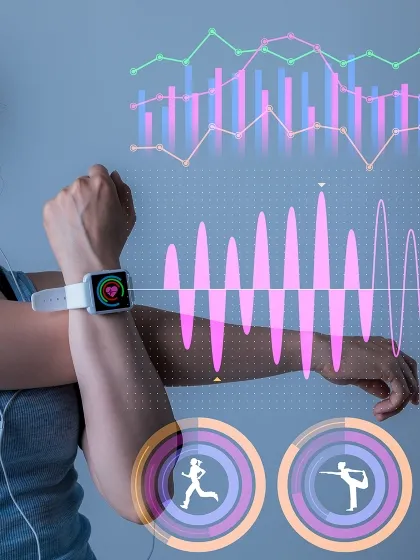
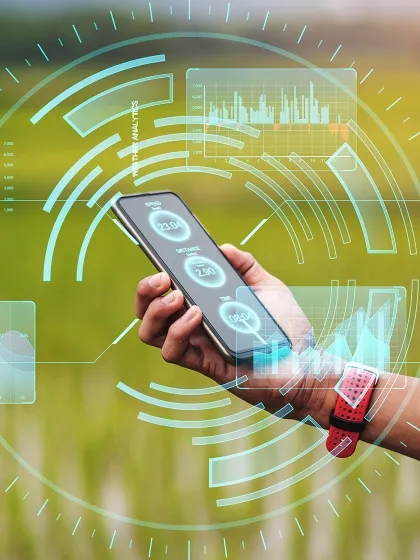
Faculty of Health and Sport Science Asia University is developing learning that combines "DX" with the field of sports. Examples of "Sports x DX" are actually all around us. One example is the video refereeing seen at Olympic and World Cup matches. With the spread of smartwatches and other devices, opportunities to utilize data are only increasing. "Sports x DX" is a field that is gaining attention both domestically and internationally.
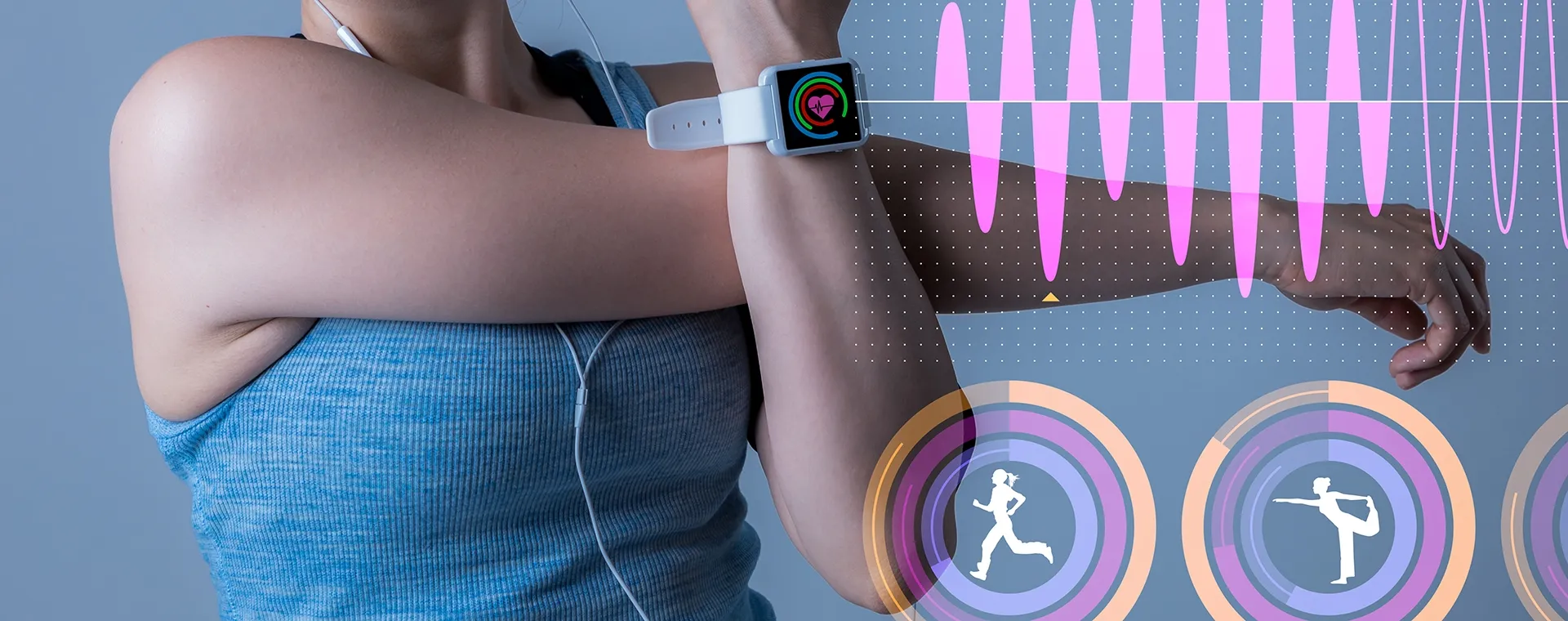
Create your own future at Asia University Faculty of Health and Sport Science!
I want to know the most efficient training methods. I want to know what happens inside your body when you get stronger. I want to make the game more exciting. By utilizing digital technology in the sports field, we aim to make sports a science, and to realize a well-being society where people can stay healthy and connected anytime, anywhere.
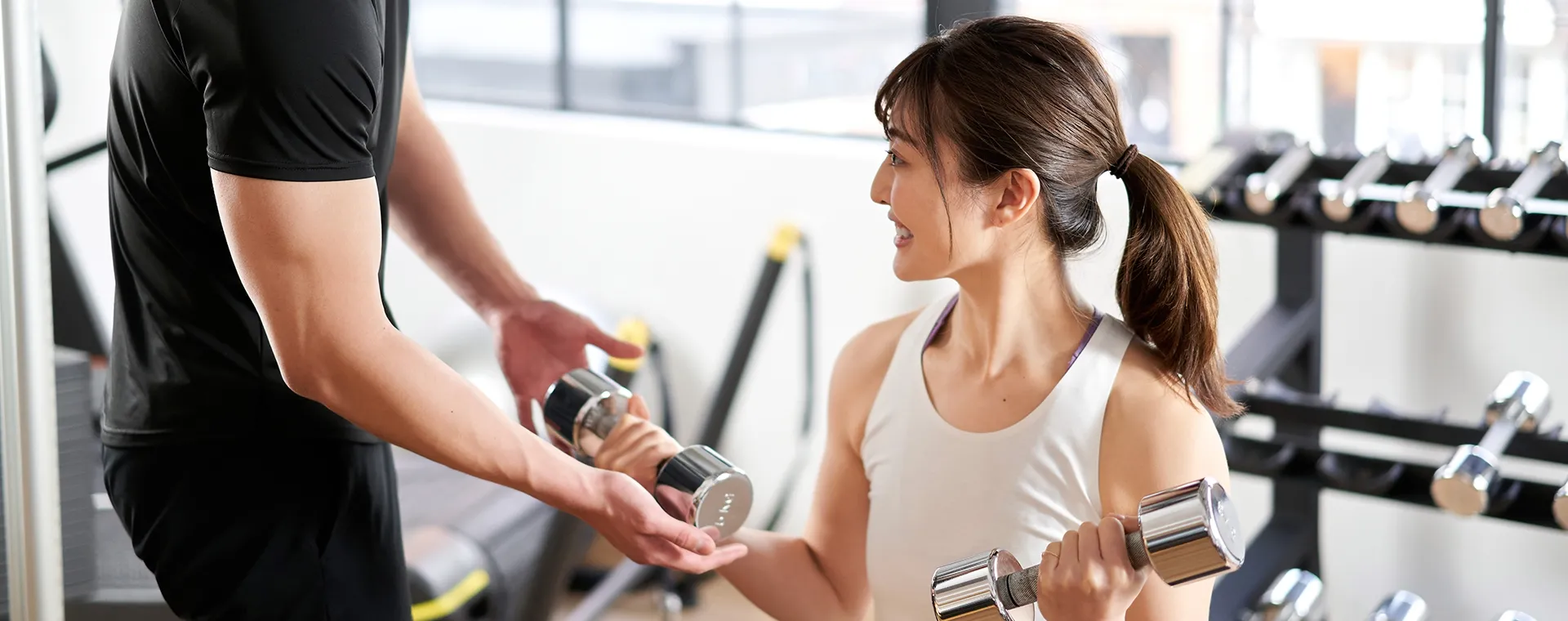
Faculty of Health and Sport Science Department of Health and Sport Science
Admission fee and tuition: 1,386,000 yen (including admission fee)| term of study | 4 years |
| degree | Doctor of Science (Health and Sports Science) |
| Completion/ Requirement for Graduation | 124 Credit or more |
| Enrollment quota | 100名 |
| Number of enrolled students | 120名 |
| male-female ratio | Male 71.7% Female 28.3% |
As of April 1, 2026
 You can only learn Asia University!
You can only learn Asia University!
Characteristics of Faculty of Health and Sport Science
Feature 1
Learn health and sports science and information engineering
There is limitless learning that can be achieved through sports x DX. Students will analyze people's movements, matches, and health behaviors from data, and gain practical knowledge on scientific knowledge that leads to improved performance, effective sports coaching methods, and exercise prescriptions. Students will also acquire practical management skills to revitalize the sports industry and sports promotion, which will lead to a career as a talent who can utilize digital technology.
Department of Health and Sport Science + Information Engineering Subjects

Sports Performance
Data on competitive ability and leadership
Use it to improve
Use it to improve

Students will acquire a wide range of knowledge, including physiology, motion analysis, mental training, and coaching. They will also acquire the ability to analyze biometric information, perform tactical analysis, and use data to improve performance and provide appropriate instruction.
Main Subjects
- Sports video analysis Seminar
- Sports Analytics
- Coaching with Sports Data
Health Promotion
Individual and community
Explore health issues
Explore health issues

Students will learn about nutrition, sports medicine, public health, exercise prescription, etc. They will consider various issues in medical care and disease prevention, such as promoting people's health and improving their quality of life, and acquire the ability to live healthy lives through sports.
Main Subjects
- Sports Nutrition
- Sports Medicine
- Public Health
Sports Career Design Area
Supporting the local community through sports
Contributing to revitalization
Contributing to revitalization

Students will learn about the sports industry, sports business, and sports policy, and hone their management skills through practical fieldwork. They will also pay attention to new sports-related businesses and sports promotion expected to emerge from digital transformation, and acquire the skills to enrich sports lives and liven up the sports scene.
Main Subjects
- Sports management theory
- sports policy theory
- Sports Career Seminar
Information Engineering
A curriculum that allows students to learn systematically from the basics
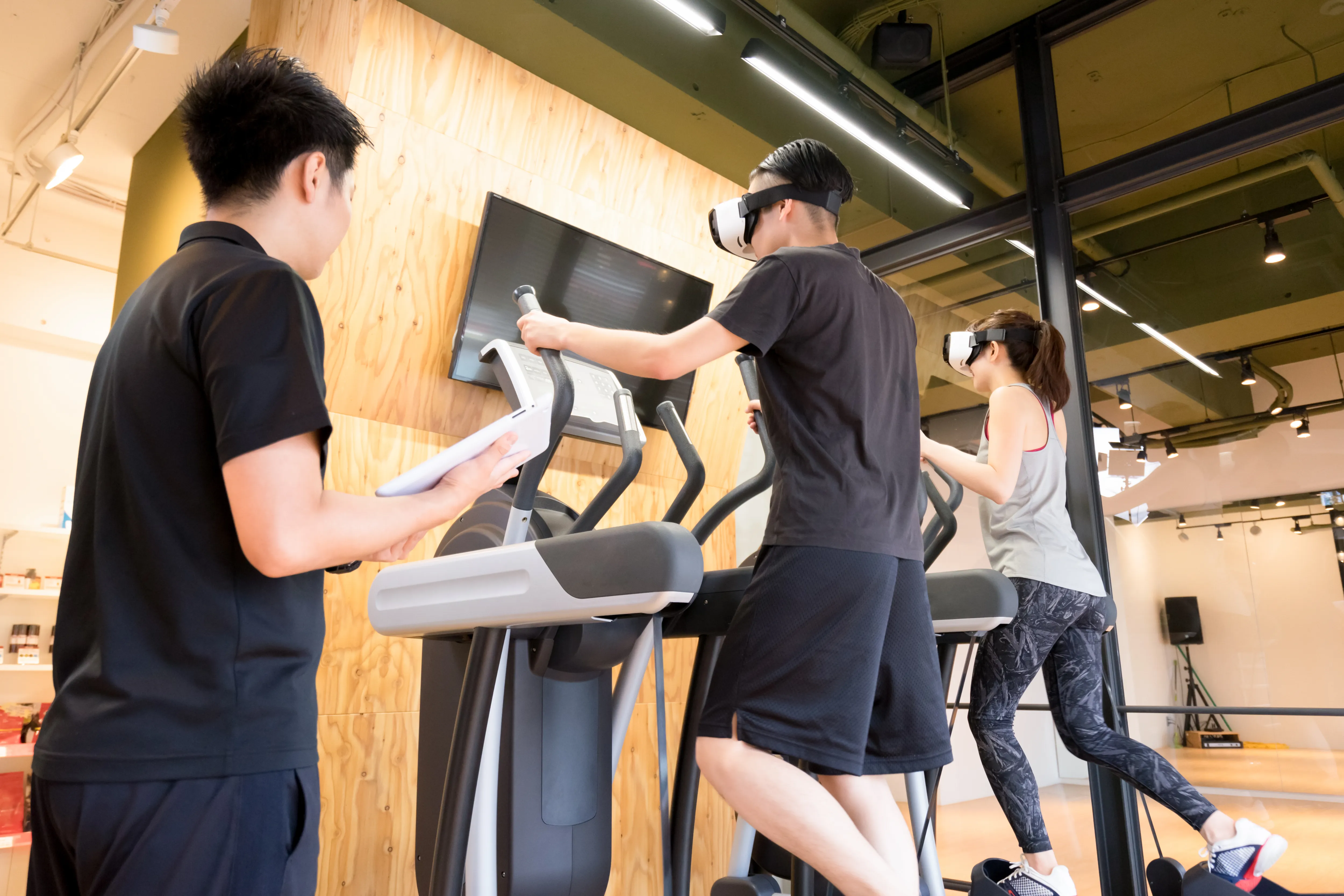
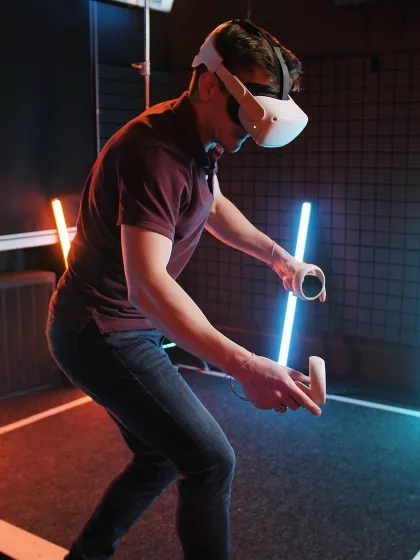
Students will thoroughly learn the fundamentals of mathematics, programming, and data science. They will also take numerous Lecture and Seminar that connect health sports with digital technology. They will acquire data measurement and collection skills using specialized equipment such as wearable devices, electromyography, and motion capture systems, and will further develop practical analytical skills by analyzing data with a variety of tools. They will also work on designing sports environments and supporting coaching using AI and VR, enhancing their ability to adapt to the digital age.
Main Subjects
- programming basics
- Application development Seminar
- Sports Technology
- Introduction to VR
- Introduction to AI
- Introduction to Operations Research
- Machine Learning Seminar

Pick-up Classes
Conditioning by biological information
By scientifically analyzing athletes' biometric information (heart rate, exercise intensity, distance traveled, etc.) and linking it to the athletes' senses, students learn the importance of conditioning that takes into account the characteristics of the sport and the individual physical features of each athlete.
MESSAGE
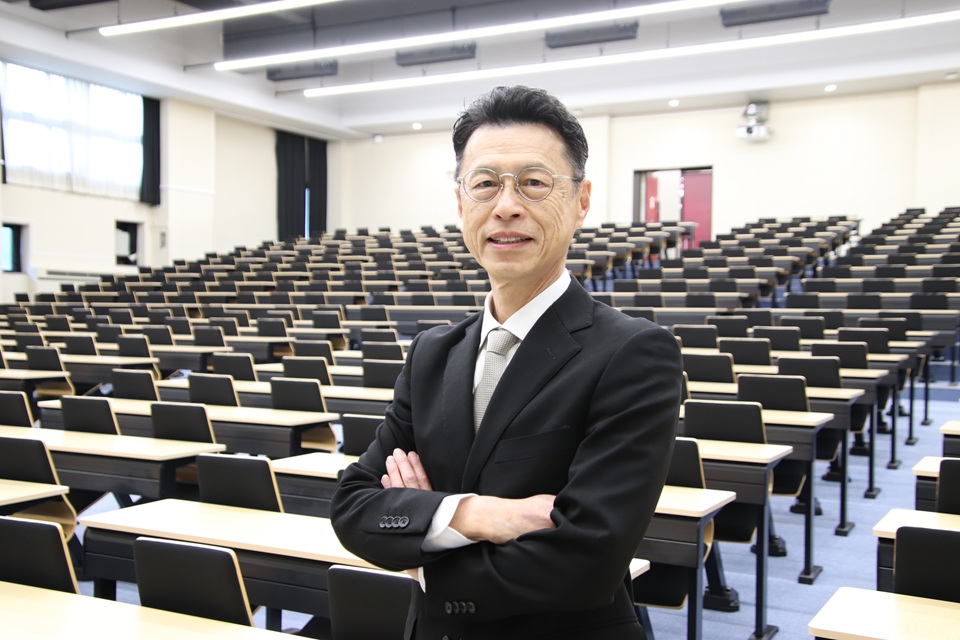
Through sports,
For those who support people's health and well-being in society
NAGAHAMA Hisashi Professor Nagahama
Faculty of Health and Sport Science
Faculty of Health and Sport Science
Faculty of Health and Sport Science offers a balanced education in two fields: "Health and Sports Science" and "Information Engineering." In recent years, interest in well-being has grown in Japan, and people have come to place greater importance on their quality of life (QOL). The ways in which people enjoy sports have also broadened, with attention now focused not only on improving athletic performance but also on new ways of engaging with sports that utilize data. The power of ICT is supporting these changes. Through the use of ICT, a society where people can safely and enjoyably participate in sports anytime, anywhere, and with anyone is gradually becoming a reality. Why not join us in creating these new values through your studies in this faculty?
Faculty Introduction
| family name | Incumbent | Specialized field | keyword | Possible themes for on-site Lecture (lectures) |
| Hiroshi Arakawa Faculty Information |
Professor | sports science | Biomechanics, motion analysis, motion capture, resistance training, wrestling | |
| ISHIGURO Emi Faculty Information |
Associate Professor | sports science | Sports Policy, Sports Management, Sports Instructors | What kind of work "supports" sports? |
| Tetsuro OgiFaculty Information | Professor | Media Informatics, Intelligent Informatics, Systems Engineering | Human Interface, VR/AR, AI, IoT | VR/AR technology / Human interface technology / Digital technology and health sports |
| Akira Shionoya Faculty Information |
Professor | Sports engineering, biomechanics | Sports engineering, development of equipment for people with disabilities, magnesium alloys, structural analysis | Manufacturing in sports / especially the development of sports equipment for people with disabilities (wheelchairs, chair skis, sit skis, etc.) |
| SHIKANAI Nao Faculty Information |
Associate Professor | Sports science, physical education, physical education, cognitive science | Sports psychology, dance psychology, dance, yoga, body expression, cognition | Yoga (lectures and practical sessions) / Exercise and training aimed at adjusting mind and body / Dance training aimed at improving nonverbal communication skills |
| Xu ZiyuanFaculty Information | Research Associate | Sports Management | Sports marketing, consumer psychology and behavior, sports events | Sports business / Sports marketing / Sports event management / Sponsorship |
| Guangxiao XuFaculty Information | Associate Professor | Sports science, physical education and physical education, statistical science | Health and physical education, sports data science & analytics, measurement and evaluation | Lecture and practical sessions on all aspects of health and physical education (especially the use of ICT) for elementary, junior high, and high school students / Practical methods of sports analytics, etc. |
| Yasuhisa TatsuyaFaculty Information | Professor | sports psychology | Sports psychology, sports mental training, coaching, well-being | Lecture (presentations) on sports psychology, sports mental training, and coaching. |
| Momoko TsuchidaFaculty Information | Research Associate | Social medicine, health and sports science | Public health, health education, school health | Health of working people (work performance, lifestyle, etc.) |
| Dean NAGAHAMA Hisashi Teacher Information |
Professor | sports science, general physiology | Sports Science, Health Science, Exercise Physiology, Physical Fitness, Wellness | General physical fitness and health science / Elucidation of the characteristics of sports competitions (long-distance running, sepak takraw, soccer, etc.) |
| HIGASHIURA Takuro Faculty Information |
Associate Professor | Health and sports science | Exercise Physiology, Cognitive Neuroscience | Exercise and sports and health / Exercise and sports contributing to improved academic performance / The international community as seen through the Olympics |
| FURUSAWA Koichi Faculty Information |
Associate Professor | sports science | Sports management, sports business | About the sports industry |
| HORIUCHI Shoichi Faculty Information |
Professor | sports science | Sports Science, Tennis Teaching Methods | Tennis Lecture and practical sessions / Improving athletic performance in sports |
| Haruhiko Madarame Faculty Information |
Professor | Health and sports science | Sports science, game analysis, exercise physiology | Overview and Examples of Game Analysis research in the Field of Sports Science |
| Akihiro MatsumotoFaculty Information | Special Duty Professor | Sports medicine, internal medicine, exercise physiology | Medicine, sports medicine, cardiovascular medicine, exercise physiology, cardiac rehabilitation |
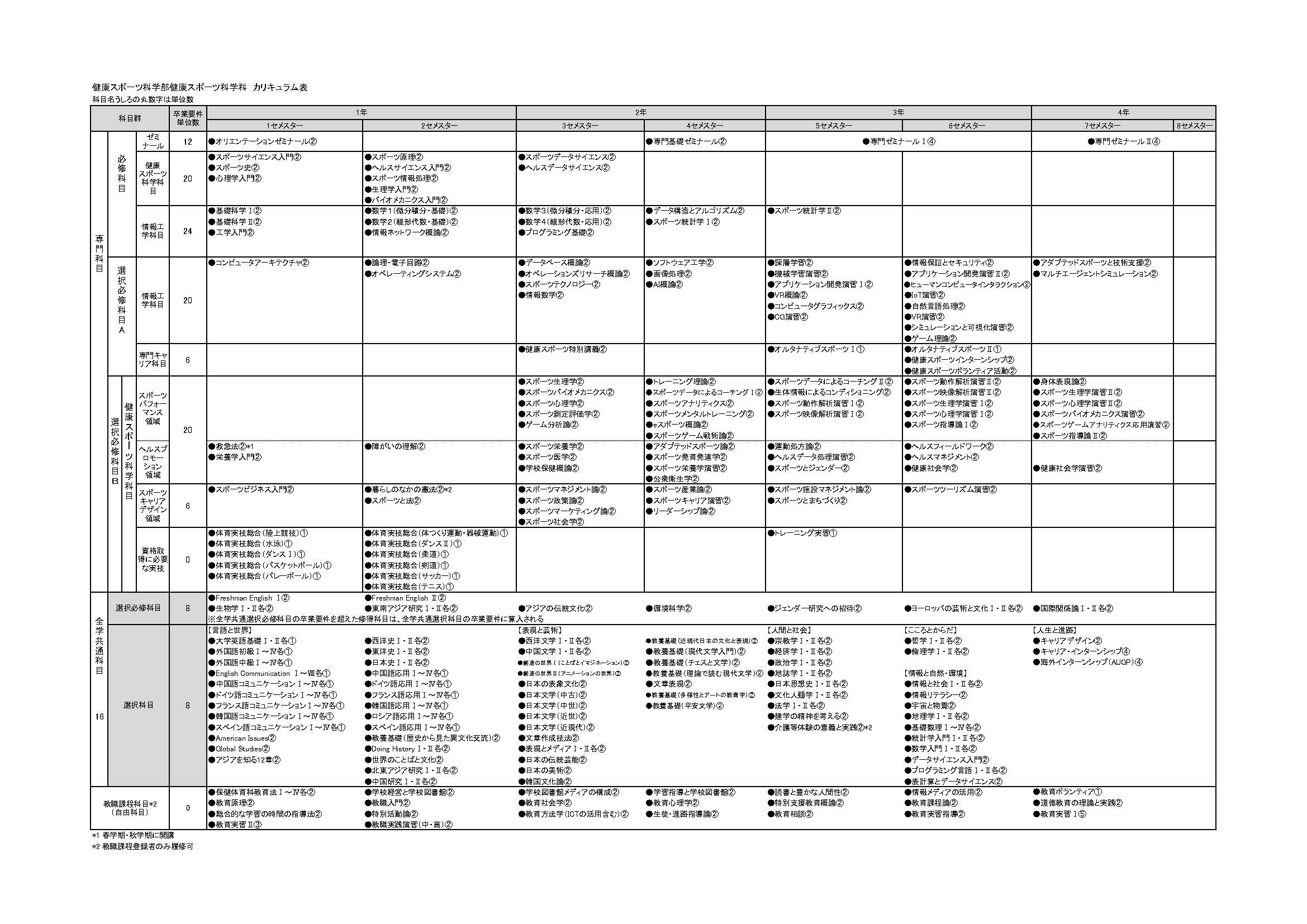
Feature 2
Through experiential learning in collaboration with companies and local communities
Improve your practical skills
Improve your practical skills
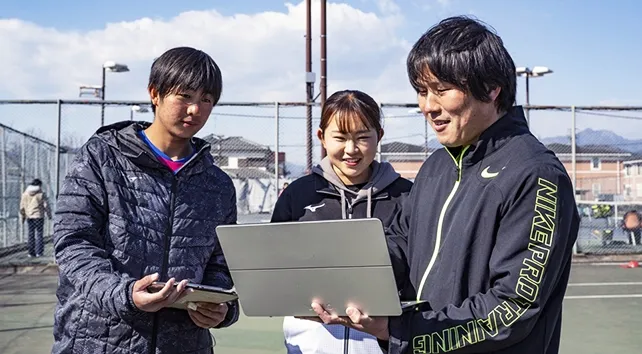
Collaboration with companies and educational institutions
With companies and educational institutions
Improve your practical skills through collaborative learning
Improve your practical skills through collaborative learning
Students will acquire the ability to solve problems in collaboration with others and practical skills for success after graduation. We offer a wide range of active learning opportunities, including corporate collaboration classes, four-year Seminar, Laboratory Work, Practicum Seminar, and internships.
Partners
Companies: Tokyu Sports System Co., Ltd., etc.
Educational institution: Tokyo City University
Partners
Companies: Tokyu Sports System Co., Ltd., etc.
Educational institution: Tokyo City University
Main Subjects
- Health and Sports Internship
- Sports Career Seminar
Revitalization of local communities
Local communities
Becoming a talent that will liven up sports
Becoming a talent that will liven up sports
We plan to provide health education programs in collaboration with the local community. We will hone the knowledge and skills to approach club activities in schools, health promotion for local residents, promotion of local sports, and the spread of sports for people with disabilities, and develop human resources who can contribute to community development through sports.
Partners
Municipalities: Musashino City, Higashikurume City, Hinode Town, etc.
Partners
Municipalities: Musashino City, Higashikurume City, Hinode Town, etc.
Main Subjects
- Health and sports volunteer activities
- Sports and urban development
Feature 3
[Unique experience-based practical subjects]
Experience alternative sports
Experience alternative sports
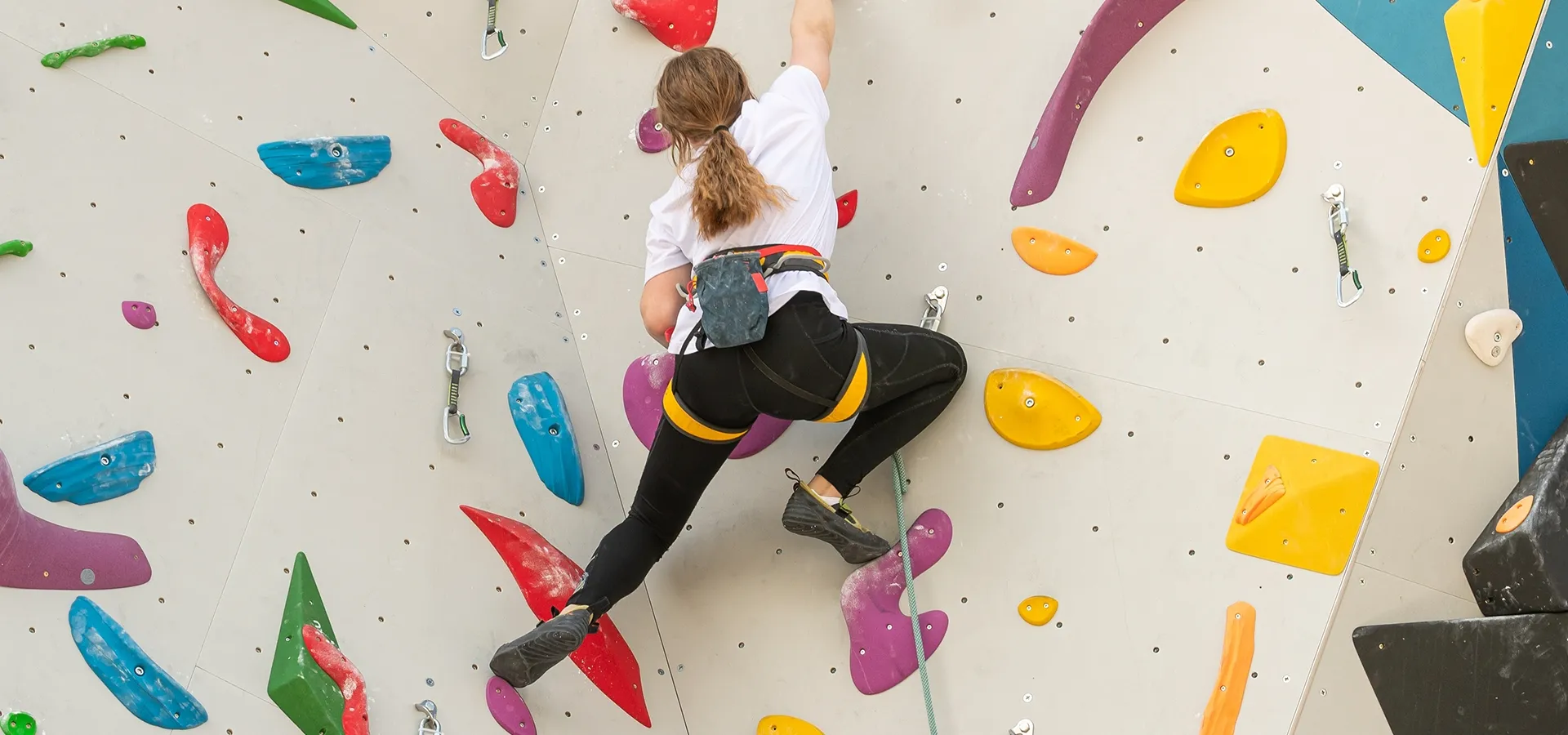
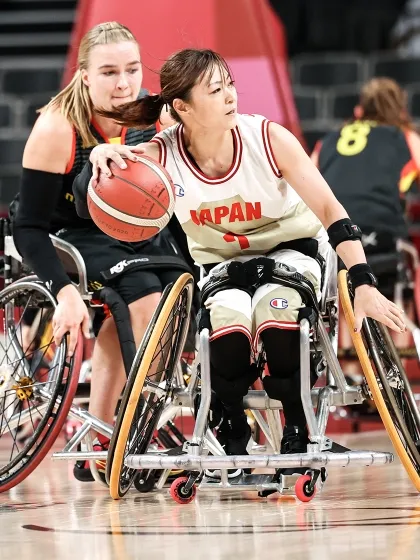
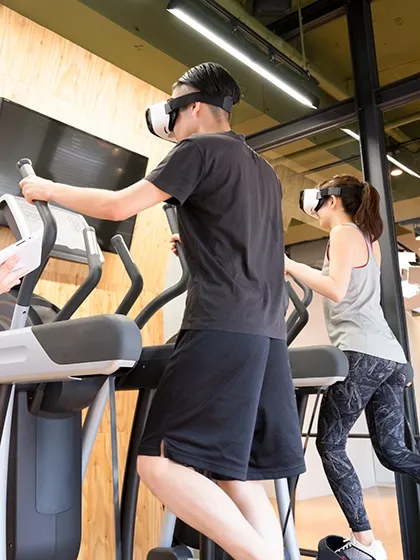
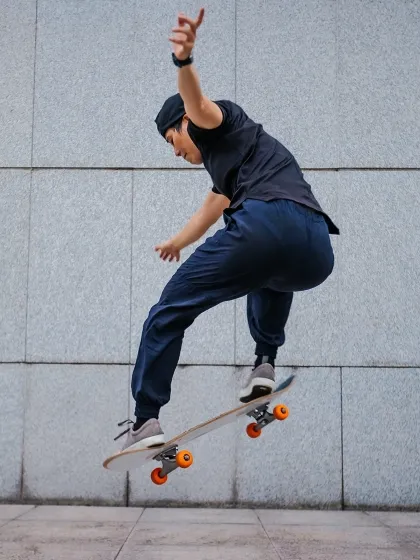
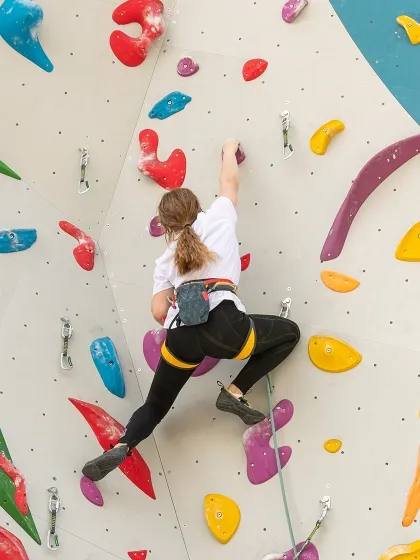
In order to ensure that sports become more widely recognized in society in the future, students will learn three new sports (e-sports, AR sports, and sport climbing) and three universal sports that anyone can participate in (boccia, blind football, and wheelchair sports) as experiential practical subjects.




Feature 4
[Pre-enrollment education and supplementary education]
A comprehensive support system to support university learning
A comprehensive support system to support university learning
We provide pre-enrollment education to all prospective students. By using AI to teach the basics of mathematics, physics, and information science online, even those who are unsure about science subjects can acquire the basic academic skills necessary for university studies. After enrollment, we assess students' level of understanding through confirmation tests, provide ongoing support for their studies, and provide supplementary education with specialized teaching staff to support their studies so that they can approach classes with confidence for the four years.
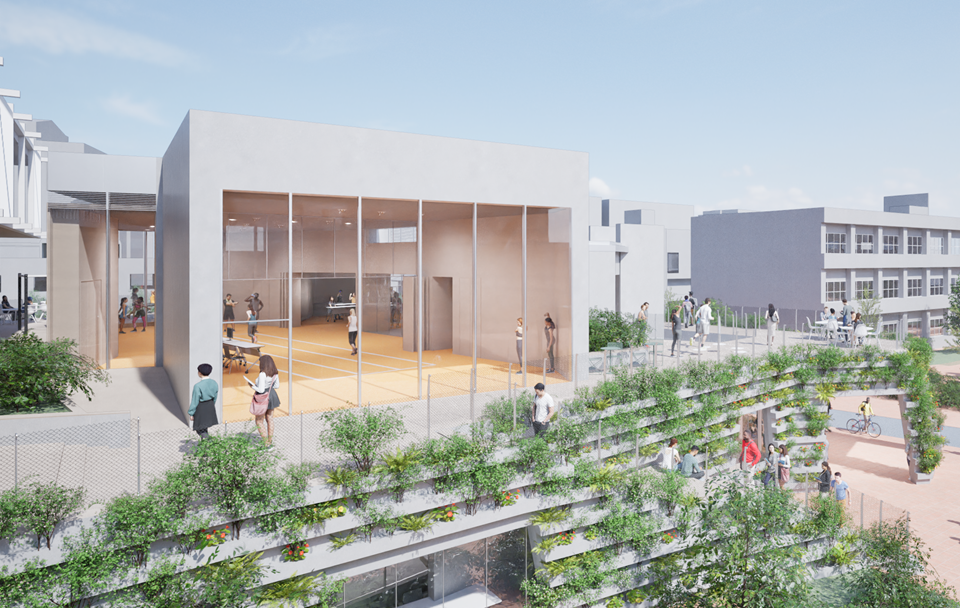
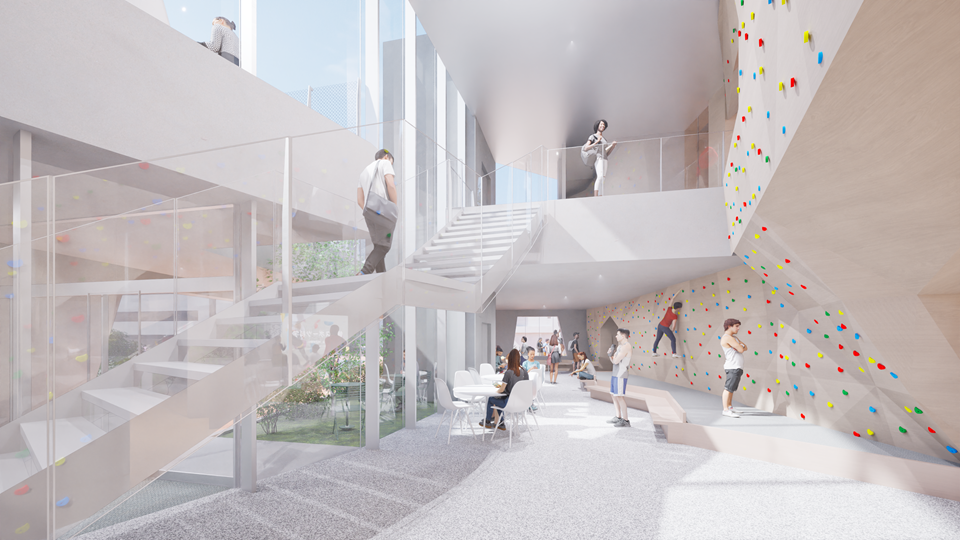
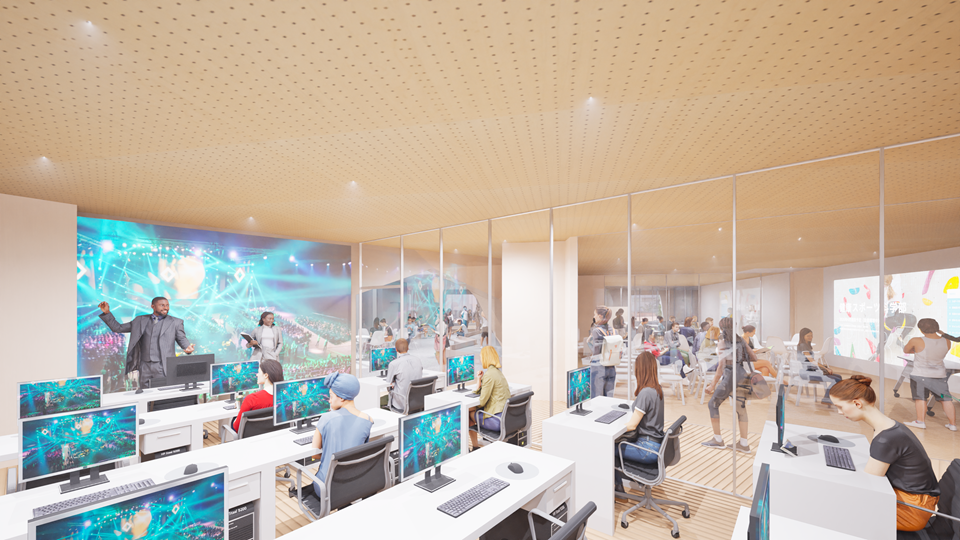
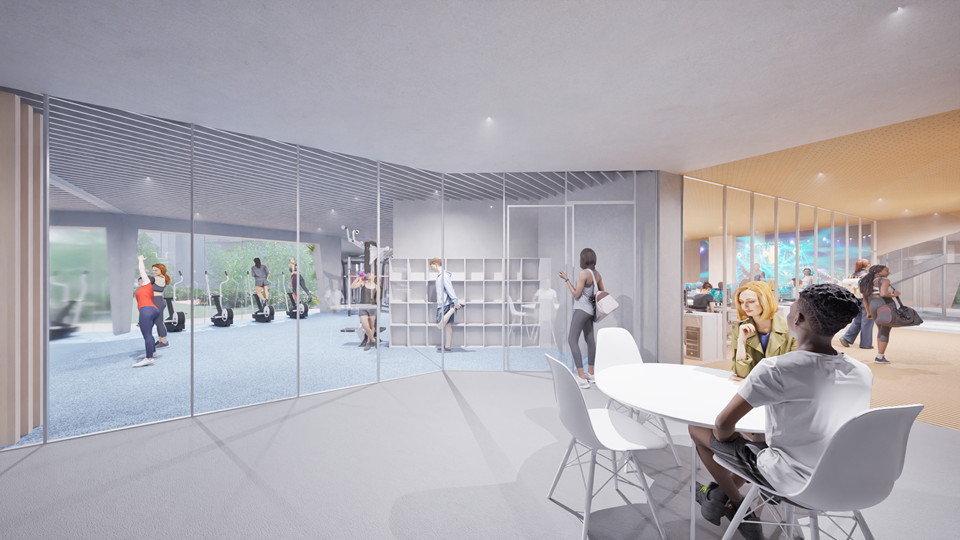
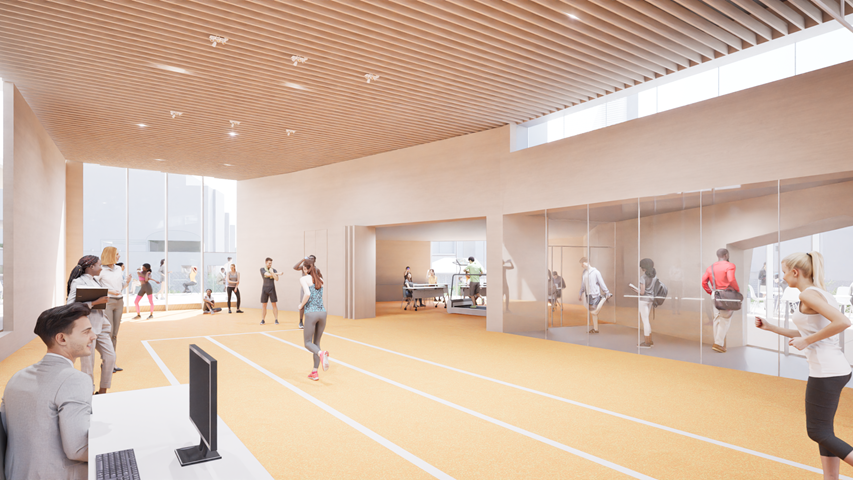
Laboratory Work Practicum building to be built in 2027!
Use of facilities unique to Asia Sports
Students can deepen their learning by utilizing the facilities and equipment unique to our university, which is known for its strong sports programs, including baseball and track and field.
A new school building equipped with Laboratory Work and training rooms is planned for construction at the Musashino campus! It will be available for use from the 2027 academic year.
*This is a plan and is subject to change.
A new school building equipped with Laboratory Work and training rooms is planned for construction at the Musashino campus! It will be available for use from the 2027 academic year.
*This is a plan and is subject to change.
 Possible career options and qualifications
Possible career options and qualifications
Possible career options and qualifications
Through four years of study, you can acquire a variety of licenses and qualifications.
We provide individual support throughout the four years.
We provide individual support throughout the four years.
Examples of licenses and qualifications that can be acquired (including eligibility to take exams)
- Junior and senior high school (type 1) teaching license (health and physical education)
- Certified sports instructor (Japan Sports Association)
- Certified Parasports Instructor (Japan Parasports Association)
- Health and Exercise Instructor (Health and Physical Fitness Foundation) *Eligibility requirements
- Group Exercise Fitness Instructor (Japan Fitness Association)
Career/Employment
- Junior and senior high school (type 1) teaching license (health and physical education)
- Certified sports instructor (Japan Sports Association)
- Certified Parasports Instructor (Japan Parasports Association)
- Health and Exercise Instructor (Health and Physical Fitness Foundation) *Eligibility requirements
- Group Exercise Fitness Instructor (Japan Fitness Association)
Career/Employment
Possible career options
- Health and sports related company (Sales, General Affairs, Analyst, research position)
- General Business
- Junior and senior high school teachers (health and physical education)
- Civil servant (Sports Promotion, Health Promotion Division, etc.)
- Sports instructor
- Graduate Graduate School
- Health and sports related company (Sales, General Affairs, Analyst, research position)
- General Business
- Junior and senior high school teachers (health and physical education)
- Civil servant (Sports Promotion, Health Promotion Division, etc.)
- Sports instructor
- Graduate Graduate School
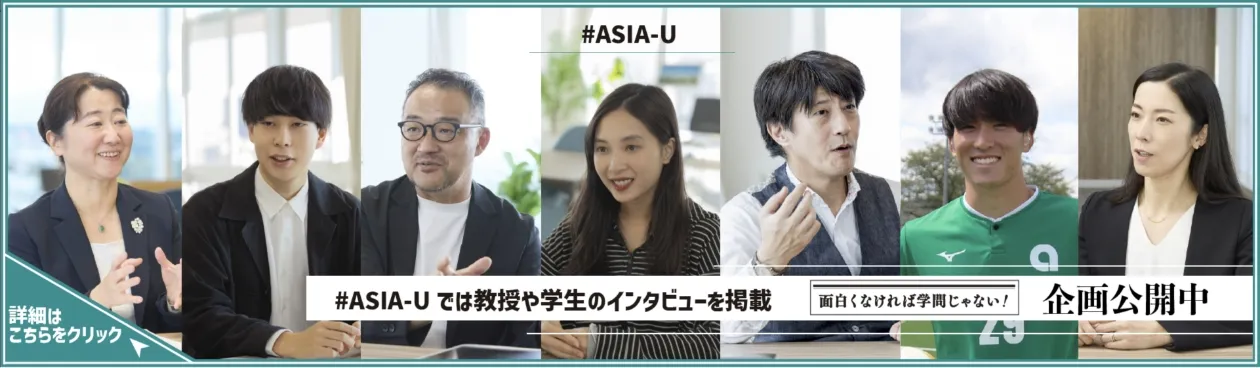
Teachers and Seniors VOICE
Let's take a look at the real voices of professors and seniors from Asia University
 The ideal talent we aim to cultivate and our three policies
The ideal talent we aim to cultivate and our three policies
The ideal talent we aim to cultivate and our three policies
The type of talent we aim to cultivate
The ideal person that this faculty aims to cultivate is "a person who has a broad education, understands diverse values, is willing to cooperate with others, and has developed the habit of continuing to learn throughout his or her life. Based on the knowledge and skills gained through the study of health and sports science and information engineering, we will cultivate people who can contribute to the realization of health for people and the development of a well-being society through sports."open all
- Educational Goals and Diploma Policy
-
Students who have completed the subjects prescribed in the curriculum of Faculty of Health and Sport Science (hereinafter referred to as "the Faculty") and have acquired the following abilities that meet Requirement for Graduation set forth in the said curriculum will be certified as having graduated and awarded a degree.
1. Acquire specialized knowledge and skills in health and sports science, and based on that, be able to think flexibly and make judgments about various phenomena in this field.
2. Students will acquire specialized knowledge and skills in information engineering, linking them to their studies in health and sports science, and will be able to utilize them to contribute to solving social issues.
3. To understand the diversity of society, acquire broad general knowledge, and be able to proactively participate in the development of society while cooperating with others.
4. You will be able to set goals, build your own career, and maintain a lifelong learning attitude.
- Curriculum Policy
-
The Faculty systematically organizes and implements the following educational programs in order to nurture human resources who can acquire the knowledge, skills, and attitudes listed in the Diploma Policy and contribute to the realization of people's health and the development of a wellbeing society.
<Educational Contents
The program is designed to provide students with the opportunity to learn health and sports science systematically and systematically, with the fundamentals of health and sports science as the main Subject (Required Subject) subjects in the lower years, and various applied and practical subjects in two areas, "sports performance" and "health promotion," mainly from the second year onward. Required Subject The number of courses in each of the two areas will not be set, but the total number of required Credit courses in both areas will be set in order to guarantee the learning outcomes.
The main subjects Subject (Required Subject) that serve as the foundation of information engineering should be arranged so that students can learn information engineering systematically and systematically. The fundamental subjects are arranged in the lower years, and applied subjects and specialized subjects that develop learning by relating health and sports science to information engineering are arranged as elective Required Subject subjects from the third year onward. 3.
3. Subject Open to All students" will be provided for students to have a broad perspective and to deepen their education. Among these, subjects to understand the diversity of society and to learn different viewpoints and values will be placed as elective Required Subject.
As opportunities to put the knowledge acquired in the fields of health and sports science and information engineering into practice in society, "specialized career subjects" (elective Required Subject) will include experiential learning such as internships and volunteer activities, and practical training in alternative sports (universal sports and new sports) that anyone can become familiar with at any time and for any length of time. In the "Specialized Career Courses" (elective ), students will have the opportunity to gain experience in experiential learning such as internships and volunteer activities, as well as practical skills in alternative sports (universal sports and new sports) that anyone can enjoy at any time. At the same time, by placing sports management related subjects in the "Sports Career Design" area, students will be provided with opportunities to learn about the position of sports in various social and business fields.
<Educational Methods
1. Various types of classes such as Lecture, Seminar, Laboratory Work, Practicum, and practical skills will be offered in order to acquire knowledge and skills, and to refine and improve the ability to think, judge, and express oneself. 2.
2. To encourage students' independent learning, various specialized Seminar courses will be offered and interactive education in small groups will be introduced. 3.
3. Seminars will be Required Subject offered from the first year to the fourth year to provide students with opportunities to work on problem solving in cooperation with others and to develop classes for active learning.
In order to acquire expertise in each specialized field, students will have the opportunity to work on a graduation thesis as the culmination of their four years of study research ・Provide students with opportunities to learn a series of processes from the establishment of issues to their verification.
- Admission Policy
-
This faculty aims to cultivate individuals who possess the knowledge, skills, and attitudes outlined in its diploma policy. Therefore, we expect the following types of students to enroll. To this end, we implement diverse selection methods and conduct multifaceted and comprehensive evaluations.
1. Possesses the basic knowledge and skills acquired through the high school curriculum, enabling them to understand the educational content of health and sports science and information engineering.
2. They have the motivation to think, judge, and express their own views on the social phenomena surrounding them, and to contribute to society by actively collaborating with people who hold diverse values.
3. I am motivated to contribute to the realization of people's health and the development of a well-being society through the exploration and practice of health and sports science and information engineering.
4. The applicant demonstrates an attitude and motivation to connect their studies in Faculty of Health and Sport Science to their own personal growth and career development.
*The methods and criteria for determining acceptance or rejection are posted on the university's website.
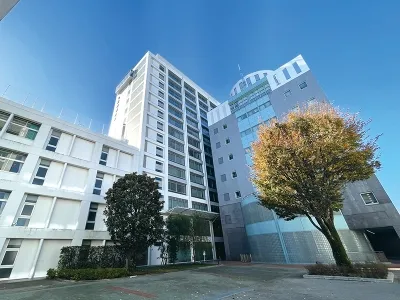
 campus
campus
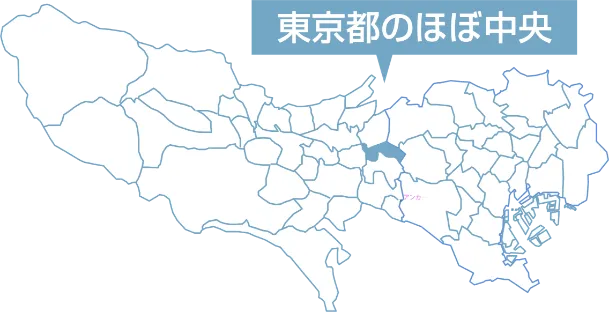
Almost in the center of Tokyo.
Easy access!
Easy access!
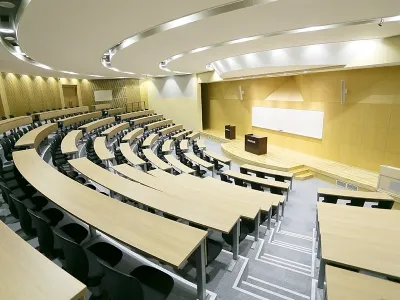
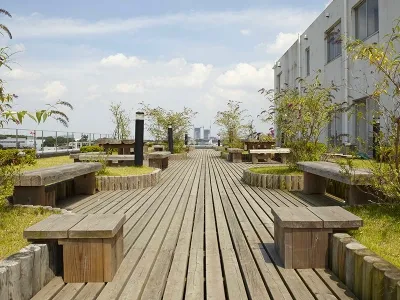
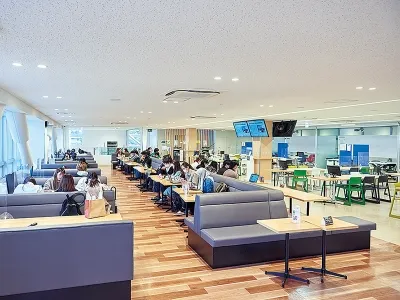
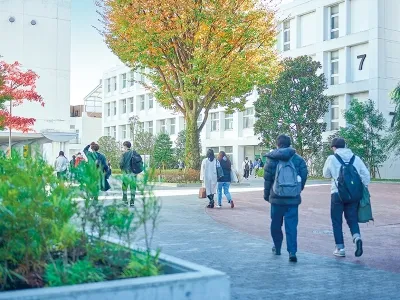
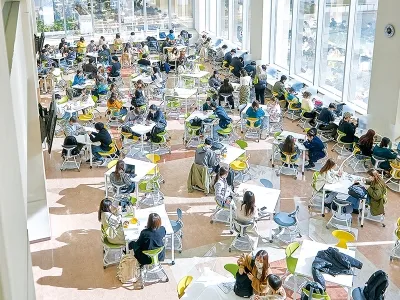
Students will study on one campus for four years until graduation.
It is located almost in the center of Tokyo, which is long from east to west.
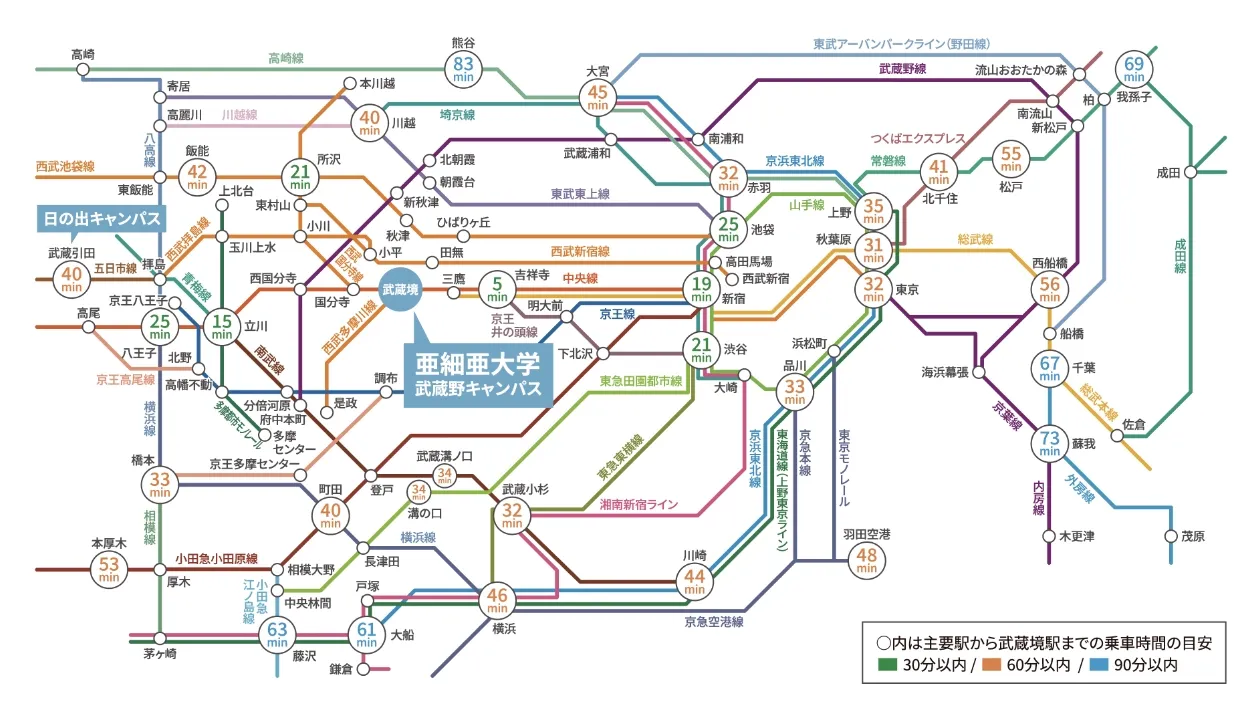
It is also well connected by public transport.
There are many lines running both east-west and north-south,
Also accessible from major stations around Tokyo
The journey takes about one to one and a half hours.
It is located almost in the center of Tokyo, which is long from east to west.
It is also well connected by public transport.
There are many lines running both east-west and north-south,
Also accessible from major stations around Tokyo
The journey takes about one to one and a half hours.