I showcased my activities in Student’s Association and secured a job offer from Toho Gakuen, a school that supports the entertainment industry!

# Entrance exam preparation experiences
Wakana Harada
Faculty of International Relations Department of International Relations
2022.11.24
――“We’re fully committed to helping students achieve their dreams.”
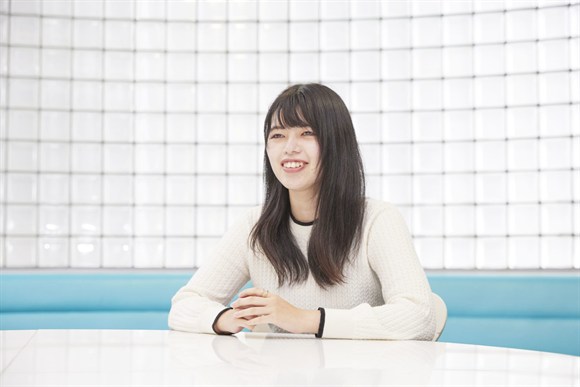
In this article, to shed light on “the real-life job-hunting situation today,” we conducted an interview with a staff member from Career Center and a current student who secured a job offer with that staff member’s support, and we’ll introduce the journey leading up to that offer. Our guest today is Chisana Harada, a fourth-year student at Faculty of International Relations, who has received a job offer from the Higashiho Gakuen Educational Corporation, an institution that trains talent for the entertainment industry.Through a conversation with Mana Sekiguchi, a staff member at our center who handled Ms. Harada’s interviews and provided close, personalized support, we’ll explore the trajectory of Ms. Harada’s job search and the role played behind the scenes by Career Center in supporting her.
Sekiguchi: I originally met Harada-san not as a Career Center staff member, but as a Student Center staff member, right?
Harada: That's right. I've been a member of Student’s Association association since my first year. Student’s Association is a student self-governing organization that includes various groups such as "ASIA-SAI" Festival Executive Committee and "BUNREN-SAI" Festival Executive Committee, and I often spoke with people from Student Center who support the Student’s Association.
Sekiguchi: I'm technically in Career Center, but I was also involved in Student’s Association work at Student Center, so I was already acquainted with Harada-san. It felt like we naturally started talking about job hunting.
Harada: I started using Career Center after receiving advice from a senior student in a Student’s Association group. At first, I was talking to a different staff member, but when that person was busy or when I needed advice, I talked a lot with Ms. Sekiguchi, who was nearby, and she supported me all the way to the final assignment.
Sekiguchi: Harada-san belonged to Financial Affairs Bureau within Student’s Association, which is an organization that handles money. As the director, you held an important position where you listened to each organization and allocated budgets. I was impressed by how you thought about various things and worked hard to make it easier for each organization to carry out its activities.
Harada: One of the main reasons I chose to work as a faculty member at a vocational school was that I had often seen the people at Student Center. When I was in high school, I was the student Executive chair, Board of Directors, and at some point I realized that I enjoyed that role because I could support everyone. Through Student’s Association activities, I visited Student Center and saw how sincerely they supported students in achieving their goals, and I definitely thought it would be wonderful if I could become someone like that.
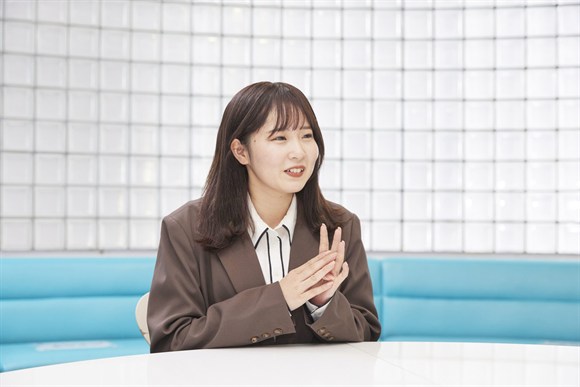
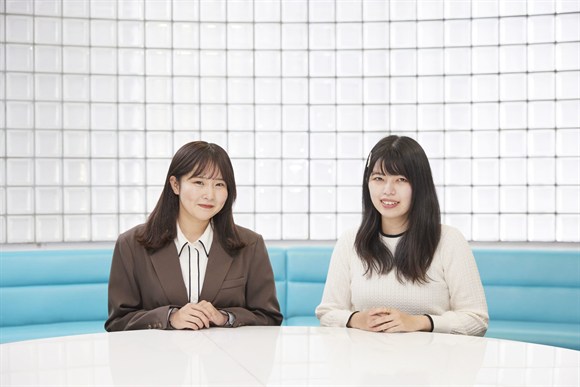
In this article, to shed light on “the real-life job-hunting situation today,” we conducted an interview with a staff member from Career Center and a current student who secured a job offer with that staff member’s support, and we’ll introduce the journey leading up to that offer. Our guest today is Chisana Harada, a fourth-year student at Faculty of International Relations, who has received a job offer from the Higashiho Gakuen Educational Corporation, an institution that trains talent for the entertainment industry.Through a conversation with Mana Sekiguchi, a staff member at our center who handled Ms. Harada’s interviews and provided close, personalized support, we’ll explore the trajectory of Ms. Harada’s job search and the role played behind the scenes by Career Center in supporting her.
Please enter your text.
The enthusiasm of school staff that I encountered through Student’s Association activities
Harada: That's right. I've been a member of Student’s Association association since my first year. Student’s Association is a student self-governing organization that includes various groups such as "ASIA-SAI" Festival Executive Committee and "BUNREN-SAI" Festival Executive Committee, and I often spoke with people from Student Center who support the Student’s Association.
Sekiguchi: I'm technically in Career Center, but I was also involved in Student’s Association work at Student Center, so I was already acquainted with Harada-san. It felt like we naturally started talking about job hunting.
Harada: I started using Career Center after receiving advice from a senior student in a Student’s Association group. At first, I was talking to a different staff member, but when that person was busy or when I needed advice, I talked a lot with Ms. Sekiguchi, who was nearby, and she supported me all the way to the final assignment.
Sekiguchi: Harada-san belonged to Financial Affairs Bureau within Student’s Association, which is an organization that handles money. As the director, you held an important position where you listened to each organization and allocated budgets. I was impressed by how you thought about various things and worked hard to make it easier for each organization to carry out its activities.
Harada: One of the main reasons I chose to work as a faculty member at a vocational school was that I had often seen the people at Student Center. When I was in high school, I was the student Executive chair, Board of Directors, and at some point I realized that I enjoyed that role because I could support everyone. Through Student’s Association activities, I visited Student Center and saw how sincerely they supported students in achieving their goals, and I definitely thought it would be wonderful if I could become someone like that.
Please enter your text.
The points where what you want to do and what you're good at align
Sekiguchi: Harada-san had a clear desire to work in the entertainment industry, right?
Harada: That's right. At first, I wanted to work on the creative side, like a CD label, a merchandise production company, or a publishing company, but my applications weren't accepted, or I didn't click with the interviewers. I started seriously looking into it in Senior, so it was a late start, and I was only able to apply to about 10 companies. Of those, I made it to the interview stage with about 4 companies.
Sekiguchi: When things were going difficult, Career Center approached me and said, "There's a school that specializes in the entertainment industry, and since Harada is in Student’s Association, maybe she'd be suited to being Administrative Staff like us? Why don't you give it a try?"
Harada: The place where what I wanted to do and the advice I received that suggested it might be a good fit for me all aligned was Toho Gakuen, where I received a job offer this time.
Sekiguchi: When I interviewed him, he spoke in a really unconfident way, so I gave him advice on things like straightening his posture. He usually handles tens of millions of Credit as the head of Student’s Association Financial Affairs Bureau, so he should be confident.
Harada: When it came down to it, I couldn't help but compare myself to others (laughs), and I was feeling down. But then someone strongly told me that I needed to think of myself as a colleague working with them as a school staff member, and that I had to speak with confidence. That helped me change my mindset and approach the interview with a more positive attitude.
Sekiguchi: In terms of the number of times, I'd say we've had about 10 interviews.
Harada: Ms. Sekiguchi is close to my age, so it felt a bit like I was consulting with an older sister. We also went through our job hunting around the same time, so her advice felt particularly fresh. She's someone who looks out for me on a regular basis, so I felt I could really trust the words she gave me.
Sekiguchi: However, we believe that if we get too close to the students, we might not be able to say what we want to say, and the students might feel uncomfortable, so we are conscious of maintaining a certain distance. Since we are close in age, there are many things we can talk about, but we prioritize not getting too involved.
Harada: That's right. At first, I wanted to work on the creative side, like a CD label, a merchandise production company, or a publishing company, but my applications weren't accepted, or I didn't click with the interviewers. I started seriously looking into it in Senior, so it was a late start, and I was only able to apply to about 10 companies. Of those, I made it to the interview stage with about 4 companies.
Sekiguchi: When things were going difficult, Career Center approached me and said, "There's a school that specializes in the entertainment industry, and since Harada is in Student’s Association, maybe she'd be suited to being Administrative Staff like us? Why don't you give it a try?"
Harada: The place where what I wanted to do and the advice I received that suggested it might be a good fit for me all aligned was Toho Gakuen, where I received a job offer this time.
Sekiguchi: When I interviewed him, he spoke in a really unconfident way, so I gave him advice on things like straightening his posture. He usually handles tens of millions of Credit as the head of Student’s Association Financial Affairs Bureau, so he should be confident.
Harada: When it came down to it, I couldn't help but compare myself to others (laughs), and I was feeling down. But then someone strongly told me that I needed to think of myself as a colleague working with them as a school staff member, and that I had to speak with confidence. That helped me change my mindset and approach the interview with a more positive attitude.
Sekiguchi: In terms of the number of times, I'd say we've had about 10 interviews.
Harada: Ms. Sekiguchi is close to my age, so it felt a bit like I was consulting with an older sister. We also went through our job hunting around the same time, so her advice felt particularly fresh. She's someone who looks out for me on a regular basis, so I felt I could really trust the words she gave me.
Sekiguchi: However, we believe that if we get too close to the students, we might not be able to say what we want to say, and the students might feel uncomfortable, so we are conscious of maintaining a certain distance. Since we are close in age, there are many things we can talk about, but we prioritize not getting too involved.
Please enter your text.
First, make sure you have a solid grasp of the basics.
Sekiguchi: Your activities in Student’s Association were a strong selling point during the interview, weren't they?
Harada: I thought that talking about my experience as the Director of Financial Affairs Bureau would be the easiest way to convey my work to the other party, so I talked about that. I had many opportunities to highlight activities that would leave a lasting impression on the listeners, such as how I spent March negotiating budgets with 17 organizations and how I entered the financial statements into the agenda for the student general assembly. Many people were surprised, saying things like, "I didn't know students were doing that much."
Sekiguchi: The fact that students are able to manage their finances to that extent is one of the characteristics of Asia University.
Harada: I was really happy that it was perceived as one of the good things about Asia University.
Sekiguchi: Toho Gakuen is a place that cultivates talent to produce people involved in the entertainment industry, not only those who appear in the spotlight like voice actors, but also those who work in sound engineering and stage equipment design.
Harada: When I spoke with them, I was struck by how many of them had a strong passion for students' dreams, and also how kind they all were.
Sekiguchi: In that kind of environment, when you take on a job that supports students, do you have a vision for your own unique way of working?
Harada: No matter what position I take on, I believe it's very important to first firmly grasp the fundamentals. To be able to accurately do the bare minimum that needs to be done. And since Toho Gakuen has the ambitious goal of "becoming the No. 1 vocational school for the media and entertainment industry in East Asia," I also want to remember that I am a colleague who will nurture the future of the entertainment industry, and I hope to become a staff member who can properly meet the needs of the students.
Sekiguchi: Good luck!
Harada: I thought that talking about my experience as the Director of Financial Affairs Bureau would be the easiest way to convey my work to the other party, so I talked about that. I had many opportunities to highlight activities that would leave a lasting impression on the listeners, such as how I spent March negotiating budgets with 17 organizations and how I entered the financial statements into the agenda for the student general assembly. Many people were surprised, saying things like, "I didn't know students were doing that much."
Sekiguchi: The fact that students are able to manage their finances to that extent is one of the characteristics of Asia University.
Harada: I was really happy that it was perceived as one of the good things about Asia University.
Sekiguchi: Toho Gakuen is a place that cultivates talent to produce people involved in the entertainment industry, not only those who appear in the spotlight like voice actors, but also those who work in sound engineering and stage equipment design.
Harada: When I spoke with them, I was struck by how many of them had a strong passion for students' dreams, and also how kind they all were.
Sekiguchi: In that kind of environment, when you take on a job that supports students, do you have a vision for your own unique way of working?
Harada: No matter what position I take on, I believe it's very important to first firmly grasp the fundamentals. To be able to accurately do the bare minimum that needs to be done. And since Toho Gakuen has the ambitious goal of "becoming the No. 1 vocational school for the media and entertainment industry in East Asia," I also want to remember that I am a colleague who will nurture the future of the entertainment industry, and I hope to become a staff member who can properly meet the needs of the students.
Sekiguchi: Good luck!