Image training is the "exam hack."
To pursue my dream job, I'm honing my language skills and going abroad to study.
To pursue my dream job, I'm honing my language skills and going abroad to study.
# Entrance exam preparation experiences
Masaya Iwashita
Faculty of Business Administration Administration, Department of Hospitality Management
2025.01.31
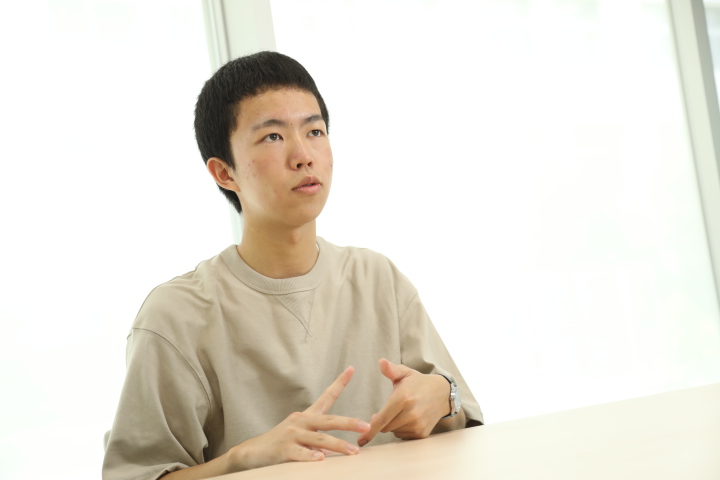
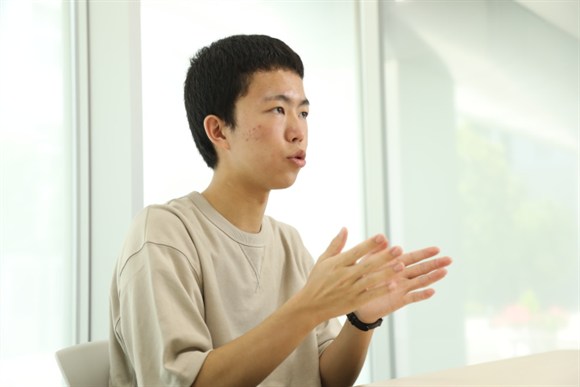
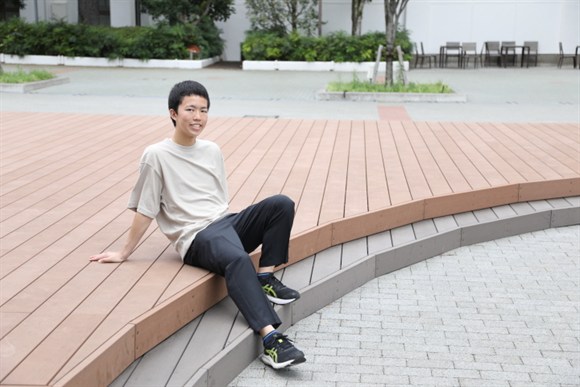
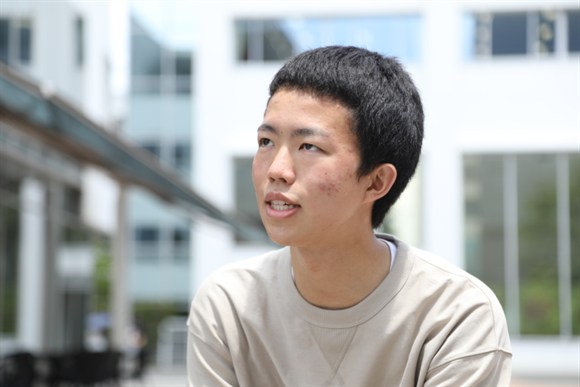
This time, we interviewed Masaya Iwashita, a first-year student in the Hospitality Management Department of the Faculty Faculty of Business Administration. Mr. Iwashita passed the university-wide entrance examination, which allows students to apply to multiple departments. We asked him about his mental preparation techniques to avoid getting nervous on the day of the exam, tips for studying for the exam, and things he wants to try while he is at university for his future.

Please enter your text.
I'd like to ask about the entrance examination system used to get into Asia University.
Q1. Please tell us the type of entrance examination you took and the subjects you took.
I took the university-wide entrance exam in the first semester. The subjects were Japanese language and English.
Q2. Why did you choose that particular entrance examination method, and what was the reason for your choice?
I was also planning to take entrance exams for other universities, and in addition to the Hospitality Management Department of Faculty of Business Administration Administration Asia University, where I was accepted, I was also interested in Department of International Relations and Department of Multicultural Communication in Faculty of International Relations, so I chose the university-wide unified entrance exam which allows for simultaneous applications to multiple universities. I'm from Saitama, so I took the exam in Omiya, but the key point is that the university-wide unified entrance exam is held at 18 locations nationwide, making it accessible to applicants who don't live in Tokyo.
I was interested in Faculty of International Relations because I wanted to work using languages in the future. However, as I looked through university brochures and other materials, I also became interested in the Faculty of Hospitality Management, and it seemed more interesting to me that I could learn about various fields of hospitality and management. In the end, I was accepted into all the departments I applied to, so I narrowed it down and decided which department I wanted to join.
Q3. What were your reasons for choosing your current faculty?
I want to work in the service industry in the future, and when I looked at the university's brochure, I felt that I could achieve that goal by enrolling in the Hospitality Management Department Faculty of Business Administration Administration, so I decided on that department. Here, I can learn not only about hospitality but also about management and business. The professors give examples that are close to real life during classes, so it's very easy to understand.
I took the university-wide entrance exam in the first semester. The subjects were Japanese language and English.
Q2. Why did you choose that particular entrance examination method, and what was the reason for your choice?
I was also planning to take entrance exams for other universities, and in addition to the Hospitality Management Department of Faculty of Business Administration Administration Asia University, where I was accepted, I was also interested in Department of International Relations and Department of Multicultural Communication in Faculty of International Relations, so I chose the university-wide unified entrance exam which allows for simultaneous applications to multiple universities. I'm from Saitama, so I took the exam in Omiya, but the key point is that the university-wide unified entrance exam is held at 18 locations nationwide, making it accessible to applicants who don't live in Tokyo.
I was interested in Faculty of International Relations because I wanted to work using languages in the future. However, as I looked through university brochures and other materials, I also became interested in the Faculty of Hospitality Management, and it seemed more interesting to me that I could learn about various fields of hospitality and management. In the end, I was accepted into all the departments I applied to, so I narrowed it down and decided which department I wanted to join.
Q3. What were your reasons for choosing your current faculty?
I want to work in the service industry in the future, and when I looked at the university's brochure, I felt that I could achieve that goal by enrolling in the Hospitality Management Department Faculty of Business Administration Administration, so I decided on that department. Here, I can learn not only about hospitality but also about management and business. The professors give examples that are close to real life during classes, so it's very easy to understand.
Q4. What kind of preparations did you make for the exam?
My serious exam preparation began at the end of April of my third year of high school, after I retired from my club activities, but I think I solved three years' worth of past exam questions. I brought the actual exam preparation book I used today. It contains past exam questions for Asia University, so it includes past questions for both the university-wide entrance exam and the departmental entrance exam. I tried solving all the problems once, and then repeatedly reworked the ones I got wrong.
In terms of preparation other than studying, since I couldn't attend Asia University 's open campus, I went to their cultural festival to get a feel for the actual university atmosphere. I also repeatedly visualized the route to the exam venue as if it were the day of the exam.
Q5. What do you think are the best things about attending Asia University?
In the Hospitality Management department, first-year students participate in Orientation Seminar where they are divided into groups to take classes in their respective specialized fields. I appreciated being able to make friends within those groups and have meaningful conversations with professors from various fields.
I'm currently interested in the field of travel. We had an assignment where we had to imagine a specific location, incorporate its unique characteristics and SDGs elements, create a travel plan in a group, and then present it within a week. Since I've always loved traveling, it was a lot of fun.
Freshman English is also an attractive class. Learning from a native English-speaking teacher in a practical, real-world setting is a major advantage. Starting with self-introductions and including group work, you'll interact with various people as you move around the classroom, making it relatively easy to make friends.
Q6. What do you want to work on during your university life going forward?
I'm considering studying abroad in an English-speaking country like the United States, the United Kingdom, or Australia, or, since I'm currently studying Chinese, in a Chinese-speaking region like China or Taiwan.
Q7. Please tell us about your dreams and goals for the future.
I'm considering joining a company that operates a popular amusement park. I'd like to be involved in the operation and planning of shows and parades, and since the company has overseas operations, I'd also like to become proficient in English and Chinese.
My serious exam preparation began at the end of April of my third year of high school, after I retired from my club activities, but I think I solved three years' worth of past exam questions. I brought the actual exam preparation book I used today. It contains past exam questions for Asia University, so it includes past questions for both the university-wide entrance exam and the departmental entrance exam. I tried solving all the problems once, and then repeatedly reworked the ones I got wrong.
In terms of preparation other than studying, since I couldn't attend Asia University 's open campus, I went to their cultural festival to get a feel for the actual university atmosphere. I also repeatedly visualized the route to the exam venue as if it were the day of the exam.
Q5. What do you think are the best things about attending Asia University?
In the Hospitality Management department, first-year students participate in Orientation Seminar where they are divided into groups to take classes in their respective specialized fields. I appreciated being able to make friends within those groups and have meaningful conversations with professors from various fields.
I'm currently interested in the field of travel. We had an assignment where we had to imagine a specific location, incorporate its unique characteristics and SDGs elements, create a travel plan in a group, and then present it within a week. Since I've always loved traveling, it was a lot of fun.
Freshman English is also an attractive class. Learning from a native English-speaking teacher in a practical, real-world setting is a major advantage. Starting with self-introductions and including group work, you'll interact with various people as you move around the classroom, making it relatively easy to make friends.
Q6. What do you want to work on during your university life going forward?
I'm considering studying abroad in an English-speaking country like the United States, the United Kingdom, or Australia, or, since I'm currently studying Chinese, in a Chinese-speaking region like China or Taiwan.
Q7. Please tell us about your dreams and goals for the future.
I'm considering joining a company that operates a popular amusement park. I'd like to be involved in the operation and planning of shows and parades, and since the company has overseas operations, I'd also like to become proficient in English and Chinese.
Please enter your text.
I'd like to ask you in detail about exam preparation and mindset.
Q8. Do you have any recommended countermeasures?
The key is to solve past exam questions in a shorter time than the actual exam time limit. Thanks to this, I was able to answer the questions relatively calmly during the actual exam. Regardless of the subject, there's a possibility that new question formats might appear, so I recommend this as a way to prepare for that possibility.
Q9. What were some of the difficulties you faced in preparing for the exam?
The general entrance exam is scheduled later than the recommendation-based entrance exam, so while I was studying for it, some of my classmates had already been accepted. That made me feel anxious. I hadn't seen any friends in the period leading up to the exam, and I felt lonely.
Q10. Do you have any recommended ways to change your mood?
I was watching recorded music programs, specifically shows like "COUNT DOWN TV" and "Music Station." I was also imagining myself as a university student to boost my motivation.
Q11. Were there any people, words, or triggers that supported you?
My family, friends, school teachers, cram school teachers, and everyone who helped me prepare for the entrance exams—all of them. My family, in particular, was a huge support. My parents supported me in so many ways. I'm currently working as staff at an open campus event, and I've noticed that many prospective students come with their parents. It's made me realize once again that preparing for entrance exams is something that parents and children should tackle together.
The key is to solve past exam questions in a shorter time than the actual exam time limit. Thanks to this, I was able to answer the questions relatively calmly during the actual exam. Regardless of the subject, there's a possibility that new question formats might appear, so I recommend this as a way to prepare for that possibility.
Q9. What were some of the difficulties you faced in preparing for the exam?
The general entrance exam is scheduled later than the recommendation-based entrance exam, so while I was studying for it, some of my classmates had already been accepted. That made me feel anxious. I hadn't seen any friends in the period leading up to the exam, and I felt lonely.
Q10. Do you have any recommended ways to change your mood?
I was watching recorded music programs, specifically shows like "COUNT DOWN TV" and "Music Station." I was also imagining myself as a university student to boost my motivation.
Q11. Were there any people, words, or triggers that supported you?
My family, friends, school teachers, cram school teachers, and everyone who helped me prepare for the entrance exams—all of them. My family, in particular, was a huge support. My parents supported me in so many ways. I'm currently working as staff at an open campus event, and I've noticed that many prospective students come with their parents. It's made me realize once again that preparing for entrance exams is something that parents and children should tackle together.
Q12. What was your method for cramming right before the entrance exam?
I was redoing the problems I got wrong. Alternatively, working on similar problems would also be a good idea. It's too late to start learning new topics right before the exam, so it's important to review the problems you've already solved.
Q13. What did you gain from your experience of taking entrance exams?
I believe I developed perseverance and the ability to manage my schedule for exams. Since exams are physically demanding, I learned how to adjust the schedule so that exam dates don't overlap when taking multiple exams, and I also developed the ability to manage my schedule—deciding what to study and when—which I believe will be useful in my future life and activities.
Q14. Please give a message to high school students who will be taking the same entrance exam.
When studying for exams, it's crucial to familiarize yourself with the format by using past exam questions. Once you're comfortable with the format, try solving them under stricter conditions than the actual exam, by shortening the time limit. Try to find ways to answer with ample time to spare so you don't panic when you run out of time during the actual exam.
It's important to visualize the route from your home to the exam venue, and to practice solving past exam questions in different environments—home, school, Library (Library Administration), and cram school—to help you feel less overwhelmed by the atmosphere of the actual exam venue. I myself get quite nervous even during club activities and competitions, so I value mental rehearsal. Just as you imagine winning in sports, it's important to imagine yourself passing the exam when studying for it.
The general entrance exam takes longer to yield results compared to the recommendation-based entrance exam. Use the university life you envision as your motivation and study hard so you have no regrets. We'll be waiting for you at Asia University.
I was redoing the problems I got wrong. Alternatively, working on similar problems would also be a good idea. It's too late to start learning new topics right before the exam, so it's important to review the problems you've already solved.
Q13. What did you gain from your experience of taking entrance exams?
I believe I developed perseverance and the ability to manage my schedule for exams. Since exams are physically demanding, I learned how to adjust the schedule so that exam dates don't overlap when taking multiple exams, and I also developed the ability to manage my schedule—deciding what to study and when—which I believe will be useful in my future life and activities.
Q14. Please give a message to high school students who will be taking the same entrance exam.
When studying for exams, it's crucial to familiarize yourself with the format by using past exam questions. Once you're comfortable with the format, try solving them under stricter conditions than the actual exam, by shortening the time limit. Try to find ways to answer with ample time to spare so you don't panic when you run out of time during the actual exam.
It's important to visualize the route from your home to the exam venue, and to practice solving past exam questions in different environments—home, school, Library (Library Administration), and cram school—to help you feel less overwhelmed by the atmosphere of the actual exam venue. I myself get quite nervous even during club activities and competitions, so I value mental rehearsal. Just as you imagine winning in sports, it's important to imagine yourself passing the exam when studying for it.
The general entrance exam takes longer to yield results compared to the recommendation-based entrance exam. Use the university life you envision as your motivation and study hard so you have no regrets. We'll be waiting for you at Asia University.