Master the entrance exam preparation methods that best suit you, and successfully pass the general entrance exam!
University life involves actively engaging in both academics and extracurricular activities.
University life involves actively engaging in both academics and extracurricular activities.
# Entrance exam preparation experiences
Riko Kanazaki
Faculty of Economics Department of Economics
2023.10.26
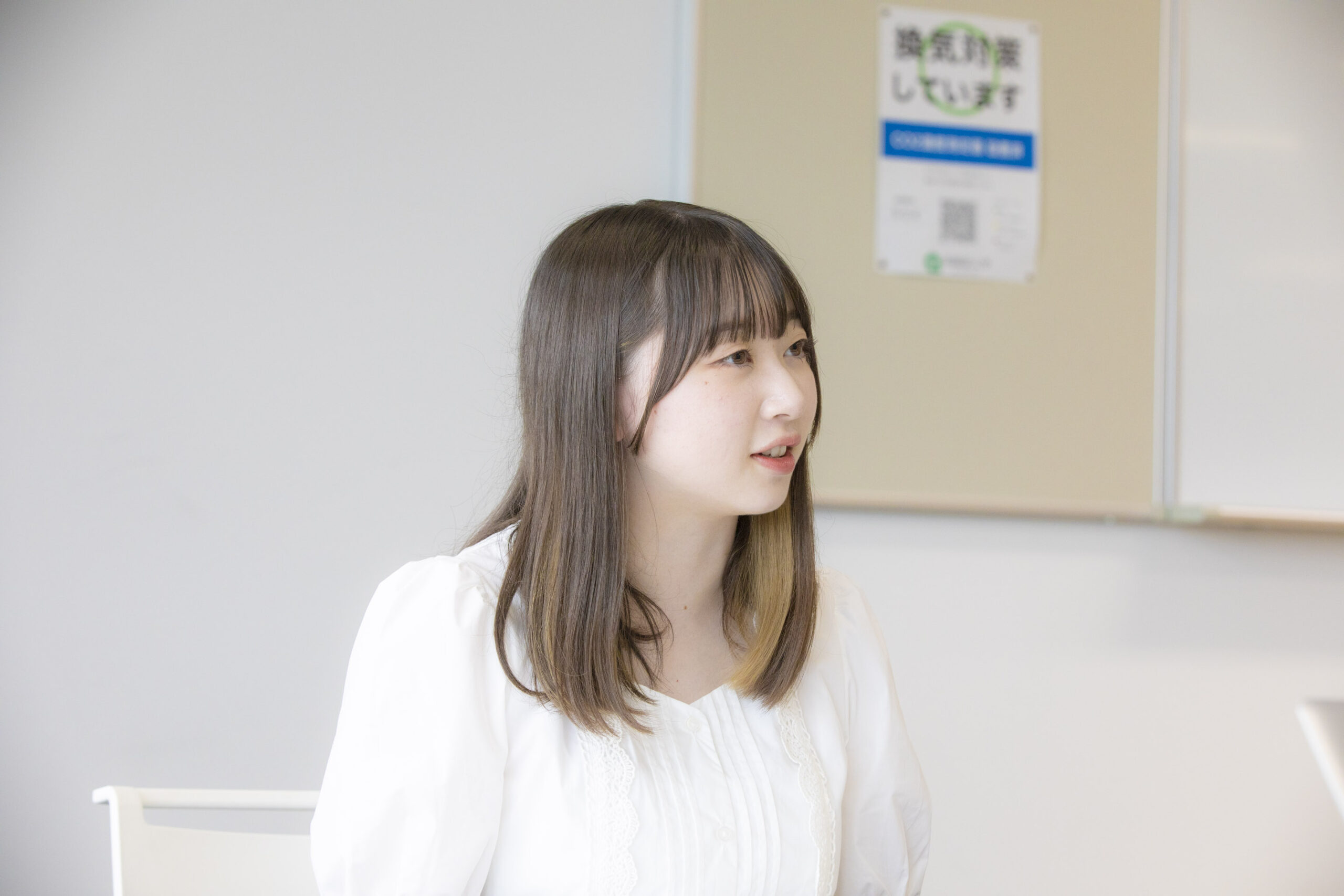
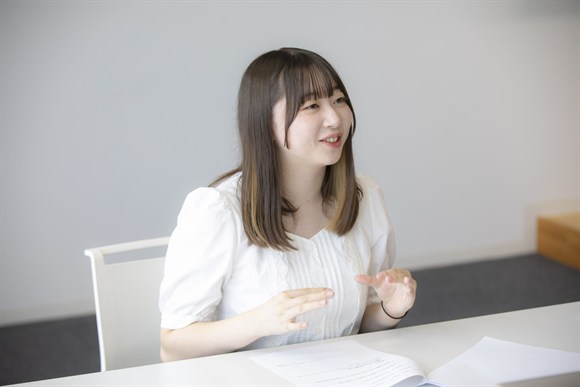
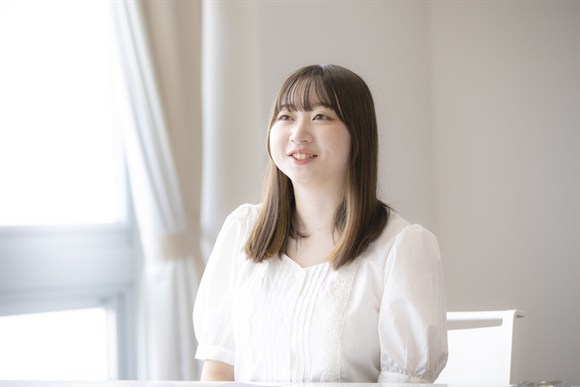
This time, we interviewed Riko Kanazaki, a first-year student in the Department of Business Administration, Faculty of Faculty of Business Administration Administration. She took the general entrance exam hoping to find her own path through the broad range of studies offered in the Department of Business Administration. We asked her about her student life, including the campus concierge who inspired her to enroll, her resumption of her beloved dance, and her unique approach to preparing for the entrance exam.
Please enter your text.
I'd like to ask about student life at Asia University.
Q1. Please tell us your reasons for choosing to study in the Department of Business Administration Asia University Faculty of Business Administration.
Also, were there any differences between your expectations before entering university and your expectations after entering university?
The deciding factor in my enrollment was when I came to Tokyo alone for the first time from Hokkaido and, despite my hesitation, attended Asia University 's open campus event. I was filled with anxiety, but the senior students serving as campus concierges were incredibly kind and offered encouraging words, which deeply moved me.
Also, I intuitively felt that the atmosphere of the campus suited me, and I thought, "This is the place for me!" When I was deciding on career options, I didn't have a clear vision of my future, so I chose to apply to the Department of Business Administration in Faculty of Business Administration, where I could study a wide range of subjects.
I'm planning to learn from multiple perspectives and find the path I want to take. What's different from what I imagined before enrolling is that there are many classes I take with students from other departments, and I have many opportunities to talk with them, so I've been able to meet friends from other departments.
Q2. What are you currently studying?
Also, if there are any courses you took that you found particularly worthwhile, please tell us the course name and why.
I'm learning the basics of Excel and bookkeeping. I find Excel difficult, but it's very useful once you can use it, so I'm trying my best to master it quickly. As for bookkeeping, I'm aiming to obtain a qualification and plan to take a certification exam using an extracurricular Course.
Among the specialized subjects, the one I found most interesting was "Introduction to IT Literacy." Since it uses Excel and other programs, I think it will be useful in the future, and I enjoy interpreting numerical changes from tables and graphs. Also, because it's a computer-based class, it makes me feel like I'm truly a university student.
Subject Open to All students is Psychology. I didn't have psychology classes in high school, so I find it interesting to gain new knowledge and learn about people's ways of thinking and behavior.
Q3. Are there any activities you've been involved in since enrolling, other than studying?
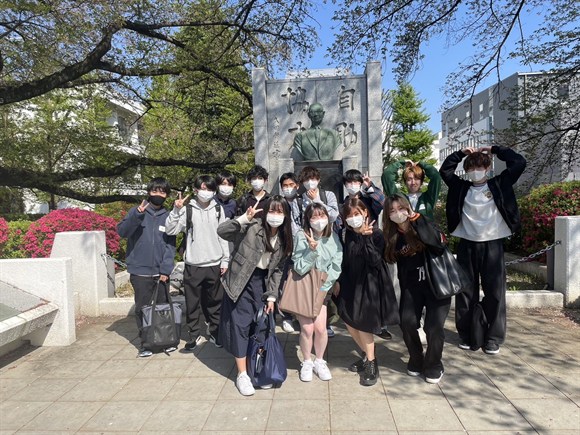
I belong to the Campus Concierge and the dance club MD.crew.
Q4. What prompted you to start the Campus Concierge service?
I had a very positive experience at an open campus event when I was in high school, so I decided to start this job as a campus concierge, hoping to help prospective students.
Many students will be starting to live alone after entering university, so I try to talk to each student individually, sharing details about their daily lives, in order to alleviate their anxieties. This is because I learned a lot from my seniors, and it was very helpful.
Also, I am currently enjoying a fulfilling and fun university life, and I would be incredibly happy if that comes across to you and motivates you in your exam preparation.
Also, were there any differences between your expectations before entering university and your expectations after entering university?
The deciding factor in my enrollment was when I came to Tokyo alone for the first time from Hokkaido and, despite my hesitation, attended Asia University 's open campus event. I was filled with anxiety, but the senior students serving as campus concierges were incredibly kind and offered encouraging words, which deeply moved me.
Also, I intuitively felt that the atmosphere of the campus suited me, and I thought, "This is the place for me!" When I was deciding on career options, I didn't have a clear vision of my future, so I chose to apply to the Department of Business Administration in Faculty of Business Administration, where I could study a wide range of subjects.
I'm planning to learn from multiple perspectives and find the path I want to take. What's different from what I imagined before enrolling is that there are many classes I take with students from other departments, and I have many opportunities to talk with them, so I've been able to meet friends from other departments.
Q2. What are you currently studying?
Also, if there are any courses you took that you found particularly worthwhile, please tell us the course name and why.
I'm learning the basics of Excel and bookkeeping. I find Excel difficult, but it's very useful once you can use it, so I'm trying my best to master it quickly. As for bookkeeping, I'm aiming to obtain a qualification and plan to take a certification exam using an extracurricular Course.
Among the specialized subjects, the one I found most interesting was "Introduction to IT Literacy." Since it uses Excel and other programs, I think it will be useful in the future, and I enjoy interpreting numerical changes from tables and graphs. Also, because it's a computer-based class, it makes me feel like I'm truly a university student.
Subject Open to All students is Psychology. I didn't have psychology classes in high school, so I find it interesting to gain new knowledge and learn about people's ways of thinking and behavior.
Q3. Are there any activities you've been involved in since enrolling, other than studying?
I belong to the Campus Concierge and the dance club MD.crew.
Q4. What prompted you to start the Campus Concierge service?
I had a very positive experience at an open campus event when I was in high school, so I decided to start this job as a campus concierge, hoping to help prospective students.
Many students will be starting to live alone after entering university, so I try to talk to each student individually, sharing details about their daily lives, in order to alleviate their anxieties. This is because I learned a lot from my seniors, and it was very helpful.
Also, I am currently enjoying a fulfilling and fun university life, and I would be incredibly happy if that comes across to you and motivates you in your exam preparation.
Q5. Please tell me about the dance club as well.
I took dance lessons from late elementary school until I graduated from junior high school.
I loved hip-hop and continued dancing, but I joined Kyudo Club in high school, so I didn't dance for a while. However, I still love dancing, so I joined a dance club in college without hesitation.
MD.crew is divided into five genres: hip hop, pop, rock, jazz, and breakdancing, and I belong to the hip hop genre. About 40% of the members are beginners, so it's okay even if you've never danced before. The senior members will teach you, so I think you'll enjoy it.
Q6. What are the activities and atmosphere like within the club?
We usually practice once a week for about an hour and a half, but as events approach, the frequency of practice increases. The third-year students take the lead in thinking up the choreography and structure, and we all work together to create it. We have a friendly and easy-going atmosphere where everyone gets along well, regardless of whether they are upperclassmen or underclassmen.
I recently participated in my first event, and although I was very nervous, I had a lot of fun dancing. My goal for the future is to continue practicing so that I can improve while having fun.
Q7. What do you think are the best things about attending Asia University?
Something I realized after enrolling is that having a single campus makes moving between classrooms easy. My friends who attend other universities also say, "That's great!"
Q8. What kind of town is Musashi-Sakai, where the university is located? What are some ways to enjoy Musashi-Sakai?
There are many restaurants between the university and Musashi-Sakai Station, so I often stop by with friends from my department or club.
I took dance lessons from late elementary school until I graduated from junior high school.
I loved hip-hop and continued dancing, but I joined Kyudo Club in high school, so I didn't dance for a while. However, I still love dancing, so I joined a dance club in college without hesitation.
MD.crew is divided into five genres: hip hop, pop, rock, jazz, and breakdancing, and I belong to the hip hop genre. About 40% of the members are beginners, so it's okay even if you've never danced before. The senior members will teach you, so I think you'll enjoy it.
Q6. What are the activities and atmosphere like within the club?
We usually practice once a week for about an hour and a half, but as events approach, the frequency of practice increases. The third-year students take the lead in thinking up the choreography and structure, and we all work together to create it. We have a friendly and easy-going atmosphere where everyone gets along well, regardless of whether they are upperclassmen or underclassmen.
I recently participated in my first event, and although I was very nervous, I had a lot of fun dancing. My goal for the future is to continue practicing so that I can improve while having fun.
Q7. What do you think are the best things about attending Asia University?
Something I realized after enrolling is that having a single campus makes moving between classrooms easy. My friends who attend other universities also say, "That's great!"
Q8. What kind of town is Musashi-Sakai, where the university is located? What are some ways to enjoy Musashi-Sakai?
There are many restaurants between the university and Musashi-Sakai Station, so I often stop by with friends from my department or club.
Please enter your text.
I'd like to ask about the entrance examination method used to get into Asia University.
Q1. Please tell us the type of entrance examination you took and the subjects you took.
This was the general entrance examination (by subject). I took the exams in Japanese (excluding classical Japanese and classical Chinese), English, and Politics and Economics.
Q2. Do you have any advice for those who will be taking the exam in the future?
I think it's more efficient to study after learning about the trends in the questions using the "Red Book (University Entrance Exam Series)"!
I started by solving past exam questions year by year on the entrance exam information website "Ajibako," and also used the "Akahon" (Red Book). Since the number of questions and the way questions are presented differ from university to university, I feel that research with the "Akahon" is important when taking the entrance exam for private universities.
Q3. What measures do you think should be taken during the autumn season?
Also, please tell me about any effective strategies you think would be helpful in the period immediately before the exam, starting with Japanese language.
Regarding reading comprehension of long texts, my teacher told me, "The answer is always somewhere." So I thought the only way to get used to it was to read a lot of texts so that I could find the answer quickly. Since the topic changes from paragraph to paragraph, if you make an effort to understand the content of each paragraph, you will be able to read long texts without difficulty.
Also, I found that reading long texts as if I were speaking helped me organize my thoughts, so I proceeded with reading using that method. Asia University 's entrance exam tends to include questions on four-character idioms, so in the days leading up to the exam, I was desperately trying to memorize four-character idioms and proverbs. There was a smartphone app that allowed me to study four-character idioms, so I used that in my free time as if it were a game.
Q4. How about your English skills?
Since I struggled with grammar, I dedicated my fall semester to solidifying the basics. Rather than tackling difficult problems, I focused on the fundamentals without rushing. I didn't want to be tied down by time constraints, so I didn't attend a cram school. Instead, I used the online learning service "Study Supplement" and got help from friends.
In the days leading up to the exam, I focused on memorizing vocabulary using the vocabulary book "English Vocabulary Target 1400," and as a result, I was able to memorize 1200 words, which I believe boosted my confidence. As for memorization techniques, I found that quizzing each other with friends was more effective than memorizing alone, especially since I wasn't particularly good at memorization.
Q5. How were the political and economic aspects?
I found my high school textbooks easy to read, so I just read them constantly. The materials, diagrams, and illustrations were also easy to understand, which I think deepened my comprehension. In addition, I worked through question-and-answer practice problems to gain knowledge in a wide range of fields. For entrance exam preparation in politics and economics, the key is to memorize as much detailed information as possible.
Q6. Are there any study methods that you found particularly helpful?
For Japanese language, four-character idioms were included in my exam, so I think studying them will immediately boost your score. For English and politics/economics, it's simply a matter of rote memorization.
Q7. Finally, do you have any advice for those taking the exam?
Studying for exams is tough, but the feeling of relief when it's all over is priceless. Work hard now so you can experience that feeling. Lots of fun things await you afterward.
Make sure you get enough sleep so you don't get sick. When I felt restless, I would do stretches at home. Moving your body helps to relieve tension. I'm rooting for all the students taking exams!
This was the general entrance examination (by subject). I took the exams in Japanese (excluding classical Japanese and classical Chinese), English, and Politics and Economics.
Q2. Do you have any advice for those who will be taking the exam in the future?
I think it's more efficient to study after learning about the trends in the questions using the "Red Book (University Entrance Exam Series)"!
I started by solving past exam questions year by year on the entrance exam information website "Ajibako," and also used the "Akahon" (Red Book). Since the number of questions and the way questions are presented differ from university to university, I feel that research with the "Akahon" is important when taking the entrance exam for private universities.
Q3. What measures do you think should be taken during the autumn season?
Also, please tell me about any effective strategies you think would be helpful in the period immediately before the exam, starting with Japanese language.
Regarding reading comprehension of long texts, my teacher told me, "The answer is always somewhere." So I thought the only way to get used to it was to read a lot of texts so that I could find the answer quickly. Since the topic changes from paragraph to paragraph, if you make an effort to understand the content of each paragraph, you will be able to read long texts without difficulty.
Also, I found that reading long texts as if I were speaking helped me organize my thoughts, so I proceeded with reading using that method. Asia University 's entrance exam tends to include questions on four-character idioms, so in the days leading up to the exam, I was desperately trying to memorize four-character idioms and proverbs. There was a smartphone app that allowed me to study four-character idioms, so I used that in my free time as if it were a game.
Q4. How about your English skills?
Since I struggled with grammar, I dedicated my fall semester to solidifying the basics. Rather than tackling difficult problems, I focused on the fundamentals without rushing. I didn't want to be tied down by time constraints, so I didn't attend a cram school. Instead, I used the online learning service "Study Supplement" and got help from friends.
In the days leading up to the exam, I focused on memorizing vocabulary using the vocabulary book "English Vocabulary Target 1400," and as a result, I was able to memorize 1200 words, which I believe boosted my confidence. As for memorization techniques, I found that quizzing each other with friends was more effective than memorizing alone, especially since I wasn't particularly good at memorization.
Q5. How were the political and economic aspects?
I found my high school textbooks easy to read, so I just read them constantly. The materials, diagrams, and illustrations were also easy to understand, which I think deepened my comprehension. In addition, I worked through question-and-answer practice problems to gain knowledge in a wide range of fields. For entrance exam preparation in politics and economics, the key is to memorize as much detailed information as possible.
Q6. Are there any study methods that you found particularly helpful?
For Japanese language, four-character idioms were included in my exam, so I think studying them will immediately boost your score. For English and politics/economics, it's simply a matter of rote memorization.
Q7. Finally, do you have any advice for those taking the exam?
Studying for exams is tough, but the feeling of relief when it's all over is priceless. Work hard now so you can experience that feeling. Lots of fun things await you afterward.
Make sure you get enough sleep so you don't get sick. When I felt restless, I would do stretches at home. Moving your body helps to relieve tension. I'm rooting for all the students taking exams!