I learned the importance of relying on others.
Entrance exam preparation that I did with my friends
Entrance exam preparation that I did with my friends
# Entrance exam preparation experiences
Kitayama Mirai
Department of Department of Multicultural Communication Faculty of International Relations
Admission method: General entrance examination (by department)
Admission method: General entrance examination (by department)
2025.07.18
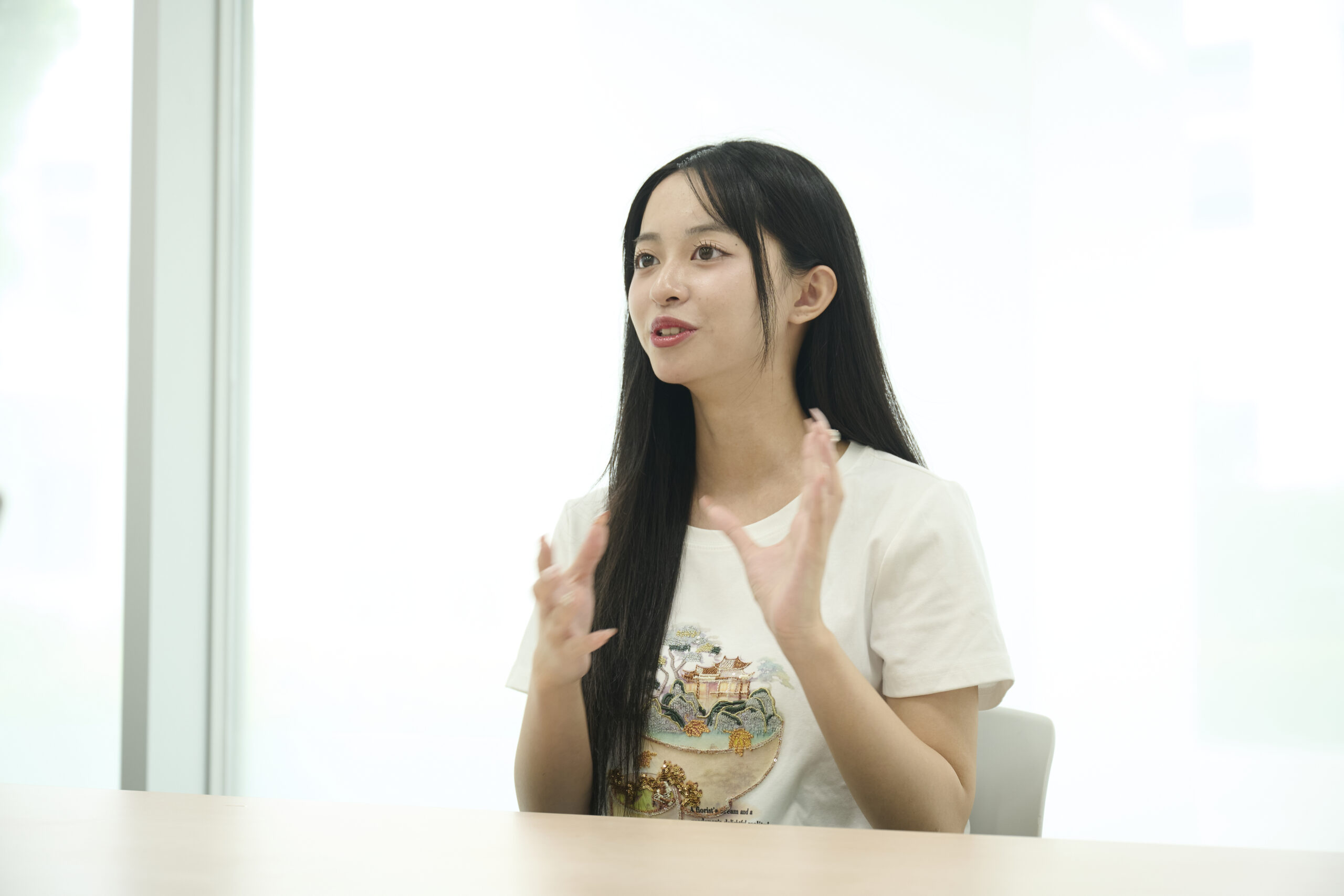
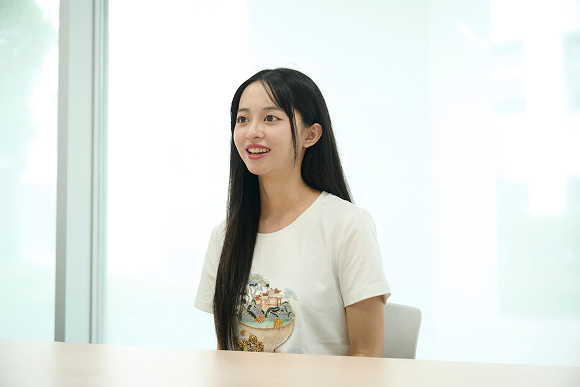
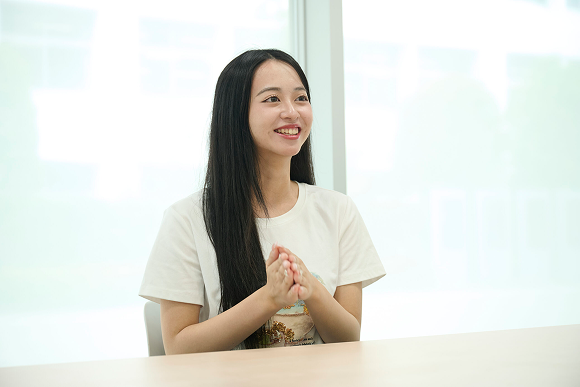
Leveraging the presentation skills she honed in high school, Mirai Kitayama entered Asia University through the comprehensive selection process. We spoke with her about the importance of putting one's thoughts into words, her interview preparation strategies, and her learning and challenges at university.
Q1. Please tell us the type and content of the entrance examination you took.
I took the comprehensive selection exam. The format involved submitting a pre-assignment and a self-introduction sheet, and then being asked questions based on their content during the interview. I felt that not only was the document screening important, but also how well I could clearly communicate my thoughts during the interview.
Q2. Please tell us your reasons for applying.
When I was struggling to decide on career options, I consulted with my school teacher, and because I was good at English, they advised me to consider an international university. I learned that Asia University offers a comprehensive study abroad program regardless of the faculty, and they recommended Faculty of International Relations where I could utilize my English skills. When I attended an open campus event, I was drawn to Department of Multicultural Communication because of the enjoyment of learning multiple languages, and that's when I decided to apply.
Q3. Why did you choose that particular entrance examination method, and what was the reason for your choice?
I chose the comprehensive selection process, partly due to the timing. I was particularly interested in multicultural understanding, so I focused my preparations solely on this department.
Q4. How did you go about preparing for the pre-assignment?
When creating my self-introduction sheet, I had limited time before the assignment deadline, but I consulted with my teacher and went through a lot of trial and error. I also received help from my friends, and together we explored my strengths and compiled them into a report.
Q5. What did you focus on when preparing for the interview?
I repeatedly conducted mock interviews, but since I tended to get used to the same teacher, I deliberately asked teachers I had less experience with to do them as well. As a result, I received feedback from multiple perspectives, which made for good practice. I also paid attention to small details such as eye contact, posture, and word choice. To avoid getting nervous during the actual interview, I asked various teachers to practice with a wide range of scenarios.

Please enter your text.
I'd like to hear about your experience taking the comprehensive selection entrance examination.
I took the comprehensive selection exam. The format involved submitting a pre-assignment and a self-introduction sheet, and then being asked questions based on their content during the interview. I felt that not only was the document screening important, but also how well I could clearly communicate my thoughts during the interview.
Q2. Please tell us your reasons for applying.
When I was struggling to decide on career options, I consulted with my school teacher, and because I was good at English, they advised me to consider an international university. I learned that Asia University offers a comprehensive study abroad program regardless of the faculty, and they recommended Faculty of International Relations where I could utilize my English skills. When I attended an open campus event, I was drawn to Department of Multicultural Communication because of the enjoyment of learning multiple languages, and that's when I decided to apply.
Q3. Why did you choose that particular entrance examination method, and what was the reason for your choice?
I chose the comprehensive selection process, partly due to the timing. I was particularly interested in multicultural understanding, so I focused my preparations solely on this department.
Q4. How did you go about preparing for the pre-assignment?
When creating my self-introduction sheet, I had limited time before the assignment deadline, but I consulted with my teacher and went through a lot of trial and error. I also received help from my friends, and together we explored my strengths and compiled them into a report.
Q5. What did you focus on when preparing for the interview?
I repeatedly conducted mock interviews, but since I tended to get used to the same teacher, I deliberately asked teachers I had less experience with to do them as well. As a result, I received feedback from multiple perspectives, which made for good practice. I also paid attention to small details such as eye contact, posture, and word choice. To avoid getting nervous during the actual interview, I asked various teachers to practice with a wide range of scenarios.
Please enter your text.
Please tell me about strategies and preparations for the entrance exam.
Q6. Please tell us about the reference books you used and the videos you used to study for the exam.
I didn't use any special textbooks or videos; I focused solely on interview practice. The fact that there was no written exam was also one of the reasons I chose this admission method.
Q7. What was the content of the actual interview like?
The interview was conducted by one male and one female interviewer, and the relaxed atmosphere helped me feel at ease. I believe I was able to convey what I had prepared with a smile.
Q8. Please tell us what you were conscious of on the day of the exam, and any regrets you have about things you wish you had done differently.
The exam itself was substantial, but the train I took to the test center was significantly delayed, and I arrived just in time for the meeting. I recommend that future test-takers allow plenty of extra time.
I didn't use any special textbooks or videos; I focused solely on interview practice. The fact that there was no written exam was also one of the reasons I chose this admission method.
Q7. What was the content of the actual interview like?
The interview was conducted by one male and one female interviewer, and the relaxed atmosphere helped me feel at ease. I believe I was able to convey what I had prepared with a smile.
Q8. Please tell us what you were conscious of on the day of the exam, and any regrets you have about things you wish you had done differently.
The exam itself was substantial, but the train I took to the test center was significantly delayed, and I arrived just in time for the meeting. I recommend that future test-takers allow plenty of extra time.
Please enter your text.
Please tell me about your university life.
Q9. What is it like now that you're actually in university?
I was surprised by the amount of homework, but the subjects I'm learning are interesting, so I'm having fulfilling days. There are also plenty of study abroad programs, and I'm planning to study in South Korea for five months during the summer of my second year. In addition, I'm in charge of the Miss Contest section as a member of the organizing committee for the school festival, ""ASIA-SAI" Annual Student Festival," and I'm enjoying the process from the preparation stage. Furthermore, in the first week of school, there was an event called "Meeting Place (1 night, 2 days at Ito Onsen)" for all first-year students, which was a great opportunity to make friends.
Q10. Is there anything you would like to try in the future?
First, I'd like to study abroad. Through studying abroad, I want to improve my English skills and, in the future, try my hand at a career as an interpreter.
Q11. Please give a message to high school students who are considering taking the same entrance exam.
It's a good idea to clearly define your strengths and what you want to convey beforehand, and then make sure to communicate them thoroughly at least twice during the interview.
Also, please make sure to arrive at the venue with plenty of time to spare so you don't arrive late on the day of the exam!
I was surprised by the amount of homework, but the subjects I'm learning are interesting, so I'm having fulfilling days. There are also plenty of study abroad programs, and I'm planning to study in South Korea for five months during the summer of my second year. In addition, I'm in charge of the Miss Contest section as a member of the organizing committee for the school festival, ""ASIA-SAI" Annual Student Festival," and I'm enjoying the process from the preparation stage. Furthermore, in the first week of school, there was an event called "Meeting Place (1 night, 2 days at Ito Onsen)" for all first-year students, which was a great opportunity to make friends.
Q10. Is there anything you would like to try in the future?
First, I'd like to study abroad. Through studying abroad, I want to improve my English skills and, in the future, try my hand at a career as an interpreter.
Q11. Please give a message to high school students who are considering taking the same entrance exam.
It's a good idea to clearly define your strengths and what you want to convey beforehand, and then make sure to communicate them thoroughly at least twice during the interview.
Also, please make sure to arrive at the venue with plenty of time to spare so you don't arrive late on the day of the exam!
Please enter your text.
I'd like to ask you in detail about exam preparation and mindset.
Q12. Were there any people, words, or triggers that supported you?
I encouraged each other along with my friends who were taking university entrance exams at the same time. On the day the results were announced, we all gathered together, watched the results online, and celebrated our successes.
Q13. What did you gain from your experience of taking entrance exams?
I learned the importance of relying on others. First, I tried to complete tasks on my own, and then, by relying on teachers and friends, I was able to objectively identify my own strengths and positive qualities. Through interview practice, I also improved my speaking and listening skills.
I encouraged each other along with my friends who were taking university entrance exams at the same time. On the day the results were announced, we all gathered together, watched the results online, and celebrated our successes.
Q13. What did you gain from your experience of taking entrance exams?
I learned the importance of relying on others. First, I tried to complete tasks on my own, and then, by relying on teachers and friends, I was able to objectively identify my own strengths and positive qualities. Through interview practice, I also improved my speaking and listening skills.