Looking for a change of pace? How about a stroll around campus with a vocabulary notebook in hand?!
Without attending cram school, I passed the entrance exam for Department of Economics using my own study methods.
Without attending cram school, I passed the entrance exam for Department of Economics using my own study methods.
# Entrance exam preparation experiences
Mion Nakane
Faculty of Business Administration Department of Economics
2025.01.31
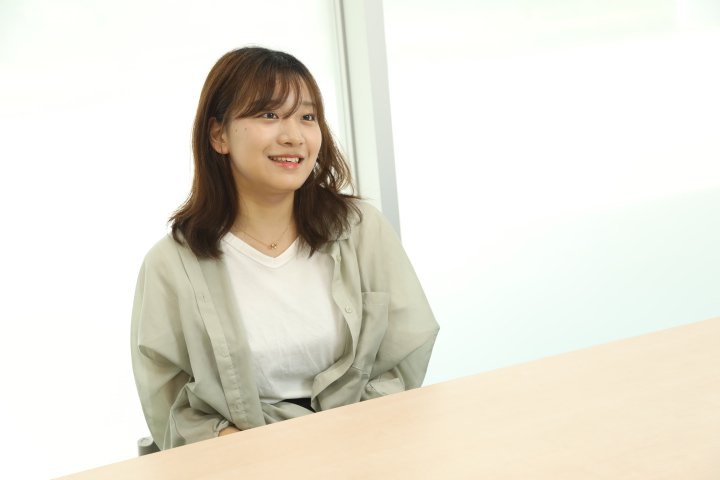
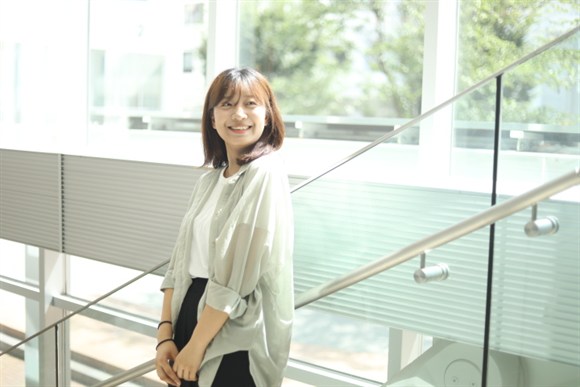
This time, we interviewed Mion Nakane, a first-year student in the Department Faculty of Economics, Department of Economics. Ms. Nakane took the general entrance examination, which is a "three-subject type" exam where admission is determined by the scores of three subjects.
We asked about her unique study methods for passing exams without attending cram school, and what she wants to accomplish during her university life.
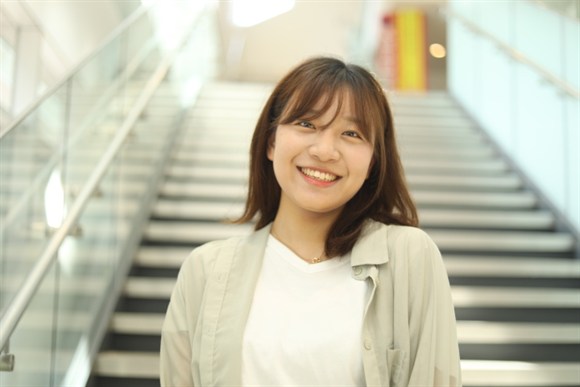
We asked about her unique study methods for passing exams without attending cram school, and what she wants to accomplish during her university life.
Please enter your text.
I'd like to ask about the entrance examination system used to get into Asia University.
Q1. Please tell us the type of entrance examination you took and the subjects you took.
I entered Asia University through the general entrance examination, which consists of three subjects: English, Japanese, and Mathematics.
Q2. Why did you choose that particular entrance examination method, and what was the reason for your choice?
Apparently, math was his strongest subject during high school.
Furthermore, when I solved past exam questions, my results in both my strong subject, math, and my weak subject, English, were fairly consistent and didn't fluctuate much, so I thought that the three-subject format might suit me.
Q3. What were your reasons for choosing your current faculty?
When I was a student preparing for university entrance exams, I hadn't decided which faculty to enter until the very last minute. However, I learned that obtaining the Japan Chamber of Commerce and Industry Bookkeeping Examination while studying Faculty of Economics would be useful in my future career, so I decided to enter Faculty of Economics in order to obtain that certification.
Q4. What kind of preparations did you make for the exam?
In mathematics, instead of solving many new problems, I focused on repeatedly solving problems I had already solved to improve my speed and accuracy. I believe it's more important to steadily improve your problem-solving skills than to try new problems and risk not getting good grades.
Since Japanese and English involve a variety of texts, I think it's best to expose yourself to many different types of texts so you can handle any kind that comes along. However, for mathematics, repeatedly solving problems you've already solved might be a good approach. As for English, which I struggled with, I used to go to my high school English teacher, whose lessons I found easy to understand, during after-school hours or lunch breaks to ask questions about problems I didn't understand.
Regarding the problems, I used workbooks and other materials I used in high school rather than past university entrance exam questions. I probably solved about two or three years' worth of past questions. I was able to solve the university entrance exam questions fairly easily, so I used the workbooks to solve more difficult problems and build my confidence.
I entered Asia University through the general entrance examination, which consists of three subjects: English, Japanese, and Mathematics.
Q2. Why did you choose that particular entrance examination method, and what was the reason for your choice?
Apparently, math was his strongest subject during high school.
Furthermore, when I solved past exam questions, my results in both my strong subject, math, and my weak subject, English, were fairly consistent and didn't fluctuate much, so I thought that the three-subject format might suit me.
Q3. What were your reasons for choosing your current faculty?
When I was a student preparing for university entrance exams, I hadn't decided which faculty to enter until the very last minute. However, I learned that obtaining the Japan Chamber of Commerce and Industry Bookkeeping Examination while studying Faculty of Economics would be useful in my future career, so I decided to enter Faculty of Economics in order to obtain that certification.
Q4. What kind of preparations did you make for the exam?
In mathematics, instead of solving many new problems, I focused on repeatedly solving problems I had already solved to improve my speed and accuracy. I believe it's more important to steadily improve your problem-solving skills than to try new problems and risk not getting good grades.
Since Japanese and English involve a variety of texts, I think it's best to expose yourself to many different types of texts so you can handle any kind that comes along. However, for mathematics, repeatedly solving problems you've already solved might be a good approach. As for English, which I struggled with, I used to go to my high school English teacher, whose lessons I found easy to understand, during after-school hours or lunch breaks to ask questions about problems I didn't understand.
Regarding the problems, I used workbooks and other materials I used in high school rather than past university entrance exam questions. I probably solved about two or three years' worth of past questions. I was able to solve the university entrance exam questions fairly easily, so I used the workbooks to solve more difficult problems and build my confidence.
Q5. What do you think are the best things about attending Asia University?
I'm in Faculty of Economics, and the university has a very well-established study abroad program. Before entering university, I wasn't interested in studying abroad, but now I find it very appealing. I'm also happy that I can easily attend study abroad information sessions. Currently, I'm studying Korean as my second foreign language, and while I'd like to study in Korea if I were to study abroad, I'd also like to go to an English-speaking country like the United States to improve my English.
The Freshman English class is also very appealing. The teachers are native speakers, and sometimes their pronunciation is so good that it's difficult to understand. However, the native speakers are friendly and approachable, and their personalities make the classes very enjoyable. Even high school students who struggle with English right now will surely come to love English through Freshman English.
Q6. What do you want to work on during your university life going forward?
I'm hoping to take the Japan Chamber of Commerce and Industry Bookkeeping Examination. I'm also studying accounting. My teachers sometimes recommend useful qualifications and certifications for job hunting during class, and they even go into detail about which level I should aim for. Furthermore, I want to broaden my perspective and gain more knowledge through things like studying abroad.
Q7. Please tell us about your dreams and goals for the future.
While studying accounting, I developed an interest in finance. I now hope to work in a finance-related field. To achieve this, I want to engage in various studies and make the most of my university life.
I'm in Faculty of Economics, and the university has a very well-established study abroad program. Before entering university, I wasn't interested in studying abroad, but now I find it very appealing. I'm also happy that I can easily attend study abroad information sessions. Currently, I'm studying Korean as my second foreign language, and while I'd like to study in Korea if I were to study abroad, I'd also like to go to an English-speaking country like the United States to improve my English.
The Freshman English class is also very appealing. The teachers are native speakers, and sometimes their pronunciation is so good that it's difficult to understand. However, the native speakers are friendly and approachable, and their personalities make the classes very enjoyable. Even high school students who struggle with English right now will surely come to love English through Freshman English.
Q6. What do you want to work on during your university life going forward?
I'm hoping to take the Japan Chamber of Commerce and Industry Bookkeeping Examination. I'm also studying accounting. My teachers sometimes recommend useful qualifications and certifications for job hunting during class, and they even go into detail about which level I should aim for. Furthermore, I want to broaden my perspective and gain more knowledge through things like studying abroad.
Q7. Please tell us about your dreams and goals for the future.
While studying accounting, I developed an interest in finance. I now hope to work in a finance-related field. To achieve this, I want to engage in various studies and make the most of my university life.
Please enter your text.
I'd like to ask you in detail about exam preparation and mindset.
Q8. Do you have any recommended countermeasures?
For math, I think it's better to repeatedly review the textbooks you already have rather than buying new ones. Also, for Japanese language studies, reading printed books is the best way to learn kanji. I actually read a lot of novels, and thanks to that, I was able to read vocabulary while others struggled. Reading novels also improves reading comprehension, so I highly recommend it.
Novels contain more human emotions than academic papers. That's why I think you become better at reading emotions from texts. I was a science student, but I loved reading books, so I was able to consistently get good grades in Japanese language arts thanks to that.
Q9. What were some of the difficulties you faced in preparing for the exam?
I've always been the type of person who doesn't have much concentration. If it's something I enjoy, like reading a book, I can sit in a chair for a long time, but when it comes to studying, I tend to lose focus.
Q10. Do you have any recommended ways to change your mood?
My friends and I would walk around the school with our vocabulary notebooks to clear our heads. Our high school had four floors, and we would climb the stairs with our notebooks, quizzing each other, going all the way to the teachers' room, or peeking into the first-year classrooms for the first time in a while.
I was worried about not going to cram school, but with the help of my school teachers after school, I think I was able to study effectively.
Q11. What did you gain from your experience of taking entrance exams?
Through my exam preparation, I gained concentration and a sense of fulfillment from my efforts. Because I'm naturally easily bored, there were times I wanted to give up, but I was incredibly happy when I mastered the knowledge I'd studied and was able to solve difficult problems. I believe that sense of accomplishment is what makes studying and gaining knowledge at university so enjoyable now.
Q12. Please give a message to high school students who will be taking the same entrance exam.
There will be times when your studies don't yield the results you expect, and you'll likely experience emotionally challenging times. However, you'll now feel a sense of accomplishment for overcoming the challenges of entrance exams and becoming a university student. Through studying for these exams, you'll gain not only knowledge but also skills like concentration and perseverance. Work hard now so that you can fully enjoy your university life in the future.
For general entrance exams, how well you perform on the day of the exam greatly influences whether you pass or fail. However, as was the case for me, very few people can perform at 100% of their ability on the day. What's important is how high you can raise 80% or 90% of your ability. Imagine your future at Asia University and work hard to make it a reality.
For math, I think it's better to repeatedly review the textbooks you already have rather than buying new ones. Also, for Japanese language studies, reading printed books is the best way to learn kanji. I actually read a lot of novels, and thanks to that, I was able to read vocabulary while others struggled. Reading novels also improves reading comprehension, so I highly recommend it.
Novels contain more human emotions than academic papers. That's why I think you become better at reading emotions from texts. I was a science student, but I loved reading books, so I was able to consistently get good grades in Japanese language arts thanks to that.
Q9. What were some of the difficulties you faced in preparing for the exam?
I've always been the type of person who doesn't have much concentration. If it's something I enjoy, like reading a book, I can sit in a chair for a long time, but when it comes to studying, I tend to lose focus.
Q10. Do you have any recommended ways to change your mood?
My friends and I would walk around the school with our vocabulary notebooks to clear our heads. Our high school had four floors, and we would climb the stairs with our notebooks, quizzing each other, going all the way to the teachers' room, or peeking into the first-year classrooms for the first time in a while.
I was worried about not going to cram school, but with the help of my school teachers after school, I think I was able to study effectively.
Q11. What did you gain from your experience of taking entrance exams?
Through my exam preparation, I gained concentration and a sense of fulfillment from my efforts. Because I'm naturally easily bored, there were times I wanted to give up, but I was incredibly happy when I mastered the knowledge I'd studied and was able to solve difficult problems. I believe that sense of accomplishment is what makes studying and gaining knowledge at university so enjoyable now.
Q12. Please give a message to high school students who will be taking the same entrance exam.
There will be times when your studies don't yield the results you expect, and you'll likely experience emotionally challenging times. However, you'll now feel a sense of accomplishment for overcoming the challenges of entrance exams and becoming a university student. Through studying for these exams, you'll gain not only knowledge but also skills like concentration and perseverance. Work hard now so that you can fully enjoy your university life in the future.
For general entrance exams, how well you perform on the day of the exam greatly influences whether you pass or fail. However, as was the case for me, very few people can perform at 100% of their ability on the day. What's important is how high you can raise 80% or 90% of your ability. Imagine your future at Asia University and work hard to make it a reality.