With a unique study method, grades skyrocketed! Passed the university-wide entrance exam and enjoyed an active student life with an eye on the future.


# Entrance exam preparation experiences
Kounosuke Takaku
Faculty of Economics Department of Economics
2023.10.12
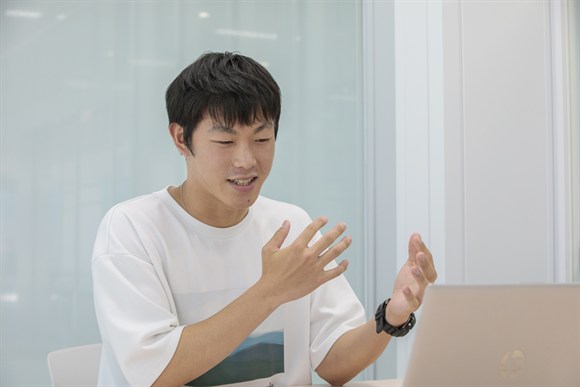
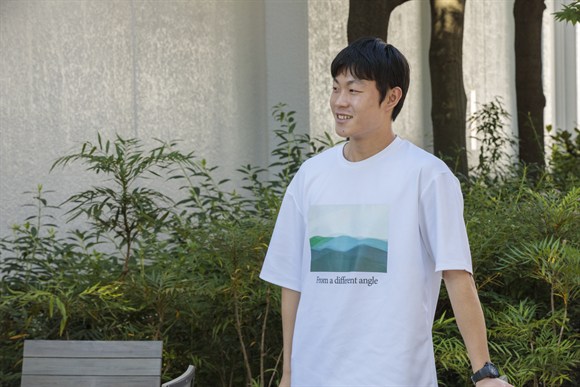
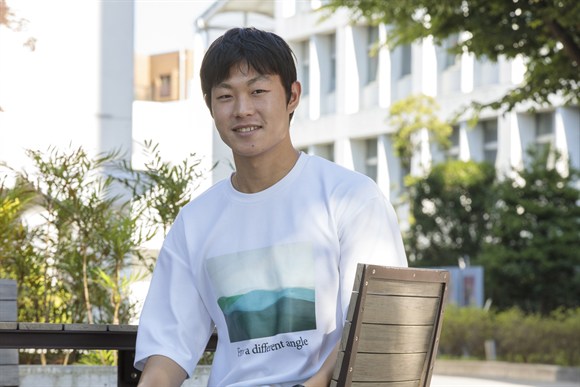
This time, we interviewed Kounosuke Takaku, a first-year student in the Department Faculty of Economics, Department of Economics. Takaku took the university-wide entrance exam because he believed that knowledge of economics would be essential when he entered the workforce. We asked him about his unique study methods, which resulted in a dramatic improvement in his English scores just before the exam, and about the various activities he is undertaking with an eye on the future.
Please enter your text.
I'd like to ask about student life at Asia University.
Q1. Please tell us your reasons for choosing to Department of Economics Faculty of Economics Asia University.
When I consulted my father about career options, he said, "No matter what profession you choose, knowledge of economics is essential. My biggest regret is not studying economics," and those words really resonated with me. My father, who studied law before taking over the family business, spoke with great weight, and when I thought about my own future, I realized that no matter what I do, I should understand economics and the world around me.
Q2. Were there any differences between your expectations before entering university and your expectations after entering university?
One thing I've noticed is that there are a lot of events. An "English Cafe" is held after school on Tuesdays and Thursdays where you can have conversations with native English-speaking Lecturer, and I try to participate every time. In the past, I often struggled to find the right words when speaking. However, when I was able to naturally use the expressions I had learned through reading in conversation, I felt that my English skills were improving. Also, there are many events that are beneficial for the future, such as a "Career Fair" where you can actually hear from alumni, and the fact that the university provides such strong support for students is also a big draw.
Q3. What are you currently studying?
I'm learning the fundamentals of economics, including various indicators that represent a country's economic strength. Economics often uses mathematics to describe events, so I'm also using functions and other mathematical tools to determine optimal prices for both producers and consumers. Even in my daily life, I'm now able to look at how prices are determined from an economic perspective, and my view of things has changed since I started studying economics.
Q4. If there are any courses you took that you found worthwhile, please tell us the course name and why.
This is [Basic Mathematics for Economics I]. As I mentioned earlier, mathematics is indispensable for explaining economics, and the content of this course, which teaches mathematics from the basics and applies it to economics, will be useful in other economics classes as well. Furthermore, it is a class that encourages students to proactively engage in activities such as trying to calculate real-world phenomena.
When I consulted my father about career options, he said, "No matter what profession you choose, knowledge of economics is essential. My biggest regret is not studying economics," and those words really resonated with me. My father, who studied law before taking over the family business, spoke with great weight, and when I thought about my own future, I realized that no matter what I do, I should understand economics and the world around me.
Q2. Were there any differences between your expectations before entering university and your expectations after entering university?
One thing I've noticed is that there are a lot of events. An "English Cafe" is held after school on Tuesdays and Thursdays where you can have conversations with native English-speaking Lecturer, and I try to participate every time. In the past, I often struggled to find the right words when speaking. However, when I was able to naturally use the expressions I had learned through reading in conversation, I felt that my English skills were improving. Also, there are many events that are beneficial for the future, such as a "Career Fair" where you can actually hear from alumni, and the fact that the university provides such strong support for students is also a big draw.
Q3. What are you currently studying?
I'm learning the fundamentals of economics, including various indicators that represent a country's economic strength. Economics often uses mathematics to describe events, so I'm also using functions and other mathematical tools to determine optimal prices for both producers and consumers. Even in my daily life, I'm now able to look at how prices are determined from an economic perspective, and my view of things has changed since I started studying economics.
Q4. If there are any courses you took that you found worthwhile, please tell us the course name and why.
This is [Basic Mathematics for Economics I]. As I mentioned earlier, mathematics is indispensable for explaining economics, and the content of this course, which teaches mathematics from the basics and applies it to economics, will be useful in other economics classes as well. Furthermore, it is a class that encourages students to proactively engage in activities such as trying to calculate real-world phenomena.
Q5. Are there any activities you've been involved in since enrolling, other than studying?
My activities include volunteering at a national youth education facility, working part-time as a student at Library (Library Administration), and working in Student’s Association Financial Affairs Bureau.
Q6. First, please tell us about your volunteer experience at the National Youth Education Facility.
I participated as part of my teacher training coursework. To qualify as a volunteer at a youth education facility, I had to attend a seminar beforehand. At the National Akagi Youth Exchange Center, I learned essential volunteer skills such as outdoor cooking and first aid from a wide range of ages, from high school students to working adults. I have fond memories of making curry together with the other trainees, starting from stoking the fire.
Q7. What prompted you to start working part-time at Library (Library Administration) as a student?
It all started when I happened to see a sign advertising for part-time work during the entrance ceremony. Although it was originally intended for second-year students and above, I had an interview and, thankfully, was hired. My duties include assisting at the counter, organizing the shelves (tidying up books), and helping with closing. I myself enjoy reading, and since starting university, I've been reading about two books a week, mainly on economics.
Q8. Please tell us about your activities in Student’s Association Financial Affairs Bureau.
We haven't really started our full-fledged activities yet, but I joined because I wanted to gain some basic knowledge about finance. I also wanted to build connections across different faculties and departments. Right now, we're planning what to sell and how much it will cost to set up a stall at "ASIA-SAI" Annual Student Festival.
Q9. What do you think are the best things about attending Asia University?
What I find appealing about this university is the excellent learning environment. I was drawn to the diverse learning environment, including ample study spaces and a well-equipped Library (Library Administration), qualification acquisition support programs, and study abroad support programs. I plan to utilize these support programs to obtain a bookkeeping qualification, and I also intend to study in Australia through Asia University Global Program (AUGP) and complete an internship at a local company.
My activities include volunteering at a national youth education facility, working part-time as a student at Library (Library Administration), and working in Student’s Association Financial Affairs Bureau.
Q6. First, please tell us about your volunteer experience at the National Youth Education Facility.
I participated as part of my teacher training coursework. To qualify as a volunteer at a youth education facility, I had to attend a seminar beforehand. At the National Akagi Youth Exchange Center, I learned essential volunteer skills such as outdoor cooking and first aid from a wide range of ages, from high school students to working adults. I have fond memories of making curry together with the other trainees, starting from stoking the fire.
Q7. What prompted you to start working part-time at Library (Library Administration) as a student?
It all started when I happened to see a sign advertising for part-time work during the entrance ceremony. Although it was originally intended for second-year students and above, I had an interview and, thankfully, was hired. My duties include assisting at the counter, organizing the shelves (tidying up books), and helping with closing. I myself enjoy reading, and since starting university, I've been reading about two books a week, mainly on economics.
Q8. Please tell us about your activities in Student’s Association Financial Affairs Bureau.
We haven't really started our full-fledged activities yet, but I joined because I wanted to gain some basic knowledge about finance. I also wanted to build connections across different faculties and departments. Right now, we're planning what to sell and how much it will cost to set up a stall at "ASIA-SAI" Annual Student Festival.
Q9. What do you think are the best things about attending Asia University?
What I find appealing about this university is the excellent learning environment. I was drawn to the diverse learning environment, including ample study spaces and a well-equipped Library (Library Administration), qualification acquisition support programs, and study abroad support programs. I plan to utilize these support programs to obtain a bookkeeping qualification, and I also intend to study in Australia through Asia University Global Program (AUGP) and complete an internship at a local company.
Please enter your text.
I'd like to ask about the entrance examination method used to get into Asia University.
Q1. Please tell us the type of entrance examination you took and the subjects you took.
This was the university-wide unified entrance exam, mid-term. The subjects were Japanese (excluding classical Japanese and classical Chinese) and English.
Q2. Do you have any advice for those who will be taking the exam in the future?
Regardless of the entrance exam format, I recommend that you first try solving past exam questions to understand your current level and then decide what you need to do, taking into account the remaining time.
Q3. What kind of measures do you think should be taken during the autumn season? Also, please tell me about any measures you think would be effective in the period immediately before the exam, starting with Japanese language.
Regarding Japanese language studies, I spent this period simply solving problems. While learning how to solve reading comprehension tests is important, I felt it was more efficient to increase the amount of practice problems I solved on my own to fundamentally improve my reading comprehension. To be honest, I initially had a fear of long passages. To overcome this, I started with short passages at a level I could read, which I think ultimately had a positive effect. In the days leading up to the exam, I recommend reviewing the problems you got wrong and trying to solve them again.
Q4. How about your English skills?
For English, I focused on vocabulary, grammar, and reading aloud in a balanced way. Among these, a turning point in my English studies was when my tutor told me, "It's a language, so you need to move your mouth when you read and write." Even in reading tests, I feel like I can't answer the questions unless I can read the English text aloud fluently. There are many learning materials available online, so it's important to repeat the pronunciation of native speakers. If you don't move on to reading after you can pronounce the words, you might find yourself thinking about how to pronounce them midway through, causing you to stumble. However, by persistently continuing to read aloud, I gradually became able to understand the meaning of the English text at the same speed as I read it. I believe your English grades will continue to improve until the very end, so I think you should continue the learning you did in the fall. This is because my English grades nearly doubled in the one to two months before the exam.
Despite focusing my exam preparation on English, I was frustrated that my grades weren't improving. There were times when I doubted my study methods, but by continuing to read aloud without giving up until the very end, I achieved a significant improvement in my grades, and I realized the importance of believing in myself and persevering.
Q5. Are there any study methods that you found particularly helpful?
In Japanese language studies, I learned problem-solving techniques from my high school teacher and tried them out starting with the next problem. For example, by dividing the text into sections—the flow of the first half, the flow of the middle section, etc.—I deepened my understanding and it became a starting point for reading texts more effectively. In English, shadowing, where you listen to audio materials and read the text following along like a shadow, was a very effective study method. You have to understand the meaning as you go, and you can't just move your mouth without understanding, so I started with simple English that I could understand. As a result, I was able to pronounce words correctly and my reading speed increased.
Q6. Finally, do you have any advice for those taking the exam?
First, I think it's about repeatedly comparing your current self to your goal of passing the exam and working to bridge that gap. Knowing where you stand will boost your motivation, and having a goal that's just within reach but still a little out of your grasp is probably the most motivating thing you can do. Then, prepare with the mindset that you'll pass with a perfect score, with plenty of room to spare.
This was the university-wide unified entrance exam, mid-term. The subjects were Japanese (excluding classical Japanese and classical Chinese) and English.
Q2. Do you have any advice for those who will be taking the exam in the future?
Regardless of the entrance exam format, I recommend that you first try solving past exam questions to understand your current level and then decide what you need to do, taking into account the remaining time.
Q3. What kind of measures do you think should be taken during the autumn season? Also, please tell me about any measures you think would be effective in the period immediately before the exam, starting with Japanese language.
Regarding Japanese language studies, I spent this period simply solving problems. While learning how to solve reading comprehension tests is important, I felt it was more efficient to increase the amount of practice problems I solved on my own to fundamentally improve my reading comprehension. To be honest, I initially had a fear of long passages. To overcome this, I started with short passages at a level I could read, which I think ultimately had a positive effect. In the days leading up to the exam, I recommend reviewing the problems you got wrong and trying to solve them again.
Q4. How about your English skills?
For English, I focused on vocabulary, grammar, and reading aloud in a balanced way. Among these, a turning point in my English studies was when my tutor told me, "It's a language, so you need to move your mouth when you read and write." Even in reading tests, I feel like I can't answer the questions unless I can read the English text aloud fluently. There are many learning materials available online, so it's important to repeat the pronunciation of native speakers. If you don't move on to reading after you can pronounce the words, you might find yourself thinking about how to pronounce them midway through, causing you to stumble. However, by persistently continuing to read aloud, I gradually became able to understand the meaning of the English text at the same speed as I read it. I believe your English grades will continue to improve until the very end, so I think you should continue the learning you did in the fall. This is because my English grades nearly doubled in the one to two months before the exam.
Despite focusing my exam preparation on English, I was frustrated that my grades weren't improving. There were times when I doubted my study methods, but by continuing to read aloud without giving up until the very end, I achieved a significant improvement in my grades, and I realized the importance of believing in myself and persevering.
Q5. Are there any study methods that you found particularly helpful?
In Japanese language studies, I learned problem-solving techniques from my high school teacher and tried them out starting with the next problem. For example, by dividing the text into sections—the flow of the first half, the flow of the middle section, etc.—I deepened my understanding and it became a starting point for reading texts more effectively. In English, shadowing, where you listen to audio materials and read the text following along like a shadow, was a very effective study method. You have to understand the meaning as you go, and you can't just move your mouth without understanding, so I started with simple English that I could understand. As a result, I was able to pronounce words correctly and my reading speed increased.
Q6. Finally, do you have any advice for those taking the exam?
First, I think it's about repeatedly comparing your current self to your goal of passing the exam and working to bridge that gap. Knowing where you stand will boost your motivation, and having a goal that's just within reach but still a little out of your grasp is probably the most motivating thing you can do. Then, prepare with the mindset that you'll pass with a perfect score, with plenty of room to spare.