The mock lesson was the deciding factor in my choice of school.
A record of my exam preparation as I took my first step towards becoming a certified social researcher.
A record of my exam preparation as I took my first step towards becoming a certified social researcher.
# Entrance exam preparation experiences
Arisa Tokunaga
Faculty of Sociology Department of Contemporary Sociology
Entrance examination method: Comprehensive selection
Entrance examination method: Comprehensive selection
2025.07.18
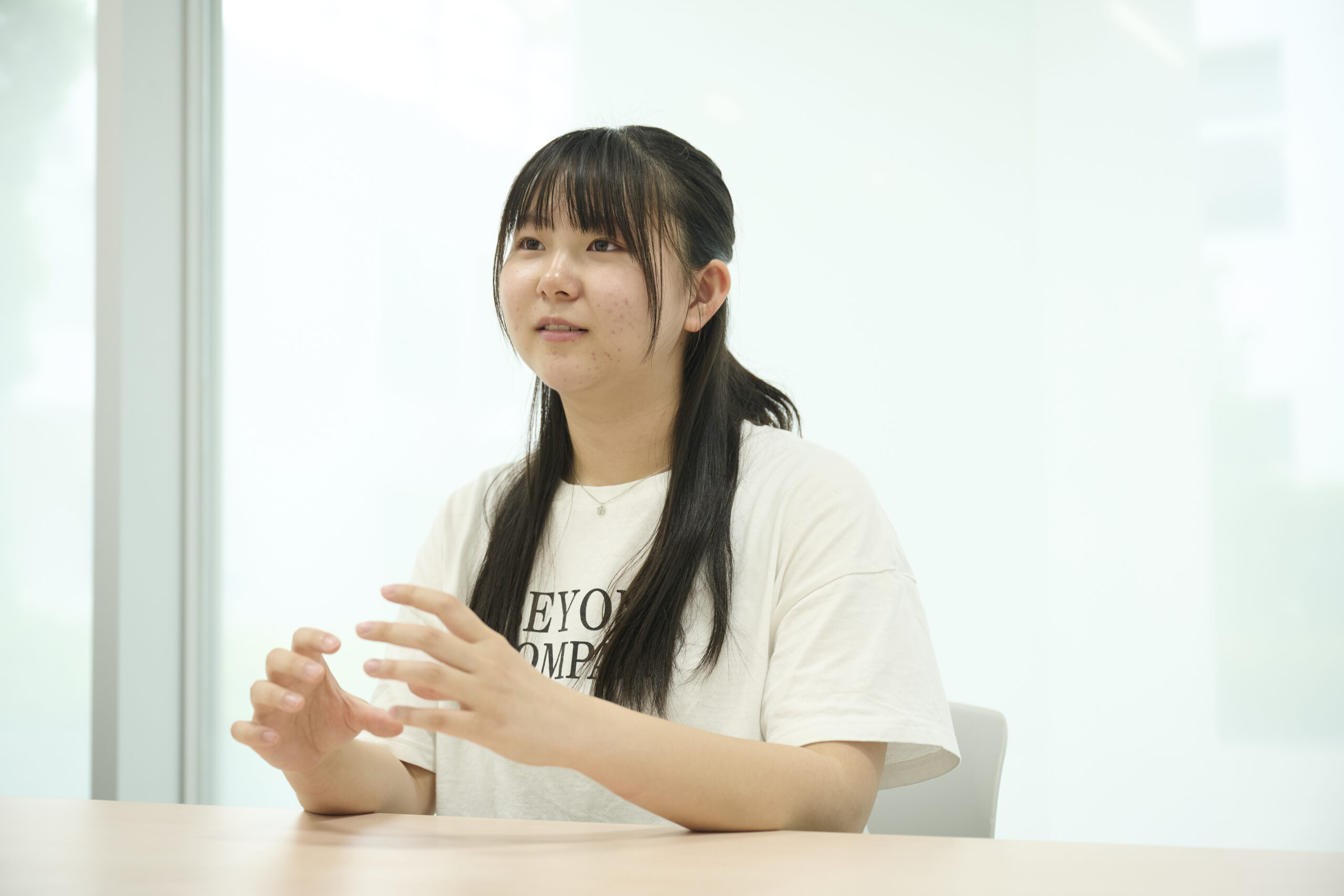
This time, we interviewed Arisa Tokunaga, a first-year student in the Department of Contemporary Society, Faculty of Sociology.
Inspired by a mock lecture, Ms. Tokunaga decided to take the entrance exam and diligently prepared for the comprehensive selection process. She shared her experiences of finding her own voice with the support of many people, the joys of university life, and her aspirations for the future.
Q1. Please tell us the type and content of the entrance examination you took.
I took the comprehensive selection exam. It consisted of a self-introduction sheet, a pre-assignment, and an interview. There was no essay or written test; the format focused on assessing my ability to communicate clearly through words.
Q2. Why did you choose that entrance examination method?
In high school, I served as student Executive chair, Board of Directors, and I was looking for an admissions method that would reflect that experience. I felt that an interview where I could express my thoughts and what I had worked hard on would suit me better than an academic test, so I chose the comprehensive selection process. The fact that it allowed me to decide on my future career options relatively early was also appealing.
Q3. What were your reasons for choosing your current faculty?
I was very impressed by a mock class on game mechanics (the know-how to make games addictive) that I happened to attend at the open campus, and I wanted to learn more about it.
The fact that I could obtain the Social Researcher qualification by taking a series of courses in my current faculty, and that I could learn about the workings of society in a broad sense, were also major attractions.
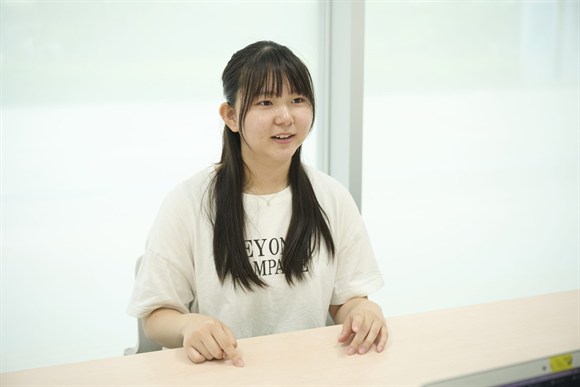

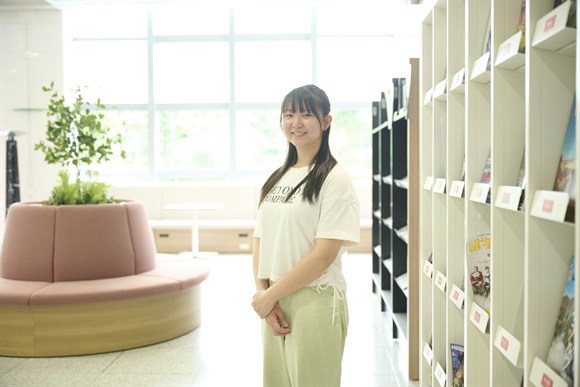
Inspired by a mock lecture, Ms. Tokunaga decided to take the entrance exam and diligently prepared for the comprehensive selection process. She shared her experiences of finding her own voice with the support of many people, the joys of university life, and her aspirations for the future.
Please enter your text.
I'd like to hear about your experience taking the comprehensive selection entrance examination.
I took the comprehensive selection exam. It consisted of a self-introduction sheet, a pre-assignment, and an interview. There was no essay or written test; the format focused on assessing my ability to communicate clearly through words.
Q2. Why did you choose that entrance examination method?
In high school, I served as student Executive chair, Board of Directors, and I was looking for an admissions method that would reflect that experience. I felt that an interview where I could express my thoughts and what I had worked hard on would suit me better than an academic test, so I chose the comprehensive selection process. The fact that it allowed me to decide on my future career options relatively early was also appealing.
Q3. What were your reasons for choosing your current faculty?
I was very impressed by a mock class on game mechanics (the know-how to make games addictive) that I happened to attend at the open campus, and I wanted to learn more about it.
The fact that I could obtain the Social Researcher qualification by taking a series of courses in my current faculty, and that I could learn about the workings of society in a broad sense, were also major attractions.
Please enter your text.
Please tell me about strategies and preparations for the entrance exam.
Q4. What kind of preparations did you make for the exam?
I had to write a personal recommendation letter (800 characters), a statement of purpose for choosing my faculty (800 characters), and a statement about my future dreams (400 characters), which was quite challenging.
At that time, a senior from my high school, who had entered Asia University a year earlier through the comprehensive entrance exam, helped me out by telling me things like "you should carefully check the syllabus," and drawing a map outlining my strengths and weaknesses. I received a lot of advice from her.
I had my school teachers proofread my writing many times, and they helped me make sure that what I wanted to convey was clearly communicated. I also asked my school teachers and parents to conduct mock interviews, and I even videotaped myself to review the footage. I made sure to choose my words carefully, keeping in mind the key points I wanted to say before leaving.
Q5. Please tell us about any reference books, videos, etc. that you used.
I used a reference book called "55 Rules for Comprehensive and School Recommendation-Based Selection" to learn tips and mindsets for interview preparation. In particular, the examples of actual conversations, which included illustrations, were easy to understand and helpful.
In addition, I utilized the YouTube channel "AOI Channel [Comprehensive Selection & University Information]," which specializes in comprehensive admissions. It was practical and easy to understand.
Q6. Please tell me about the atmosphere and content of the exam venue on the day of the test.
On the day of the interview, upon arriving at the school, we gathered in a large classroom in Building 5, and then were guided in order when our names were called in the waiting room in Building 7. The interview was conducted by two male interviewers and two applicants. The first question was "What did you work hard on in high school?", but I was so nervous that I completely forgot... The interviewers were considerate and encouraged the other applicant to speak first instead of me, but when it was my turn, I still couldn't remember. Then, one of the interviewers said, "I know you worked hard as student Executive chair, Board of Directors in high school, so it's okay!"
I felt a little relieved when you called, and I was able to talk to you.
The next question was, "Why did you choose to apply to the newly established Department of Contemporary Society in the Faculty of Sociology?" Thanks to my thorough preparation beforehand, I was able to speak at my own pace.
Other questions included "What are your dreams for the future?", "What are the pre-assignment tasks?", and "What do you want to work hard on once you enter university?".
The interview itself felt short, but I think it was about 15 minutes long.
Q7. What were you conscious of on the day of the exam, and what do you regret?
My lack of practice was a source of anxiety, so I wish I had set aside some time before the actual interview to recall what I wanted to say. If I had done more mock interviews, I think I could have spoken more calmly even when I was nervous.
Also, I recommend going to the restroom while waiting in the dressing room, smiling at yourself in the mirror, and saying "You'll be alright!" as it helped calm you down!
I had to write a personal recommendation letter (800 characters), a statement of purpose for choosing my faculty (800 characters), and a statement about my future dreams (400 characters), which was quite challenging.
At that time, a senior from my high school, who had entered Asia University a year earlier through the comprehensive entrance exam, helped me out by telling me things like "you should carefully check the syllabus," and drawing a map outlining my strengths and weaknesses. I received a lot of advice from her.
I had my school teachers proofread my writing many times, and they helped me make sure that what I wanted to convey was clearly communicated. I also asked my school teachers and parents to conduct mock interviews, and I even videotaped myself to review the footage. I made sure to choose my words carefully, keeping in mind the key points I wanted to say before leaving.
Q5. Please tell us about any reference books, videos, etc. that you used.
I used a reference book called "55 Rules for Comprehensive and School Recommendation-Based Selection" to learn tips and mindsets for interview preparation. In particular, the examples of actual conversations, which included illustrations, were easy to understand and helpful.
In addition, I utilized the YouTube channel "AOI Channel [Comprehensive Selection & University Information]," which specializes in comprehensive admissions. It was practical and easy to understand.
Q6. Please tell me about the atmosphere and content of the exam venue on the day of the test.
On the day of the interview, upon arriving at the school, we gathered in a large classroom in Building 5, and then were guided in order when our names were called in the waiting room in Building 7. The interview was conducted by two male interviewers and two applicants. The first question was "What did you work hard on in high school?", but I was so nervous that I completely forgot... The interviewers were considerate and encouraged the other applicant to speak first instead of me, but when it was my turn, I still couldn't remember. Then, one of the interviewers said, "I know you worked hard as student Executive chair, Board of Directors in high school, so it's okay!"
I felt a little relieved when you called, and I was able to talk to you.
The next question was, "Why did you choose to apply to the newly established Department of Contemporary Society in the Faculty of Sociology?" Thanks to my thorough preparation beforehand, I was able to speak at my own pace.
Other questions included "What are your dreams for the future?", "What are the pre-assignment tasks?", and "What do you want to work hard on once you enter university?".
The interview itself felt short, but I think it was about 15 minutes long.
Q7. What were you conscious of on the day of the exam, and what do you regret?
My lack of practice was a source of anxiety, so I wish I had set aside some time before the actual interview to recall what I wanted to say. If I had done more mock interviews, I think I could have spoken more calmly even when I was nervous.
Also, I recommend going to the restroom while waiting in the dressing room, smiling at yourself in the mirror, and saying "You'll be alright!" as it helped calm you down!
Please enter your text.
Please tell me about your university life.
Q8. What do you think are the good things about attending university after enrolling?
The classes are enjoyable, and the subjects we learn are fascinating. At the university, each professor has a different teaching style; some professors keep the pace well, creating an environment where it's easy to concentrate. The variety of study abroad programs is also appealing, allowing me to develop an interest in many different countries.
Q9. What do you want to work on during your university life going forward?
I aim to obtain the Social Research Specialist qualification, and I want to broaden my knowledge and perspective by diligently attending classes.
Q10. Please tell us about your dreams and goals for the future.
I want to work in a job where I can plan products and services that are useful to people. I want to be someone who can understand societal issues and voices and connect them through my own words and actions.
Q11. Please give a message to high school students who will be taking the same entrance exam.
In classes and interviews, it's crucial to clearly express your desire to study at this school. Taking notes on classes that interest you during the open campus will help you articulate those ideas in your own words. And don't hesitate to ask for help from teachers, family, and friends. I believe that seeking advice instead of struggling alone is key to success.
The classes are enjoyable, and the subjects we learn are fascinating. At the university, each professor has a different teaching style; some professors keep the pace well, creating an environment where it's easy to concentrate. The variety of study abroad programs is also appealing, allowing me to develop an interest in many different countries.
Q9. What do you want to work on during your university life going forward?
I aim to obtain the Social Research Specialist qualification, and I want to broaden my knowledge and perspective by diligently attending classes.
Q10. Please tell us about your dreams and goals for the future.
I want to work in a job where I can plan products and services that are useful to people. I want to be someone who can understand societal issues and voices and connect them through my own words and actions.
Q11. Please give a message to high school students who will be taking the same entrance exam.
In classes and interviews, it's crucial to clearly express your desire to study at this school. Taking notes on classes that interest you during the open campus will help you articulate those ideas in your own words. And don't hesitate to ask for help from teachers, family, and friends. I believe that seeking advice instead of struggling alone is key to success.
Please enter your text.
I'd like to ask you in detail about exam preparation and mindset.
Q12. What were some of the difficulties you faced while studying for the entrance exam?
It was incredibly difficult to put into words all the hard work I had put in. I had the feelings, but I couldn't express them properly, and I ended up blaming myself and worrying about it many times.
Q13. What are your methods or triggers for overcoming a slump?
When I was troubled, the best thing I did was to talk about everything with someone. Putting it into words helped me organize my thoughts and regain a positive outlook.
Q14. Are there any people or words that have supported you?
I still remember the words "Let's do our best together" that my homeroom teacher said to me, and the advice, "If you decide to say this, you won't regret it." My friends' words of encouragement, "Let's do our best," also gave me a lot of strength.
Q15. What did you gain from your experience of taking entrance exams?
Putting my thoughts into words helped me develop the ability to articulate my dreams and strengths and communicate them to others. I believe that's what has led to my current confidence.
Q16. Do you have any amulets or items for making wishes?
The gummies in my favorite flavor that my parents gave me, and the messages I received from my friends on LINE, really gave me the strength to keep going. Conversely, I also gave my friends letters, so I think we were able to encourage each other.
It was incredibly difficult to put into words all the hard work I had put in. I had the feelings, but I couldn't express them properly, and I ended up blaming myself and worrying about it many times.
Q13. What are your methods or triggers for overcoming a slump?
When I was troubled, the best thing I did was to talk about everything with someone. Putting it into words helped me organize my thoughts and regain a positive outlook.
Q14. Are there any people or words that have supported you?
I still remember the words "Let's do our best together" that my homeroom teacher said to me, and the advice, "If you decide to say this, you won't regret it." My friends' words of encouragement, "Let's do our best," also gave me a lot of strength.
Q15. What did you gain from your experience of taking entrance exams?
Putting my thoughts into words helped me develop the ability to articulate my dreams and strengths and communicate them to others. I believe that's what has led to my current confidence.
Q16. Do you have any amulets or items for making wishes?
The gummies in my favorite flavor that my parents gave me, and the messages I received from my friends on LINE, really gave me the strength to keep going. Conversely, I also gave my friends letters, so I think we were able to encourage each other.