The consistent effort put in each day paid off on the day of the entrance exam, and I passed the university-wide entrance examination.
The prospect of a fulfilling foreign language education sparks a wide range of dreams.
The prospect of a fulfilling foreign language education sparks a wide range of dreams.
# Entrance exam preparation experiences
Megumi Ukai
Faculty of International Relations Department of International Relations
2023.12.21
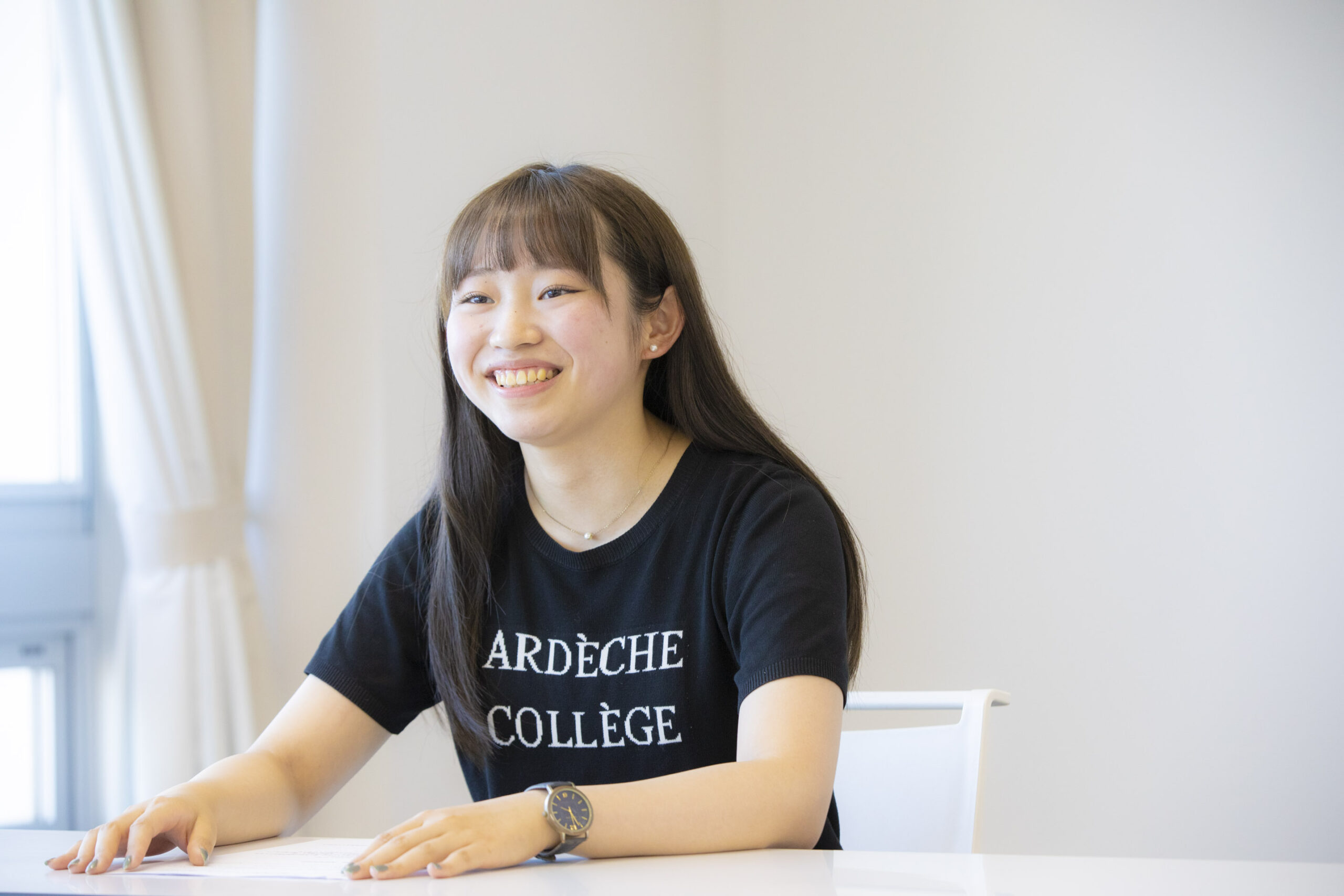
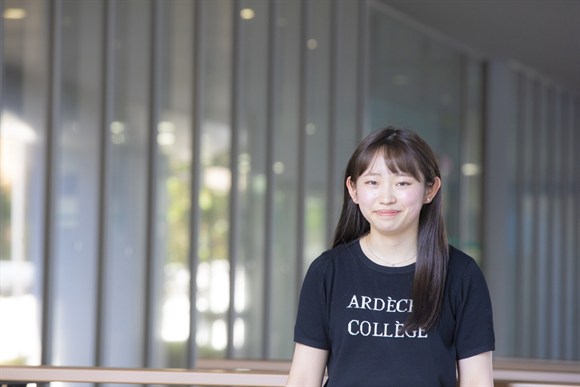
This time, we interviewed Megumi Ukai, a first-year student in the Department of Faculty of International Relations, Department of International Relations. Ms. Ukai was attracted to the university because of the environment that is well-established for those who wish to work in international fields, and she took the university-wide entrance examination. We asked her about the fulfilling foreign language education and the extracurricular activities she is participating in with her future in mind.
Please enter your text.
I'd like to ask about student life at Asia University.
Q1. Please tell us your reasons for choosing Faculty of International Relations Department of International Relations Asia University.
I absolutely wanted to attend Asia University because it has a large number of International Student, a comprehensive study abroad program, and because studying abroad is mandatory for Faculty of International Relations.
I chose Department of International Relations because I felt it provided the ideal environment to realize my dream of working in international fields, such as with NGOs, using English or another second language.
Q2. Were there any differences between your expectations before entering university and your expectations after entering university?
I had thought that Faculty of International Relations would mainly focus on English-only courses, but I was pleasantly surprised to find that the courses in other second languages were also very comprehensive. I am drawn to the environment where I can learn and grow together with my fellow students.
Within clubs and circles, students get along well with each other, and I also have the opportunity to take classes with International Student. I feel that sharing diverse perspectives and values contributes to my personal growth.
Q3. What are you currently studying?
In addition to English, students can choose a second language from a variety of options, and they also learn about politics, economics, and how to interpret situations from data from an international perspective, as well as international cooperation.
I am also participating in “ASIA YUME COLLEGE” Development China Program, so I chose Chinese as my second language. This program is common to all four faculties (Faculty Faculty of Business Administration Administration, Faculty Faculty of Economics, Faculty of Law, and Faculty of International Relations), and students take it in parallel with their individual faculty courses. In their second year, students participate in a six-month study abroad program in China and an internship there (AUCP).
I heard from a graduate of Asia University that many students who participate in “ASIA YUME COLLEGE” go on to be active in international fields, which I found appealing, and I decided to participate.
I absolutely wanted to attend Asia University because it has a large number of International Student, a comprehensive study abroad program, and because studying abroad is mandatory for Faculty of International Relations.
I chose Department of International Relations because I felt it provided the ideal environment to realize my dream of working in international fields, such as with NGOs, using English or another second language.
Q2. Were there any differences between your expectations before entering university and your expectations after entering university?
I had thought that Faculty of International Relations would mainly focus on English-only courses, but I was pleasantly surprised to find that the courses in other second languages were also very comprehensive. I am drawn to the environment where I can learn and grow together with my fellow students.
Within clubs and circles, students get along well with each other, and I also have the opportunity to take classes with International Student. I feel that sharing diverse perspectives and values contributes to my personal growth.
Q3. What are you currently studying?
In addition to English, students can choose a second language from a variety of options, and they also learn about politics, economics, and how to interpret situations from data from an international perspective, as well as international cooperation.
I am also participating in “ASIA YUME COLLEGE” Development China Program, so I chose Chinese as my second language. This program is common to all four faculties (Faculty Faculty of Business Administration Administration, Faculty Faculty of Economics, Faculty of Law, and Faculty of International Relations), and students take it in parallel with their individual faculty courses. In their second year, students participate in a six-month study abroad program in China and an internship there (AUCP).
I heard from a graduate of Asia University that many students who participate in “ASIA YUME COLLEGE” go on to be active in international fields, which I found appealing, and I decided to participate.
Q5. Are there any activities you've been involved in since enrolling, other than studying?
I belong to the Campus Concierge and Exploration Club, and outside of school, I have been involved in NGO volunteer activities since high school.
Q6. First, please tell us about the campus concierge.
When I was in high school, I wasn't able to attend Asia University 's open campus event. However, at other universities I did attend, I was impressed by the students who were there to offer advice, and I wanted to help prospective students myself, so I applied to be a campus concierge.
The other day, I had the opportunity to conduct individual consultations as a campus concierge for the first time. I believe I was able to provide supportive advice to prospective students who wanted to ask current students directly, covering topics such as how to register for courses, how to choose a second language, and what it's like to live alone, all from a student's perspective.
Q7. What kind of activities does Exploration Club do?
I joined the club after being introduced by a senior student in Department of International Relations. We have a club meeting once a month to plan the activities for the following month, and so far we've had trips such as climbing Mt. Fuji, a bungalow camp, and a camp on Tomogashima, an uninhabited island in the Kitan Strait. Everyone in the club is kind and we all get along well regardless of our year level, so I'm really looking forward to seeing what our next activity will be.
Q8. Please tell us about your NGO volunteer activities.
I've always been interested in international issues, and after learning about the Palestinian refugee problem in high school and reading related books, I wanted to learn more. I realized that there are many issues I don't know about because I live in peaceful Japan.
I started participating in volunteer groups in my second year of high school after reading about several organizations in a book written by someone who works for an NGO. Due to the pandemic, most of our activities were conducted via Zoom, but I was able to participate in things like lectures and promoting refugee-related films.
Aside from my work with NGOs, last year I participated in activities in the typhoon-stricken areas of my hometown, Nagano Prefecture. During that time, I learned the importance of putting myself in someone else's shoes. Now, as a campus concierge, I feel this is an attitude I should always keep in mind when interacting with prospective students.
Q9. What do you think are the best things about attending Asia University?
The school places a strong emphasis on foreign language education, and its system is so comprehensive that students can choose from 14 different second languages. In the Chinese class I chose, there are tests every time, which I feel is definitely helping me to retain what I've learned.
Also, since there are many International Student on campus, I have opportunities to interact with students from various countries, which allows me to learn about the differences in culture and ways of thinking of each country, and it's been a great learning experience. The office hours, which provide opportunities to actually ask questions and consult with professors, are also a great feature.
I went to my Chinese teacher to ask about problems I didn't understand in class, and she advised me that "until you get used to listening to Chinese, just keep listening," so I'm trying my best to put that into practice.
I belong to the Campus Concierge and Exploration Club, and outside of school, I have been involved in NGO volunteer activities since high school.
Q6. First, please tell us about the campus concierge.
When I was in high school, I wasn't able to attend Asia University 's open campus event. However, at other universities I did attend, I was impressed by the students who were there to offer advice, and I wanted to help prospective students myself, so I applied to be a campus concierge.
The other day, I had the opportunity to conduct individual consultations as a campus concierge for the first time. I believe I was able to provide supportive advice to prospective students who wanted to ask current students directly, covering topics such as how to register for courses, how to choose a second language, and what it's like to live alone, all from a student's perspective.
Q7. What kind of activities does Exploration Club do?
I joined the club after being introduced by a senior student in Department of International Relations. We have a club meeting once a month to plan the activities for the following month, and so far we've had trips such as climbing Mt. Fuji, a bungalow camp, and a camp on Tomogashima, an uninhabited island in the Kitan Strait. Everyone in the club is kind and we all get along well regardless of our year level, so I'm really looking forward to seeing what our next activity will be.
Q8. Please tell us about your NGO volunteer activities.
I've always been interested in international issues, and after learning about the Palestinian refugee problem in high school and reading related books, I wanted to learn more. I realized that there are many issues I don't know about because I live in peaceful Japan.
I started participating in volunteer groups in my second year of high school after reading about several organizations in a book written by someone who works for an NGO. Due to the pandemic, most of our activities were conducted via Zoom, but I was able to participate in things like lectures and promoting refugee-related films.
Aside from my work with NGOs, last year I participated in activities in the typhoon-stricken areas of my hometown, Nagano Prefecture. During that time, I learned the importance of putting myself in someone else's shoes. Now, as a campus concierge, I feel this is an attitude I should always keep in mind when interacting with prospective students.
Q9. What do you think are the best things about attending Asia University?
The school places a strong emphasis on foreign language education, and its system is so comprehensive that students can choose from 14 different second languages. In the Chinese class I chose, there are tests every time, which I feel is definitely helping me to retain what I've learned.
Also, since there are many International Student on campus, I have opportunities to interact with students from various countries, which allows me to learn about the differences in culture and ways of thinking of each country, and it's been a great learning experience. The office hours, which provide opportunities to actually ask questions and consult with professors, are also a great feature.
I went to my Chinese teacher to ask about problems I didn't understand in class, and she advised me that "until you get used to listening to Chinese, just keep listening," so I'm trying my best to put that into practice.
Please enter your text.
I'd like to ask about the entrance examination method used to get into Asia University.
Q1. Please tell us the type of entrance examination you took and the subjects you took.
This was the university-wide unified entrance exam, mid-term. The subjects were Japanese (excluding classical Japanese and classical Chinese) and English.
Q2. Do you have any advice for those who will be taking the exam in the future?
The actual exam included questions similar to those in past exams, so you'll be fine if you prepare thoroughly.
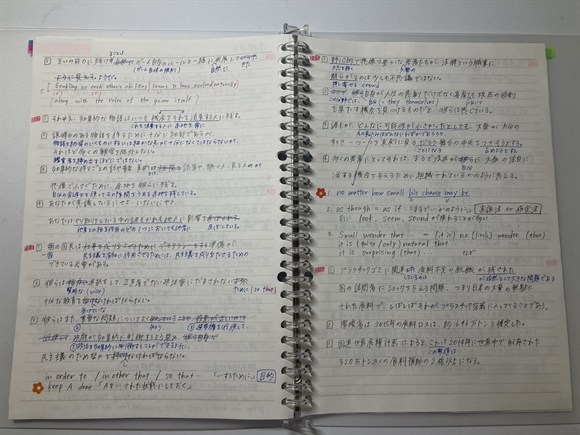
I found that repeatedly solving past exam questions was effective. By solving similar problems, you gradually become familiar with the question format.
Q3. What measures do you think should be taken from autumn onwards?
Also, please tell me about any effective strategies you think would be helpful in the period immediately before the exam, starting with Japanese language.
Since the Japanese language exam tends to feature many questions on four-character idioms, I worked on increasing my vocabulary by studying textbooks and past exam questions, as well as trying questions from other universities. I was fairly good at reading comprehension.
As a countermeasure, first read the question and grasp the main points. To increase your reading speed, I think it's important to read a variety of texts and "make reading a habit."
This was the university-wide unified entrance exam, mid-term. The subjects were Japanese (excluding classical Japanese and classical Chinese) and English.
Q2. Do you have any advice for those who will be taking the exam in the future?
The actual exam included questions similar to those in past exams, so you'll be fine if you prepare thoroughly.
I found that repeatedly solving past exam questions was effective. By solving similar problems, you gradually become familiar with the question format.
Q3. What measures do you think should be taken from autumn onwards?
Also, please tell me about any effective strategies you think would be helpful in the period immediately before the exam, starting with Japanese language.
Since the Japanese language exam tends to feature many questions on four-character idioms, I worked on increasing my vocabulary by studying textbooks and past exam questions, as well as trying questions from other universities. I was fairly good at reading comprehension.
As a countermeasure, first read the question and grasp the main points. To increase your reading speed, I think it's important to read a variety of texts and "make reading a habit."
Q4. How about your English skills?
Every day, I focused on studying vocabulary, idioms, and grammar. My method for memorizing vocabulary was reading aloud.
I found it easier to memorize words by reading them aloud, so I would read my vocabulary list out loud. Since you can't write words if you can't read them, reading aloud is very important for studying English. I encourage all exam candidates to give it a try!
Q5. What kind of preparation do you think would be effective in the period immediately before the exam?
I was reviewing my vocabulary list right up until the English exam started. Surprisingly, some of the questions came from the words I had looked at.
If you continue doing what you've been doing up to that point on the day of the exam, you should be able to take the test without feeling nervous. I felt that the accumulation of daily efforts would pay off on the day of the entrance exam.
Q6. Are there any study methods that you found particularly helpful?
I made sure to thoroughly understand the question format by solving past problems from the entrance exam information website "Ajibako Plus." I also paid close attention to time management.
Q7. Finally, do you have any advice for those taking the exam?
You may have anxieties about the entrance exams, but university life is much freer than high school life. It's a great time to take classes you want to study that will be useful in the future and to seriously consider your own future.
Also, I think your circle of friends will expand even further within the same faculty or club. There are lots of fun things waiting for you after you enroll, so please work hard and get through your entrance exams.
Every day, I focused on studying vocabulary, idioms, and grammar. My method for memorizing vocabulary was reading aloud.
I found it easier to memorize words by reading them aloud, so I would read my vocabulary list out loud. Since you can't write words if you can't read them, reading aloud is very important for studying English. I encourage all exam candidates to give it a try!
Q5. What kind of preparation do you think would be effective in the period immediately before the exam?
I was reviewing my vocabulary list right up until the English exam started. Surprisingly, some of the questions came from the words I had looked at.
If you continue doing what you've been doing up to that point on the day of the exam, you should be able to take the test without feeling nervous. I felt that the accumulation of daily efforts would pay off on the day of the entrance exam.
Q6. Are there any study methods that you found particularly helpful?
I made sure to thoroughly understand the question format by solving past problems from the entrance exam information website "Ajibako Plus." I also paid close attention to time management.
Q7. Finally, do you have any advice for those taking the exam?
You may have anxieties about the entrance exams, but university life is much freer than high school life. It's a great time to take classes you want to study that will be useful in the future and to seriously consider your own future.
Also, I think your circle of friends will expand even further within the same faculty or club. There are lots of fun things waiting for you after you enroll, so please work hard and get through your entrance exams.