Deep self-awareness leads to confidence in interviews!
Towards the dream of "working abroad," which lies beyond one's interests.
Towards the dream of "working abroad," which lies beyond one's interests.
# Entrance exam preparation experiences
Makoto Yamashita
Faculty of International Relations Department of Multicultural Communication
2025.09.20
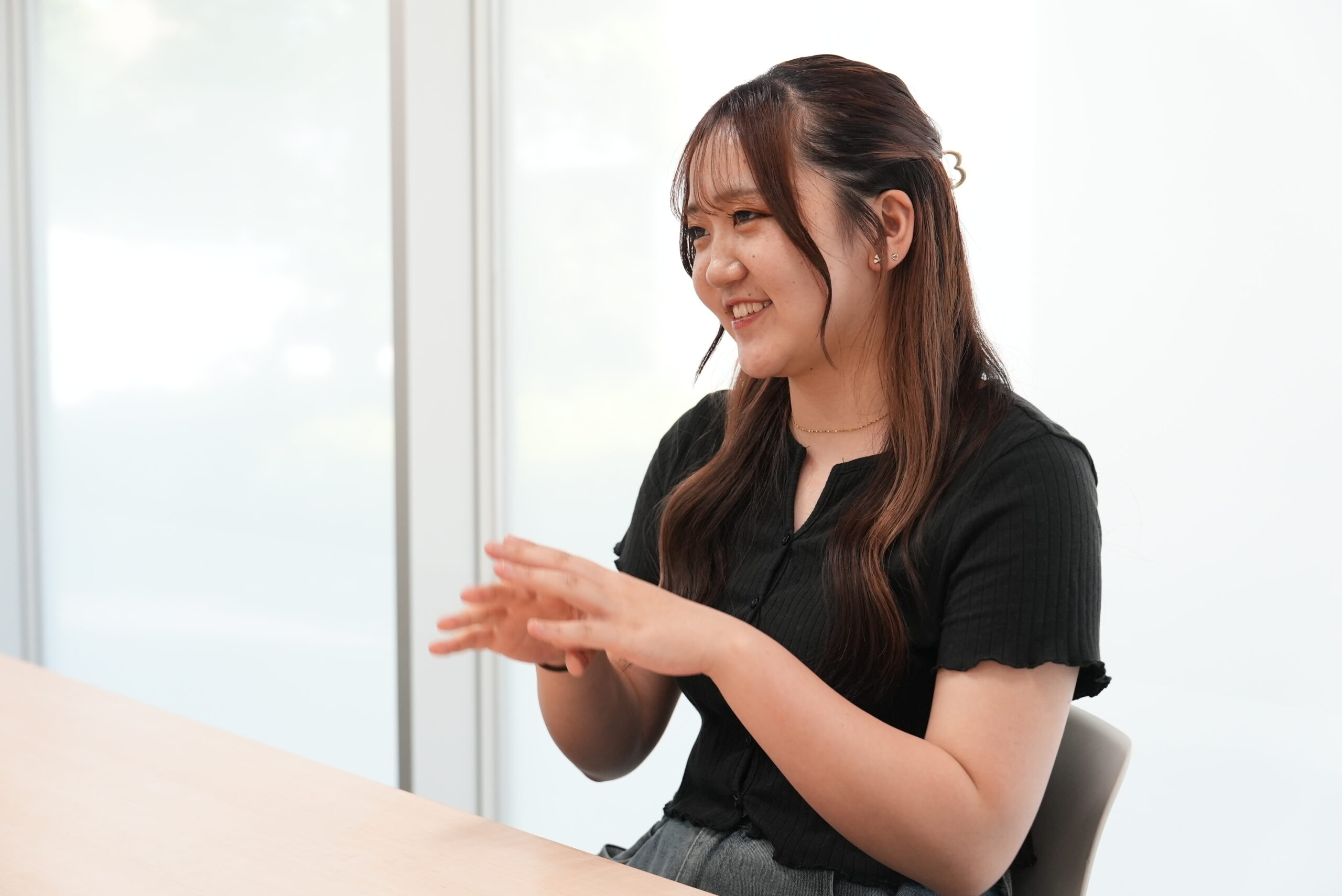
This time, we interviewed Makoto Yamashita, a first-year student in the Department of Department of Multicultural Communication of Faculty of International Relations. Through preparing for the entrance exams, Ms. Yamashita was able to discover what she truly wanted to do.
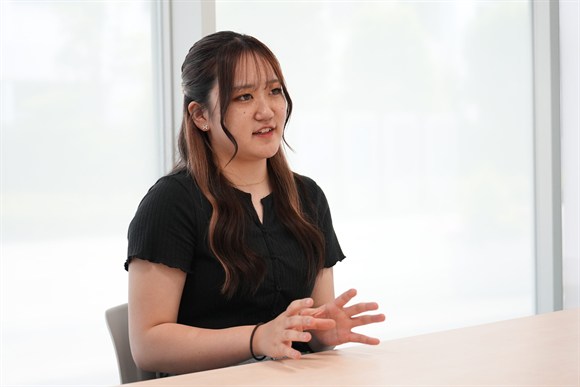
We asked about the importance of research necessary for entrance exam preparation, and what they would like to try at university.
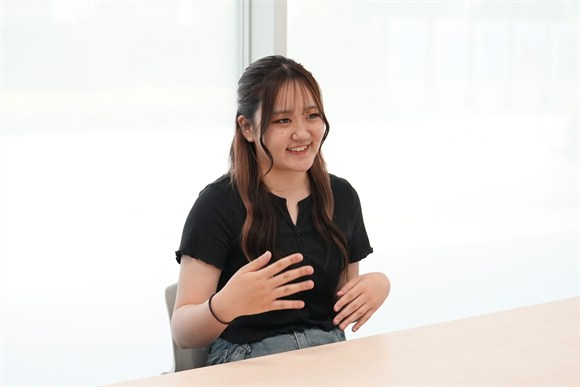
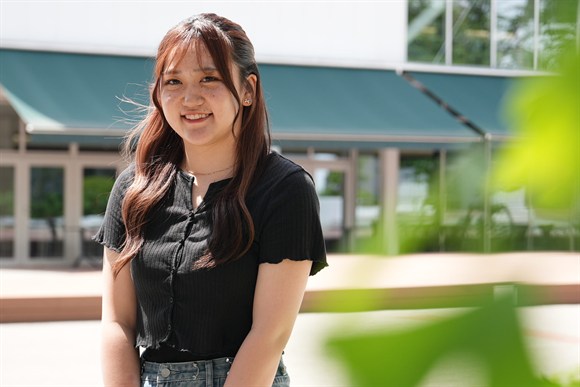
We asked about the importance of research necessary for entrance exam preparation, and what they would like to try at university.
Please enter your text.
I'd like to ask about the entrance examination system used to get into Asia University.
Q1. Please tell us the type of entrance examination you took and the subjects you took.
This is a comprehensive selection entrance examination.
Q2. Why did you choose that particular entrance examination method, and what was the reason for your choice?
It all started at a high school entrance exam information session. I learned about the comprehensive selection process, and since I wasn't very confident in my academic abilities, I decided to give it a try.
I had a clear idea of what I wanted to learn, and I was more confident than most people in my motivation to pursue it, so I felt that the comprehensive selection process, which allowed me to showcase that motivation, was a good fit for me.
Q3. What were your reasons for choosing your current faculty?
My primary reason for choosing this university was my interest in the languages and cultures of other countries, especially Korea. I was also attracted to Asia University 's extensive study abroad programs and specialized courses. I've always liked K-POP, which led me to want to learn more about Korea. While searching for international studies programs, I came across Department of Multicultural Communication in the Faculty of International Relations at Asia University.
Q4. What kind of preparations did you make for the exam?
I attended a cram school for comprehensive entrance exams, where they reviewed my pre-assignments and application documents. For interview practice, I not only relied on the cram school, but also my friends, my mother, and my school teachers—I did everything I could to prepare.
I also did some self-analysis. I thoroughly researched and analyzed what I wanted to study at university and whether I could actually do that there.
Q5. What do you think are the best things about attending Asia University?
I think it's great to have so many people in the same faculty and department who share the same interests and goals as me. I'm also attracted to the study abroad program.
The advantages include being taught by multiple native speakers in regional language classes, and being exposed to English every day through Freshman English. Freshman English is a Small Class Size class taught by native speakers and conducted entirely in English with no Japanese spoken.
This is a comprehensive selection entrance examination.
Q2. Why did you choose that particular entrance examination method, and what was the reason for your choice?
It all started at a high school entrance exam information session. I learned about the comprehensive selection process, and since I wasn't very confident in my academic abilities, I decided to give it a try.
I had a clear idea of what I wanted to learn, and I was more confident than most people in my motivation to pursue it, so I felt that the comprehensive selection process, which allowed me to showcase that motivation, was a good fit for me.
Q3. What were your reasons for choosing your current faculty?
My primary reason for choosing this university was my interest in the languages and cultures of other countries, especially Korea. I was also attracted to Asia University 's extensive study abroad programs and specialized courses. I've always liked K-POP, which led me to want to learn more about Korea. While searching for international studies programs, I came across Department of Multicultural Communication in the Faculty of International Relations at Asia University.
Q4. What kind of preparations did you make for the exam?
I attended a cram school for comprehensive entrance exams, where they reviewed my pre-assignments and application documents. For interview practice, I not only relied on the cram school, but also my friends, my mother, and my school teachers—I did everything I could to prepare.
I also did some self-analysis. I thoroughly researched and analyzed what I wanted to study at university and whether I could actually do that there.
Q5. What do you think are the best things about attending Asia University?
I think it's great to have so many people in the same faculty and department who share the same interests and goals as me. I'm also attracted to the study abroad program.
The advantages include being taught by multiple native speakers in regional language classes, and being exposed to English every day through Freshman English. Freshman English is a Small Class Size class taught by native speakers and conducted entirely in English with no Japanese spoken.
Q6. What do you want to work on during your university life going forward?
I would like to challenge myself by studying in South Korea and obtaining qualifications.
Q7. Please tell us about your dreams and goals for the future.
I don't have a specific career in mind yet, but I'd like to work in a field related to overseas affairs. My current goal is to become fluent in both Korean and English.
I'd like to ask you in detail about exam preparation and mindset.
Q8. Do you have any recommended countermeasures?
The key is to practice interview questions with various people. Don't just ask the same person; ask different people so you can get used to unexpected questions. It's also important to prepare so you can answer any questions based on your written statement of purpose and pre-assigned tasks. In addition, I recommend watching the news regularly to stay informed about current society.
In my case, I had written in my application documents that I was interested in Korea, so I anticipated questions like "What is the current relationship between Japan and Korea?" and "Are you aware of recent news regarding Korea?" during the interview, and I did my research so that I could answer them thoroughly.
Q9. What were some of the difficulties you faced in preparing for the exam?
I wasn't used to interviews, and I struggled with stumbling over my words during practice. However, that improved with repeated practice, so I think the key is to just keep practicing.
I would like to challenge myself by studying in South Korea and obtaining qualifications.
Q7. Please tell us about your dreams and goals for the future.
I don't have a specific career in mind yet, but I'd like to work in a field related to overseas affairs. My current goal is to become fluent in both Korean and English.
I'd like to ask you in detail about exam preparation and mindset.
Q8. Do you have any recommended countermeasures?
The key is to practice interview questions with various people. Don't just ask the same person; ask different people so you can get used to unexpected questions. It's also important to prepare so you can answer any questions based on your written statement of purpose and pre-assigned tasks. In addition, I recommend watching the news regularly to stay informed about current society.
In my case, I had written in my application documents that I was interested in Korea, so I anticipated questions like "What is the current relationship between Japan and Korea?" and "Are you aware of recent news regarding Korea?" during the interview, and I did my research so that I could answer them thoroughly.
Q9. What were some of the difficulties you faced in preparing for the exam?
I wasn't used to interviews, and I struggled with stumbling over my words during practice. However, that improved with repeated practice, so I think the key is to just keep practicing.
Q10. Do you have any methods for overcoming a slump? What triggers it?
Unlike general entrance exams, I had thoroughly researched what I wanted to do and was constantly motivated because I was pushing forward towards my goal.
Q11. Do you have any recommended ways to relax or unwind?
I don't consciously think of it as a way to change my mood, but if I had to say something, it would be that I practiced for the interview casually, as if I were talking to a friend as I normally would.
Q12. Were there any people, words, or triggers that supported you?
I am truly grateful to my cram school teachers, friends, parents, and school teachers for all their help.
Q13. What was your method for cramming right before the entrance exam?
I had interviews with all sorts of people. I prepared by having them ask me about unrelated things so that I could handle unexpected questions.
Q14. What did you gain from your experience of taking entrance exams?
By researching things that interest me, I discovered my goal: to work in a field related to overseas affairs.
Q15. Please give a message to high school students who will be taking the same entrance exam.
For both your application documents and interview preparation, get feedback from as many people as possible and absorb everything you can. However, don't rely solely on others; it's crucial to analyze and understand yourself, and to clearly define what you want to do. The more research you do, the more confident you'll be in the interview, so keep at it until the end.
Unlike general entrance exams, I had thoroughly researched what I wanted to do and was constantly motivated because I was pushing forward towards my goal.
Q11. Do you have any recommended ways to relax or unwind?
I don't consciously think of it as a way to change my mood, but if I had to say something, it would be that I practiced for the interview casually, as if I were talking to a friend as I normally would.
Q12. Were there any people, words, or triggers that supported you?
I am truly grateful to my cram school teachers, friends, parents, and school teachers for all their help.
Q13. What was your method for cramming right before the entrance exam?
I had interviews with all sorts of people. I prepared by having them ask me about unrelated things so that I could handle unexpected questions.
Q14. What did you gain from your experience of taking entrance exams?
By researching things that interest me, I discovered my goal: to work in a field related to overseas affairs.
Q15. Please give a message to high school students who will be taking the same entrance exam.
For both your application documents and interview preparation, get feedback from as many people as possible and absorb everything you can. However, don't rely solely on others; it's crucial to analyze and understand yourself, and to clearly define what you want to do. The more research you do, the more confident you'll be in the interview, so keep at it until the end.