I overcame the entrance exams with support and ingenuity.
Yuasa-san aims to work in the hotel industry.
I overcame the entrance exams with support and ingenuity.
Yuasa-san aims to work in the hotel industry.

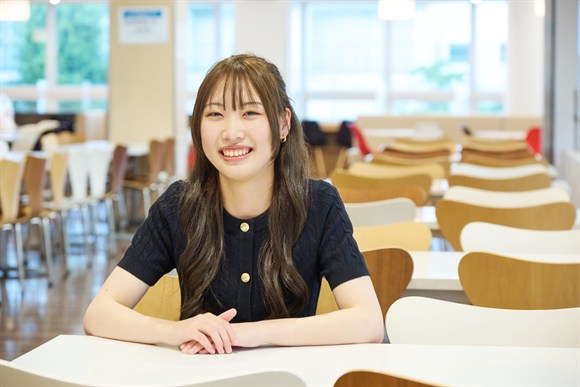
# Entrance exam preparation experiences
Kana Yuasa
Faculty of Business Administration Department of Hospitality Management
Admission method: General entrance examination (by department)
Admission method: General entrance examination (by department)
2025.11.18
This time, we interviewed Kana Yuasa, a first-year student in the Hospitality Management Department of the Faculty Faculty of Business Administration. Aiming to work in the hospitality field, such as the hotel industry, she took the general entrance exam. Armed with her strong point, world history, she spent her days devising ways to overcome her weakness in English. There were times when stress made her ill, but encouraged by the support of her family and friends, she continued to work hard without giving up until the very end.
Currently, Yuasa is active as an open campus staff member and a member of "ASIA-SAI" Annual Student Festival organizing committee, growing through her interactions with others. We spoke with Yuasa, who is using the experiences she gained during her exam preparation period to move forward towards her future dreams, about what she learned and thought at that time.
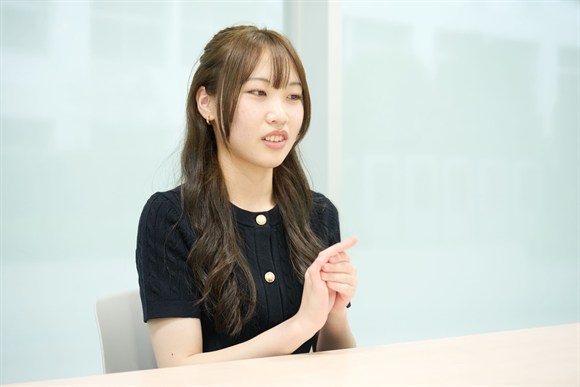
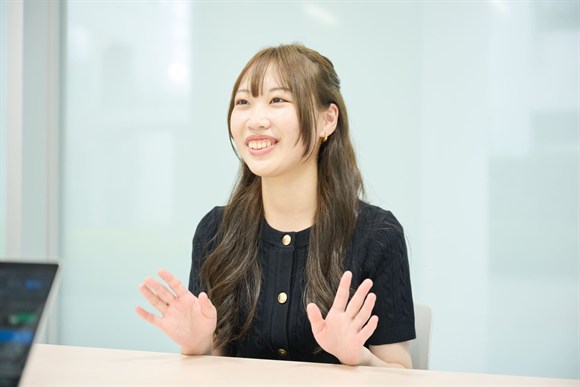
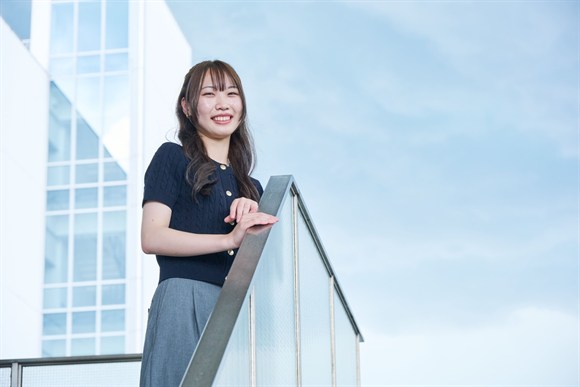
Currently, Yuasa is active as an open campus staff member and a member of "ASIA-SAI" Annual Student Festival organizing committee, growing through her interactions with others. We spoke with Yuasa, who is using the experiences she gained during her exam preparation period to move forward towards her future dreams, about what she learned and thought at that time.
Please enter your text.
I'd like to hear about your experience taking the general entrance exam.
Q1. Please tell us the type and content of the entrance examination you took.
The entrance examination format was a general entrance examination (by faculty) with three subjects: English, Japanese, and World History.
Q2. Why did you choose that entrance examination method?
English wasn't my strong point, but it was a required subject, so I couldn't avoid it. On the other hand, I was good at memorization, so I thought I could make world history a source of points. My Japanese language skills were inconsistent, but I felt I could score well depending on the text, so I decided to try this combination of three subjects.
Q3. What were your reasons for choosing your current faculty?
I had always wanted to work in the hotel industry in the future. I was also interested in aviation-related jobs, such as flight attendant positions, and was drawn to the opportunity to learn about hospitality in a broad range of fields.
The entrance examination format was a general entrance examination (by faculty) with three subjects: English, Japanese, and World History.
Q2. Why did you choose that entrance examination method?
English wasn't my strong point, but it was a required subject, so I couldn't avoid it. On the other hand, I was good at memorization, so I thought I could make world history a source of points. My Japanese language skills were inconsistent, but I felt I could score well depending on the text, so I decided to try this combination of three subjects.
Q3. What were your reasons for choosing your current faculty?
I had always wanted to work in the hotel industry in the future. I was also interested in aviation-related jobs, such as flight attendant positions, and was drawn to the opportunity to learn about hospitality in a broad range of fields.
Please enter your text.
Please tell me about strategies and preparations for the entrance exam.
Q4. What kind of preparations did you make for the exam?
I started seriously studying for the entrance exams in my third year of high school.
For world history, the handouts and quizzes created by my teacher were far easier to understand than commercially available textbooks, so I used them repeatedly to solidify my memorization.
I was able to improve my English skills by starting with basic vocabulary, then progressing to grammar, and finally to reading comprehension.
*For learning English vocabulary, I used the well-known "Target 1900 English Vocabulary."
(Official website: https://www.obunsha.co.jp/product/detail/034646)
For Japanese language studies, I honed my reading comprehension skills by being exposed to many texts, and Seminar repeatedly through mock exams and workbooks.
Q5. Do you have any recommended study methods?
For me, the most effective method was the "Pomodoro Technique." It involves studying intensely for 25 minutes, then taking a 5-minute break, and repeating this cycle. I found it easier to maintain focus and switch gears than when studying for long periods.
Music is my biggest support, partly for relaxation. However, I tend to sing along to songs with lyrics (laughs). During my exam preparation period, I tried various things, but ultimately settled on soundtracks from my favorite movies and dramas. I highly recommend them! And that led me to the Pomodoro Technique (laughs).
Q6. What were some of the difficulties you faced while studying for the entrance exam?
The hardest part was being overwhelmed by the atmosphere around me. Seeing my friends constantly studying made me anxious that I had to push myself too hard, and I ended up overdoing it. As a result, I developed shingles due to the intense stress, and my health deteriorated.
I made sure to ask my family not to talk about studying during meals and to talk about things other than studying with my friends.
From this experience, I learned that "studying is important, but protecting your health is even more important." Since then, I've made sure to take proper breaks and study while being mindful of the balance between my mind and body.
Q7. What did you do to relax and unwind? I'd love to hear your recommendations.
My recommendation is to imagine enjoyable future events during study breaks. Incorporating even small things that excite you can help reduce stress and maintain a positive attitude.
During exam season, I inevitably felt very stressed, so I made a point of creating time to think about fun things. At school, I would make plans with my friends about where we would go after the exams were over, and I would look back at memories with my friends in the photo folder on my smartphone. Thinking, "We can hang out again once it's all over!" naturally made me feel more positive and motivated again.
Q8. What was your method for cramming right before the entrance exam?
In the final period leading up to the exam, I avoided venturing into new material and instead thoroughly reviewed what I had already covered. In particular, I repeatedly solved past exam questions, focusing on the areas where I made mistakes or struggled. Repeating the same problems gave me the confidence that I could solve them in the actual exam.
Furthermore, by devising a specific order in which to solve problems and starting with my areas of strength, I was able to stay calm, get into a rhythm, and tackle even difficult problems.
I started seriously studying for the entrance exams in my third year of high school.
For world history, the handouts and quizzes created by my teacher were far easier to understand than commercially available textbooks, so I used them repeatedly to solidify my memorization.
I was able to improve my English skills by starting with basic vocabulary, then progressing to grammar, and finally to reading comprehension.
*For learning English vocabulary, I used the well-known "Target 1900 English Vocabulary."
(Official website: https://www.obunsha.co.jp/product/detail/034646)
For Japanese language studies, I honed my reading comprehension skills by being exposed to many texts, and Seminar repeatedly through mock exams and workbooks.
Q5. Do you have any recommended study methods?
For me, the most effective method was the "Pomodoro Technique." It involves studying intensely for 25 minutes, then taking a 5-minute break, and repeating this cycle. I found it easier to maintain focus and switch gears than when studying for long periods.
Music is my biggest support, partly for relaxation. However, I tend to sing along to songs with lyrics (laughs). During my exam preparation period, I tried various things, but ultimately settled on soundtracks from my favorite movies and dramas. I highly recommend them! And that led me to the Pomodoro Technique (laughs).
Q6. What were some of the difficulties you faced while studying for the entrance exam?
The hardest part was being overwhelmed by the atmosphere around me. Seeing my friends constantly studying made me anxious that I had to push myself too hard, and I ended up overdoing it. As a result, I developed shingles due to the intense stress, and my health deteriorated.
I made sure to ask my family not to talk about studying during meals and to talk about things other than studying with my friends.
From this experience, I learned that "studying is important, but protecting your health is even more important." Since then, I've made sure to take proper breaks and study while being mindful of the balance between my mind and body.
Q7. What did you do to relax and unwind? I'd love to hear your recommendations.
My recommendation is to imagine enjoyable future events during study breaks. Incorporating even small things that excite you can help reduce stress and maintain a positive attitude.
During exam season, I inevitably felt very stressed, so I made a point of creating time to think about fun things. At school, I would make plans with my friends about where we would go after the exams were over, and I would look back at memories with my friends in the photo folder on my smartphone. Thinking, "We can hang out again once it's all over!" naturally made me feel more positive and motivated again.
Q8. What was your method for cramming right before the entrance exam?
In the final period leading up to the exam, I avoided venturing into new material and instead thoroughly reviewed what I had already covered. In particular, I repeatedly solved past exam questions, focusing on the areas where I made mistakes or struggled. Repeating the same problems gave me the confidence that I could solve them in the actual exam.
Furthermore, by devising a specific order in which to solve problems and starting with my areas of strength, I was able to stay calm, get into a rhythm, and tackle even difficult problems.
Please enter your text.
Please give some advice to students taking entrance exams.
Q9. On the day of the exam, please tell us if there was anything you were glad you had done at the exam venue, or conversely, anything you regretted not doing.
What was good was that I left with more than 30 minutes to spare, anticipating train delays. In reality, the Sobu Line, which often experiences delays, did not, and although there was a delay on the Chiyoda Line I was on before, I was able to avoid panicking because I had allowed for extra time. Checking my belongings, such as my watch, beforehand also gave me peace of mind.
My biggest regret is that I checked the questions I was worried about right before the exam, which only made me more anxious. I should have moved on from the subjects I finished and focused on the next one. Also, I think I could have answered more smoothly if I had simulated the "order of solving" by practicing with past exam questions, such as starting with the questions I was good at.
Q10. Please give a message to high school students who will be taking the same entrance exam.
The first thing I want to tell you is to thoroughly work through past exam questions. By repeatedly solving the same year's questions, you can clearly identify your weaknesses and practice in a way that simulates the actual exam.
The entrance exam may feel like your fate is decided in a single day, but try not to get too caught up in that. Instead, focus on "giving your absolute best." And don't forget to take care of your health. I hope you'll do your best until the very end.
Furthermore, I want you to cherish your high school life just as much as your exam preparation. The year you spend as a senior in high school will never come again. While diligently studying for your exams, don't forget to enjoy school life and create memories with your friends. Those experiences will become valuable assets that will connect to your university life and beyond.
What was good was that I left with more than 30 minutes to spare, anticipating train delays. In reality, the Sobu Line, which often experiences delays, did not, and although there was a delay on the Chiyoda Line I was on before, I was able to avoid panicking because I had allowed for extra time. Checking my belongings, such as my watch, beforehand also gave me peace of mind.
My biggest regret is that I checked the questions I was worried about right before the exam, which only made me more anxious. I should have moved on from the subjects I finished and focused on the next one. Also, I think I could have answered more smoothly if I had simulated the "order of solving" by practicing with past exam questions, such as starting with the questions I was good at.
Q10. Please give a message to high school students who will be taking the same entrance exam.
The first thing I want to tell you is to thoroughly work through past exam questions. By repeatedly solving the same year's questions, you can clearly identify your weaknesses and practice in a way that simulates the actual exam.
The entrance exam may feel like your fate is decided in a single day, but try not to get too caught up in that. Instead, focus on "giving your absolute best." And don't forget to take care of your health. I hope you'll do your best until the very end.
Furthermore, I want you to cherish your high school life just as much as your exam preparation. The year you spend as a senior in high school will never come again. While diligently studying for your exams, don't forget to enjoy school life and create memories with your friends. Those experiences will become valuable assets that will connect to your university life and beyond.