Faculty introduction
PAGE SECTIONS
Faculty overview
Today's globalized world faces many challenges. The study of Faculty of International Relations is about thinking about how people with different languages, cultures, political and economic backgrounds can coexist. In Department of International Relations, we have established a diverse group of courses for students to think about what they can do to promote international political and economic cooperation and peacebuilding. Department of Multicultural Communication offers a wide range of courses to help students learn about the diversity of cultures and religions and contribute to building a multicultural society.
MESSAGE
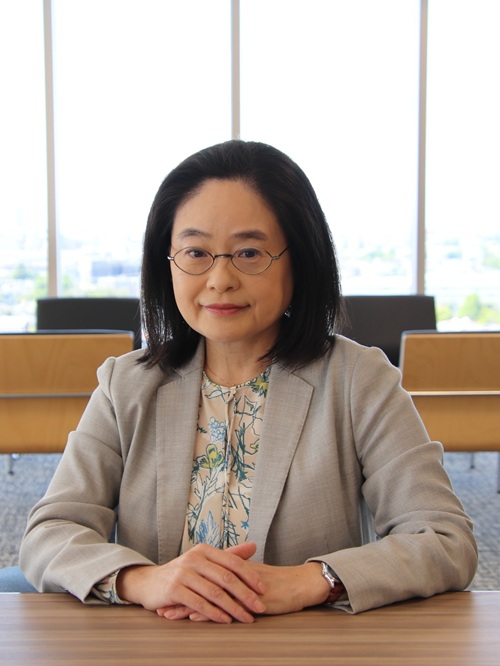
Understanding the diverse problems facing the international community,
Cultivating a personality that respects "others"
Professor Ayako MASUHARA AyakoCultivating a personality that respects "others"
Dean of the Faculty of International Relations
The world is at a major turning point. The war in Ukraine and conflicts in the Middle East, such as in Gaza and Iran, have resulted in countless casualties and have brought food and energy crises to the world. Xenophobia, which rejects immigrants, is rampant in many countries, and hatred is dividing societies. Will we continue hurtling towards a world filled with violence and hatred, or will we build peace? The path we choose is the one to peace.
To achieve this, it is essential to respect "others" with different cultures and to strive for a peaceful and prosperous international society where the freedom and human rights of each individual are guaranteed. Faculty of International Relations will help you learn about the various issues facing the international community and support your growth as an intellectually independent individual.
To achieve this, it is essential to respect "others" with different cultures and to strive for a peaceful and prosperous international society where the freedom and human rights of each individual are guaranteed. Faculty of International Relations will help you learn about the various issues facing the international community and support your growth as an intellectually independent individual.
Purpose of education research
Department of International Relations (Applicable to students entering in the 2026 academic year)
Through interdisciplinary specialized education covering politics, law, economics, and society, English education that emphasizes the ability to communicate, and a broad and deep liberal arts education, students develop an international perspective and comprehensive decision-making ability, and understand the international relations of the world and the role of Japan in the international community. Develop capable human resources who understand and can contribute to the peace and development of the international community in response to the needs of the times.open all
-
Graduation Accreditation and Degree Conferment Policy (Diploma Policy)
- Faculty of International Relations Department of International Relations (hereinafter referred to as "this Department") aims to cultivate individuals who will contribute to the peace and development of the international community, based on the founding principle of "the spirit of Self-help and Cooperation." To achieve this objective, degrees will be awarded to students who meet the following requirements.
- Acquire basic knowledge in various social science fields, including politics, law, economics, and society.
- By applying this basic knowledge and considering various problems in the international community, students will deepen their understanding of international relations, and develop an active learning attitude, a broad perspective that looks at social phenomena from multiple perspectives, the ability to think logically, and solid confidence. Expressiveness (especially Japanese ability) is cultivated.
- Have a certain level of proficiency in English.
- As a member of the international community, have ethical standards and a willingness to actively contribute to the promotion of peace and cooperation in the international community.
-
Curriculum Formulation and Implementation Policy (Curriculum Policy)
- Based on the Diploma Policy, the Department organizes and implements the curriculum according to the following policies.
<Education content>- Seminars will be held as Required Subject from the first year to the fourth year. In the seminar, students will not only learn about international issues, but also engage in active learning such as independent theme selection, reporting, discussion, and written expression (writing papers and reports). Seminars form the core of learning in this department.
- In the first year, introductory courses in various social science fields, such as "Introduction to Political Science," "Introduction to Law," "Introduction to Economics," and "Introduction to Sociology," are offered as elective courses. Also in the first year, introductory courses in various social science fields, such as "Introduction to International Economics," "Introduction to International Politics," and "Introduction to International Cooperation," are offered as specialized Elective Subject. Through these courses, students will acquire fundamental knowledge in various social science fields.
- From the third and fourth years, however, some subjects are offered from the second year, and are divided into three areas: economics and management, law and politics, and international cooperation, with specialized Elective Subject available. Through these specialized Elective Subject, students will acquire specialized knowledge on various issues in the international community.
- To improve English proficiency, broaden international perspectives, and provide cross-cultural experiences, AUAP (5-month study abroad program in the United States), AUASP (5-month study abroad program in Malaysia), and AUKP (5-month study abroad program in South Korea) are offered as recommended subjects.
- In the second year, "International English I and II" are Required Subject. Furthermore, from the first to the third and fourth years, a wide range of specialized English courses are offered under the name GLEE (Global Expert English). Students who acquire 18 Credit from this course group, fulfilling the required Credit for each elective Required Subject group set by the department, will be certified as "GLEE graduates." Through these specialized English courses, students will learn about international relations in English and further improve their English proficiency.
<Education method>- Focusing on seminars, students develop their willingness to learn on their own, and learn report (=presentation) skills, debate (=debate) skills, and writing papers/reports from the beginning of the first year to the advanced level of the fourth year. , Professor step by step.
- Instruct students to actively use the AUAP and other study abroad programs and classes of the university to gain overseas experience. The main purpose of overseas experience is not only to learn languages, but also to experience different cultures and broaden your international perspective, and to grow as a person through living in an unfamiliar environment.
- In the first year, we offer "Introduction to Global Career Design" and "International Business Projects," and we also incorporate career-related classes into seminars from the first year, providing career education from the foundational years. Furthermore, in the third year, we offer the opportunity to experience an internship at an overseas company through our "International Internship" program.
-
Policy for Accepting New Students (Admission Policy)
- In order to develop human resources as indicated in the Diploma Policy, the Department hopes that the following people will enter the Department widely from Japan and abroad.
- He has a strong interest in trends in the international community.
- The knowledge that is a prerequisite for learning social sciences, especially the subjects related to geography and civics, has been thoroughly studied.
- Acquire the Japanese language skills necessary for reporting, discussion, and report writing.
- Have acquired the basic ability to read, write, listen and speak English.
- He has a strong desire to learn foreign languages, especially English, and hopes to play an active role in an international job in the future.
- Students acquire basic knowledge and skills through the high school curriculum so that they can understand the educational content of this department.
- Students will acquire an attitude of respect for diverse values and have a clear sense of purpose and a proactive and independent approach to deepening their learning.
*The methods and criteria for determining acceptance or rejection are posted on the university's website.
Key points for the entrance exam
Department of Multicultural Communication (Applicable to students entering in the 2026 academic year)
Through education on the history and current state of cross-border multicultural exchange, basic education on international relations, English education that emphasizes the ability to communicate, and a broad and deep liberal arts education, we cultivate high communication skills that connect people with diverse cultural backgrounds, From the standpoint of mutual respect, we aim to develop capable human resources who can promote multicultural exchange and dialogue in Asia and other parts of the world.open all
-
Graduation Accreditation and Degree Conferment Policy (Diploma Policy)
- Department of Multicultural Communication Faculty of International Relations (hereinafter referred to as "this Department") aims to cultivate individuals who can promote intercultural exchange and dialogue in Asia and other regions of the world, based on the founding principle of "the spirit of Self-help and Cooperation reliance and cooperation." To achieve this objective, degrees will be awarded to students who meet the following requirements.
- This course acquires basic knowledge about the history and current state of cross-border multicultural exchange.
- Have a certain level of proficiency in English and Asian languages. In addition, based on this, students acquire communication skills that connect people with diverse cultural backgrounds.
- Deepen your understanding of multicultural exchange through field surveys at sites of diverse cultures and the analysis and reporting of survey results. , Reliable expressive power (especially Japanese language ability) is cultivated.
- Based on the principle of mutual respect for cultures, it has a positive attitude to promote multicultural exchange and dialogue.
-
Curriculum Formulation and Implementation Policy (Curriculum Policy)
- Based on the Diploma Policy, the Department organizes and implements the curriculum according to the following policies.
<Education content>- Seminars are Required Subject from the first to the fourth year. In seminars, students will engage in active learning, including studying intercultural exchange, selecting their own themes, conducting field research, presenting findings, participating in discussions, and writing (writing papers and reports). Seminars form the core of learning in this department.
- In the first year, students are required to take "Beginner Regional Language," a course in which they choose and study one of several languages, primarily from the Asian region (Korean, Chinese, Indonesian, Hindi, or Arabic). This beginner level ensures that all students acquire basic grammar and fundamental conversational skills. Furthermore, to further enhance regional language proficiency, "Intermediate Regional Language" is offered as Elective Subject in the second year, and "Advanced Regional Language" in the third year. Acquiring a regional language, along with learning English, is a fundamental skill for promoting multicultural exchange.
- In the first year, introductory subjects such as "Introduction to Sociology", "Introduction to Cultural Anthropology", and "Introduction to Asian Economy and Society" are compulsory. In addition, in the second year, "Introduction to multicultural society", "Introduction to tourism geography", "Introduction to language and society" and other general topics are offered as elective compulsory subjects. Through these subjects, students will learn the basic knowledge necessary for intercultural exchange.
- In the 3rd and 4th years, but some subjects from the 2nd year, students are divided into 3 areas: multicultural social cooperation area, tourism multicultural area, and multicultural and multilingual area, and specialized Elective Subject are arranged. Through these specialized Elective Subject, students will learn the specialized knowledge necessary for multicultural exchange.
- For the purpose of on-site experience education and developing the ability to adapt to different cultures, students learn the basics of field survey attitudes and methods in the “Introduction to Fieldwork” Required Subject in the first year. Investigative Practicum training is provided.
- To improve English proficiency, broaden international perspectives, and provide cross-cultural experiences, AUAP (5-month study abroad program in the United States), AUASP (5-month study abroad program in Malaysia), and AUGP (short-term study abroad program) are offered as elective but recommended subjects.
<Education method>- Focusing on seminars, students develop their willingness to learn on their own, and learn report (=presentation) skills, debate (=debate) skills, and writing papers/reports from the beginning of the first year to the advanced level of the fourth year. , Professor step by step.
- We encourage students to gain overseas experience through semester-long study abroad programs, active participation in "Multicultural Field Studies," and utilization of other study abroad programs offered by our university. The main objectives of overseas experience are to broaden one's international perspective by encountering different cultures, acquire fieldwork skills and techniques, and foster personal growth through living in an unfamiliar environment, in addition to language learning.
- In the first year, we offer "Introduction to Active Careers I & II," and we also incorporate career education into "Introduction to Asian Economic Society," also in the first year. Furthermore, we integrate career-related classes into seminars as appropriate from the first year. In addition, in the third year, we provide an opportunity to experience internships at overseas companies through "Multicultural Internship."
-
Policy for Accepting New Students (Admission Policy)
- In order to develop human resources as indicated in the Diploma Policy, the Department hopes that the following people will enter the Department widely from Japan and abroad.
- He has a strong interest in the societies, cultures, and languages of countries in Asia and around the world, as well as intercultural exchange.
- The knowledge required to study multicultural exchange, especially the subjects related to geography and civics, has been thoroughly studied.
- Acquire the Japanese language skills necessary for reporting, discussion, and report writing.
- Have acquired the basic ability to read, write, listen and speak English.
- He has a strong desire to learn English and other Asian languages, and hopes to play an active role in an international career in the future.
- Students acquire basic knowledge and skills through the high school curriculum so that they can understand the educational content of this department.
- Students will acquire an attitude of respect for diverse values and have a clear sense of purpose and a proactive and independent approach to deepening their learning.
*The methods and criteria for determining acceptance or rejection are posted on the university's website.
Key points for the entrance exam
Graduation Credit and Degree Acquisition
Department of International Relations
Degree: Bachelor of Arts of International RelationsDuration of study: 4 years
Graduation Credit required for Subject category (applicable to students entering in the 2026 academic year)
| Subject categories |
Required number Credit | remarks | ||
| Specialized subject | Required Subject | 16単位 |
| |
| Elective Required Subject | 4 Credit | |||
| Elective Subject | 52 Credit | |||
| Flex 10 | Required Subject *1 | 10単位 | *1 to *3 are Credit earned in excess of Requirement for Graduation | |
| Specialized Elective Subject *2 | ||||
| Subjects of Department of Multicultural Communication | ||||
| Specialized subjects of other faculties | ||||
| Courses at other universities based on Credit transfer agreements | ||||
| Subject Open to All students | University-wide Elective Subject *3 | |||
| Required Subject | Japanese (International Student only) | 10単位 | ||
| Elective Required Subject | 10単位 | Credit earned in excess of 10 Credit can be counted towards Requirement for Graduation as Credit for university-wide Elective Subject. | ||
| Elective Subject | 32 Credit (International Student: 22 Credit) |
| ||
| total | 124単位 | |||
Department of Multicultural Communication
Degree: Bachelor of Arts (International Relations)Length of study: 4 years
Graduation Credit required for Subject category (applicable to students entering in the 2026 academic year)
|
|
Subject categories |
Required number Credit | remarks | |
| Specialized subject | Required Subject | basic subjects | 8単位 |
|
| seminar | 14単位 | |||
| Regional language | 6単位 | *Learning must be done in the regional language registered by each individual. | ||
| Elective Required Subject | 6 Credit |
|||
| Elective Subject |
38 Credit |
| ||
| flex 14 | Required Subject *1 | 14単位 | *1 to *3 are Credit earned in excess of Requirement for Graduation | |
| Specialized Elective Subject *2 | ||||
| Specialized subjects Department of International Relations | ||||
| Specialized subjects of other faculties | ||||
| Courses at other universities based on Credit transfer agreements | ||||
| Subject Open to All students | University-wide Elective Subject *3 | |||
| Required Subject (For International Student only) |
Japanese | 8単位 |
| |
| Elective Required Subject | 6単位 | Credit earned in excess of 6 Credit can be counted towards Requirement for Graduation as Credit for university-wide Elective Subject. | ||
| Elective Subject | 32 Credit (International Student: 24 Credit) |
| ||
| total | 124単位 | |||
<Updated on April 16, 2026>
Faculty of International Relations