Faculty introduction
PAGE SECTIONS
Faculty overview
Through Lecture and practice, you will learn how to efficiently manage and manage companies and organizations.
In the Department of Business Administration, students comprehensively and multifacetedly cultivate the knowledge and skills necessary for running companies and organizations.
The Department of Hospitality Management trains students with the skills to be active on the front lines of the service industry with a spirit of hospitality.
In Department of Data Science, we develop business-oriented DX human resources through learning that connects data science and business administration.
In all three of these departments, students can acquire a global perspective and advanced information literacy, which are essential in today's increasingly internationalized and information-oriented society.
In the Department of Business Administration, students comprehensively and multifacetedly cultivate the knowledge and skills necessary for running companies and organizations.
The Department of Hospitality Management trains students with the skills to be active on the front lines of the service industry with a spirit of hospitality.
In Department of Data Science, we develop business-oriented DX human resources through learning that connects data science and business administration.
In all three of these departments, students can acquire a global perspective and advanced information literacy, which are essential in today's increasingly internationalized and information-oriented society.
MESSAGE
my future
Can consult and create
to Bachelor of Arts education
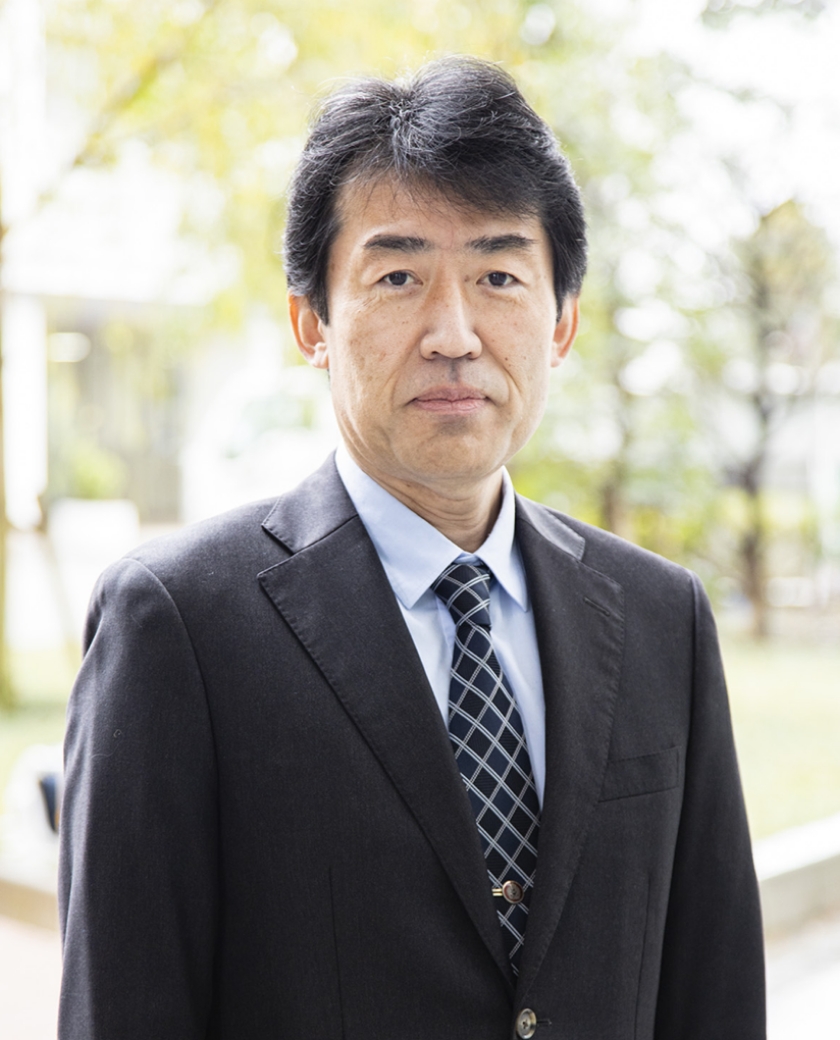
Professor Nobuyuki SUZUKI NobuyukiCan consult and create
to Bachelor of Arts education
Dean of the Faculty of Business Administration
Faculty of Business Administration has established three departments with different learning disciplines and is developing active learning Bachelor of Arts education based on the emphasis on practical learning and respect for individuality.
For example, we have established rich educational collaborations with various companies, and the Department of Business Administration offers Special Lecture for Top Management and Special Lectures on Business Administration (donated Course by the Tokyu Group), and Special Lecture for Hospitality Management and Hospitality Internship in the Department of Hospitality Management.
In addition, Department of Data Science was established in April 2023, and a new specialized education program has been launched to develop human resources who can play an active role in today's digital society.
For example, we have established rich educational collaborations with various companies, and the Department of Business Administration offers Special Lecture for Top Management and Special Lectures on Business Administration (donated Course by the Tokyu Group), and Special Lecture for Hospitality Management and Hospitality Internship in the Department of Hospitality Management.
In addition, Department of Data Science was established in April 2023, and a new specialized education program has been launched to develop human resources who can play an active role in today's digital society.
Purpose of education research
Department of Business Administration (Applicable to students entering in the 2026 academic year)
Through acquiring skills in language, information processing, and quantitative analysis, as well as cultivating broad general knowledge and communication abilities, and gaining specialized knowledge and practical skills in management, primarily in the areas of business administration, accounting, and marketing, we aim to develop individuals with management capabilities and an international perspective.open all
-
Graduation Accreditation and Degree Conferment Policy (Diploma Policy)
- Acquire the prescribed Credit in the curriculum of Faculty of Business Administration (hereinafter referred to as “this department”) and develop “practical learning” in a broad sense, that is, the ability to manage through specialized knowledge of business administration and its practical application. A degree is awarded to students who have completed the course. Specifically, degrees will be awarded to students who have acquired the following abilities in addition to the university's diploma policy.
- Have an interest in how companies and society work and how they should be, acquire specialized knowledge centered on the areas of management, accounting, and marketing, as well as a wide range of education, and be able to make comprehensive decisions.
- Able to communicate with respect and empathy for diversity in a global environment.
- Acquire information literacy and quantitative analysis techniques, and use them practically to proactively contribute to society by discovering and solving problems.
- Be aware that business administration and management skills are cultivated through theory and practice, and strive to develop one's own career while maintaining a lifelong learning attitude.
-
Curriculum Formulation and Implementation Policy (Curriculum Policy)
- This department systematically organizes and implements the following curriculum in order to cultivate individuals who can acquire the knowledge, skills, and attitudes outlined in the diploma policy and who can choose their own careers and lives.
<Educational content>- In the first year, we offer introductory and basic specialized compulsory Required Subject in business administration, accounting, and marketing in order to increase interest in business and business society as well as interest in business administration in general.
- In order to acquire the information literacy and statistical analysis skills of business data necessary for writing reports and papers, specialized subjects are arranged in the first year.
- In the second year, students are required to take major subjects such as organizations and human resources, management and finance, management strategy, accounting, marketing, distribution, and global management, which serve as Required Subject for specialization.
- 3rd and 4th year general Seminar subjects to cultivate imagination research execution ability, presentation ability, etc. Place next.
- In order to understand the business environment, corporate management and its diversity in the Asian region, and to foster a global mindset, we offer multiple specialized subjects.
- Career-related subjects are arranged so that students can think about their own career options and gain an experiential understanding of what it means to work.
- In order to understand industry trends and the reality of corporate management, deepen further insight into business administration, and grasp clues for one's own career options and way of life, Lecture by top executives of companies will be arranged in the third year.
- Acquire English vocabulary and expressiveness in business and corporate management, and arrange multiple specialized subjects for follow-up after studying abroad.
- Applied and practical specialized subjects related to the fields of business administration, accounting, and marketing are arranged.
- In addition to specialized subjects, students acquire a wide range Subject Open to All students, with an emphasis on cultivating the basic skills necessary for studying at university as well as the education and insight needed to deal with the real world.
<Education method>- In addition to promoting independent learning, devise educational methods such as presentations and group work in order to experience cooperation and communication with others.
- First-year education is provided to acquire the skills necessary for university study and to increase interest in companies, society, work, etc.
- Conduct fieldwork and internships to put into practice the specialized knowledge learned at university.
- We will implement small-group education, focusing on comprehensive Seminar courses, to allow us to address the individual needs of each student.
-
Policy for Accepting New Students (Admission Policy)
- In order to develop human resources who have the knowledge, skills, and attitudes described in the Diploma Policy, the Department is highly interested in the business world, and is expected to be active in a global environment and work widely in the business world in the future. I am looking for someone who is willing to: To that end, we implement a variety of selection methods and conduct multifaceted and comprehensive evaluations.
- Students have acquired basic knowledge and skills in the high school curriculum so that they can understand the educational content of this department.
- Students have acquired logical thinking and communication skills through their studies in high school.
- Participate in various activities such as acquiring qualifications and skills at high school, and actively participate in various activities with a clear sense of purpose and the desire to improve their skills and careers during the four years of study in this department. can participate in
- Interested in diverse societies and cultures, willingness to cooperate with people with diverse values, and flexibility to listen to different opinions.
- Willingness to utilize knowledge, skills, attitudes, and experiences learned in this department for society and self-career development.
*The methods and criteria for determining acceptance or rejection are posted on the university's website.
Key points for the entrance exam
Hospitality Management Department (Applicable to students entering in the 2026 academic year)
We cultivate individuals with broad general knowledge and communication skills, and develop highly capable personnel who possess the specialized knowledge and practical skills in hospitality required in the hospitality industry, as well as management skills centered on business, accounting, and marketing.open all
-
Graduation Accreditation and Degree Conferment Policy (Diploma Policy)
- The Department of Hospitality Management in the Faculty Faculty of Business Administration (hereinafter referred to as "this department") awards a degree to students who have acquired the prescribed Credit in the curriculum, gained specialized knowledge and skills related to the hospitality business, and acquired three abilities: practical execution ability, management ability, and a hospitality mindset. Specifically, in addition to the university's diploma policy, a degree will be awarded to students who have acquired the following abilities.
- In the practical field of the hospitality business, you will acquire and be able to utilize advanced specialized knowledge, skills, and broad general education that will make you immediately effective. (Knowledge and Understanding)
- Possesses and can utilize knowledge of management, including business administration, accounting, and marketing, as well as communication skills such as impression-making, and the skills and mindset required in the hospitality field. (Thinking, Judgment, Skills, Expression)
- Have high communication skills from a global perspective, respect diverse cultures, and be able to contribute broadly to the international community. (interest, willingness, attitude, expression)
- By understanding the practices and strategies of hospitality companies and gaining practical experience in the workplace, you can shape your future career. (Skills and practical skills)
-
Curriculum Formulation and Implementation Policy (Curriculum Policy)
- This department organizes its curriculum based on the following educational content and methods in order to help students acquire the abilities outlined in the diploma policy.
<Educational content>- In the first year, students will acquire the necessary knowledge and skills for learning through the completion of required Required Subject serve as introductory and foundational subjects in various fields of hospitality business, as well as in business administration, accounting, and marketing.
- In the theoretical subjects, students will develop management skills through the study of foundational and advanced courses in hospitality business, impression management, business administration, accounting, and marketing.
- In the practical subjects group, students will acquire specialized knowledge and skills for practical work in the hospitality business through Required Subject "Hospitality Service Training," and "Training" and "Internship" courses in various areas of the hospitality business.
- In the interdisciplinary course group, Required Subject "Introductory Seminar in Hospitality," "Basic Seminar," "Applied Seminar," and "Comprehensive Seminar." Cultivate.
- In general education, we provide education that cultivates a broad range of knowledge, fundamental skills, and a global perspective through Required Subject such as the "Orientation Seminar," compulsory subjects (English and other foreign languages), and the areas of "Language and the World," "Expression and Art," "Humans and Society," "Mind and Body," "Information and Nature/Environment," and "Life and career options."
<Education method>- To contribute to future career development, a four-year integrated small-group education program (seminar format), including first-year education, will be implemented as Required Subject.
- We provide comprehensive education that combines theory and practice through Lecture, Seminar, training, and internships, led by expert faculty with extensive experience in the hospitality business.
- Through “Introductory Hospitality Seminar”, “Basic Seminar”, “Applied Seminar”, and “Comprehensive Seminar” that focus on each student’s career, we will improve communication skills and implement a holistic education that enhances the individuality of each student.
- We will implement education that cultivates a wide range of general knowledge, diverse basic knowledge, and a global perspective through a group Subject Open to All students.
-
Policy for Accepting New Students (Admission Policy)
- This department seeks individuals who possess the knowledge, skills, and attitudes outlined in the diploma policy, who have a deep interest in hospitality business, management, accounting, marketing, and impression management, and who have a clear sense of purpose to work in the hospitality business in the future.
- Students are motivated to acquire basic knowledge and skills in the high school curriculum so that they can understand the educational content of this department, and to actively participate in various activities in university life.
- I have a deep interest in the hospitality business, management, accounting, marketing, and impression management.
- They have a clear sense of purpose, wanting to work in the hospitality business in the future.
- Willingness to learn, inquisitiveness, challenging spirit, spontaneity, cooperativeness, and indomitable spirit.
- He likes to interact with people, and has elements of a hospitality mindset, logical thinking, and communication skills.
- Have a clear sense of purpose, drive and aptitude for a future career.
- Willingness to utilize the knowledge, skills, attitudes, and experiences learned in this department for the benefit of society.
*The methods and criteria for determining acceptance or rejection are posted on the university's website.
Key points for the entrance exam
Department of Data Science (Applicable to students entering in the 2026 academic year)
Through project-based Seminar, this program aims to cultivate individuals who can analyze challenges in businesses and society, and use data science and AI methods to solve those problems, thereby fostering talent capable of leading a rapidly advancing global society with AI and technology.open all
-
Graduation Accreditation and Degree Conferment Policy (Diploma Policy)
- A degree will be awarded to students who have acquired the prescribed Credit in the curriculum of the Department of Department of Data Science Faculty of Business Administration (hereinafter referred to as "this Department"), and who have acquired the following abilities in addition to those stipulated in the university's diploma policy.
- Individuals who possess a fundamental understanding of the relationship between information technology and society, a basic grasp of classical natural science, and a strong foundation in mathematics and statistics that allows them to understand mathematical principles, data science, and AI from a fundamental level, and who can apply these skills to solve social problems.
- We are looking for individuals with the fundamental programming skills to perform data collection, implementation, and visualization related to AI and machine learning; the basic knowledge to propose business applications of deep learning; and the ability to perform these tasks in English in the future, thereby contributing to solving societal problems.
- Those who have the mindset to extract new knowledge from unknown data and connect it to real-world problem solving, and who can use it to solve social problems
- Those who have basic knowledge of corporate management and business, understand the background of social issues, and have insight into the implementation or practice of research results in the field
-
Curriculum Formulation and Implementation Policy (Curriculum Policy)
- This department systematically organizes and implements its curriculum based on the following policies in order to help students acquire the knowledge, skills, and attitudes outlined in the diploma policy.
<Educational content>- The curriculum includes subjects that cultivate a fundamental understanding of and application of classical natural sciences, as well as the relationship between information technology and society.
- The curriculum includes subjects designed to cultivate fundamental and applied mathematical skills necessary to understand mathematics, data science, and AI from their underlying principles.
- The curriculum includes subjects designed to cultivate fundamental and applied statistical skills, enabling students to understand mathematics, data science, and AI from a fundamental perspective.
- The curriculum includes subjects that cultivate fundamental knowledge and applied skills in basic data handling and data collection for AI and machine learning.
- The curriculum includes subjects designed to cultivate the fundamental and applied programming skills necessary for the practical implementation of AI and machine learning in society.
- The curriculum includes courses designed to cultivate the fundamental knowledge necessary to propose business applications of AI, machine learning, and deep learning.
- The curriculum includes courses designed to cultivate fundamental and applied skills in media programming for data visualization and other applications.
- The curriculum includes courses designed to cultivate fundamental English skills necessary for reading English documents and communicating in English for business purposes.
- We will include courses that cultivate a mindset of extracting new insights from unknown data and connecting them to solving real-world problems.
- The curriculum includes subjects designed to cultivate fundamental knowledge and applied skills in corporate management and business.
<Education method>- In addition to promoting independent learning, devise educational methods such as presentations and group work in order to experience cooperation and communication with others.
- First-year education is provided to acquire the skills necessary for university study and to increase interest in companies, society, work, etc.
- To help students become accustomed to English in the specialized fields of data science and AI, we have established CLIL (Content and Language Integrated Learning) courses and conduct classes that incorporate English.
- In order to learn about the cutting edge of companies and the frontline, we invite people who are active on the front lines as external Lecturer.
- Courses involving Laboratory Work, Practicum, Seminar, and discussions, as well as graduation research courses, are taught in small groups.
- For students who are not good at mathematics, classes are held so that they can understand from high school mathematics in the first year.
- We will provide classes for qualification exams in the fields of mathematics, data science, and AI.
-
Policy for Accepting New Students (Admission Policy)
- This department seeks individuals who possess the knowledge, skills, and attitudes outlined in the diploma policy. To this end, we implement diverse selection methods and conduct multifaceted and comprehensive evaluations.
- Have the basic mathematics and logical thinking skills that are essential for learning data science.
- Able to work enthusiastically to find and solve problems in companies and society.
- Actively promote communication and cooperation with diverse people.
- Able to take on challenges with high ethics and a strong interest in the development of an advanced information technology society.
*The methods and criteria for determining acceptance or rejection are posted on the university's website.
Key points for the entrance exam
Graduation Credit and Degree Acquisition
Department of Management
Degree: Bachelor of Arts of Business AdministrationLength of study: 4 years
Graduation Credit required for Subject category (applicable to students entering in the 2026 academic year)
| Subject category | Required number Credit | remarks | ||
| Specialized subject | Required Subject | 16単位 | ||
| Elective Required Subject | 20単位 | Credit earned in excess of Credit can be counted towards Requirement for Graduation as Credit for specialized Elective Subject. | ||
| Elective Subject | 46単位 | *Up to 10 Credit in total from courses offered to other faculties, as well as courses taken in the teacher training program, can be counted towards Requirement for Graduation. | ||
| Subject Open to All students | Required Subject (for International Student only) | 8単位 | Japanese I-VIII (8 Credit) is compulsory. | |
| Elective Required Subject | 10単位 | Credit earned in excess of Credit can be counted towards Requirement for Graduation up to 8 Credit Credit university-wide Elective Subject. | ||
| Elective Subject | 32 Credit (International Student: 24 Credit) |
|||
| total | 124単位 | |||
Department of Hospitality Management
Degree: Bachelor of Arts of Business AdministrationLength of study: 4 years
Graduation Credit required for Subject category (applicable to students entering in the 2026 academic year)
| Subject category | Required number Credit | remarks | |
| Specialized subject | Required Subject | 29単位 | |
| Elective Required Subject A | 2単位 | In both categories A and B, Credit earned in excess of the required number Credit can be counted towards Requirement for Graduation as Credit for specialized Elective Subject. | |
| Elective Required Subject B | 1単位 | ||
| Elective Subject | 52単位 | ||
| Subject Open to All students | Required Subject | 2単位 | |
| Elective Required Subject | 10単位 | Credit earned in excess of 10 Credit can be counted towards Requirement for Graduation as Credit for university-wide Elective Subject. | |
| Elective Subject | 28単位 | ||
| total | 124単位 | ||
Department of Data Science
Degree: Bachelor of Arts of Business AdministrationLength of study: 4 years
Graduation Credit required for Subject category (applicable to students entering in the 2026 academic year)
| Subject category | Required number Credit | remarks | |
| Specialized subject | Required Subject | 16単位 | |
| Compulsory Required Subject (DS) | 22単位 | Credit earned in excess of Credit can be counted towards Requirement for Graduation as Credit for specialized Elective Subject. | |
| Required Required Subject (Management) | 10単位 | ||
| Elective Subject | 16単位 | ||
| Subject Open to All students | Required Subject | 18単位 | |
| Elective Required Subject | 14単位 | Credit earned in excess of 14 Credit can be counted towards Requirement for Graduation as Credit for university-wide Elective Subject. | |
| Elective Subject | 18単位 | ||
| Elective Subject | 10単位 | Students must acquire 10 Credit from either Elective Subject specialized subjects or Elective Subject Subject Open to All students (excluding Credit already included in Elective Subject specialized subjects and Subject Open to All students mentioned above). | |
| total | 124単位 | ||
<Updated on April 1, 2026>
Faculty of Business Administration