- Asia University
- Faculty
- Faculty of Sociology
- Faculty of Sociology
- Faculty introduction
Faculty introduction
PAGE SECTIONS
Faculty overview
Sociology focuses on the relationships between people.
How have the enjoyable forms of entertainment created by people developed? How did customs like conducting business meetings over coffee come about? How are infectious diseases and inequalities changing society? Sociology is a discipline that uses imagination to study human groups, from everyday human relationships to global conflicts, and helps solve the problems that arise within them.
At Asia University Faculty of Sociology, we cultivate practical individuals who can take on the responsibility of solving social issues by fostering collaborative skills with diverse individuals through fieldwork and problem-solving classes, analyzing the nature of local communities, work (business), life, and consumption.
How have the enjoyable forms of entertainment created by people developed? How did customs like conducting business meetings over coffee come about? How are infectious diseases and inequalities changing society? Sociology is a discipline that uses imagination to study human groups, from everyday human relationships to global conflicts, and helps solve the problems that arise within them.
At Asia University Faculty of Sociology, we cultivate practical individuals who can take on the responsibility of solving social issues by fostering collaborative skills with diverse individuals through fieldwork and problem-solving classes, analyzing the nature of local communities, work (business), life, and consumption.
MESSAGE
The current state of society
And let's think about what comes next together!
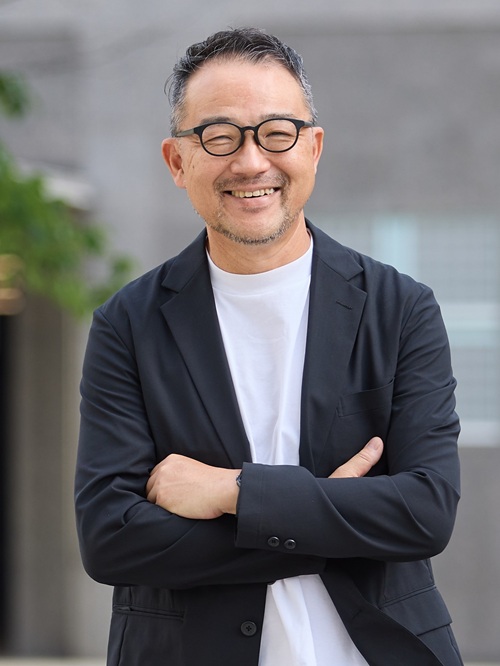
SHIRAI Hiromasa Hiromasa ProfessorAnd let's think about what comes next together!
Dean
In the Faculty of Sociology, we study a wide range of people, things, and events around us. We hope that our students will use their fresh perspectives to perceive contemporary society, identify challenges, consider what is needed to solve them, and actively propose solutions.
The Department of Contemporary Society in the Faculty of Sociology places particular emphasis on "the present," and offers three areas of study: "Entertainment and Culture," "Community and Networks," and "Cities and Business." First, broadly explore each of these fields, and then find your area of specialization.
Modern society faces many challenges, but it also holds immense potential. Let's work together to consider how we can build the society of the future, while keeping an eye on what is happening "now."
The Department of Contemporary Society in the Faculty of Sociology places particular emphasis on "the present," and offers three areas of study: "Entertainment and Culture," "Community and Networks," and "Cities and Business." First, broadly explore each of these fields, and then find your area of specialization.
Modern society faces many challenges, but it also holds immense potential. Let's work together to consider how we can build the society of the future, while keeping an eye on what is happening "now."
Purpose of education research
Department of Contemporary Sociology (applicable to students admitted in 2026)
The Department of Contemporary Society in the Faculty of Sociology, while based on sociological knowledge and methodologies, also utilizes knowledge from other social sciences to teach students about the various challenges facing contemporary society and methods for their analysis. It aims to cultivate individuals who can work collaboratively with others in local communities, businesses, and around the world to solve problems, with respect for diversity and a spirit of tolerance.
open all
- Graduation Accreditation and Degree Conferment Policy (Diploma Policy)
- The Department of Contemporary Society within the Faculty of Sociology (hereinafter referred to as "this Department") awards the degree of "Bachelor of Bachelor of Arts" to individuals who have embodied the founding spirit of "the spirit of Self-help and Cooperation," fulfilled Requirement for Graduation set by the Faculty, acquired specialized knowledge and skills related to solving problems in contemporary society, and possess the following abilities and qualities.
- Have sufficient knowledge of sociology and social research.
- Students acquire basic knowledge of the social sciences that will enable them to gain a broader understanding of modern society from a global perspective and provide the basis for solving its problems.
- Have basic skills for using ICT.
- You can work with others to actively contribute to creating a better modern society.
- You can set goals, shape your career experientially, and maintain a lifelong learning attitude.
- Curriculum Formulation and Implementation Policy (Curriculum Policy)
- In this department, in order to ensure that students acquire the knowledge, skills, and attitudes outlined in the diploma policy, the curriculum is organized and implemented based on the following principles.
<Educational content>- First, "Introduction to Sociology" and "Introduction to Social Research" will be compulsory courses in the first year, and many sociology-related subjects will be offered from the second year onwards.
- In order to acquire a broader range of academic knowledge, "Introduction to Business Economics" is offered in the first year, "Introduction to Social Psychology" and "Introduction to Business Administration" are offered in the second year, and advanced subjects are offered thereafter.
- In order to acquire basic skills for utilizing ICT, we offer "Learn PC skills from scratch" and "Learn programming from scratch", and to a certain extent, students can also take advanced courses.
- In order to practically learn about the issues facing modern society, we have organized three research courses - "Entertainment and Culture," "Community and Networks," and "Cities and Business" - to provide systematic learning opportunities.
- In order to enable students to cooperate with others and at the same time acquire an attitude of lifelong learning, first-year seminars (called "Basic Seminars I and II" in this department) are compulsory in the first year, and "Graduation research Seminars I to IV" are compulsory in the third and fourth years, and students are also given the opportunity to take career development-related subjects.
<Education method>- To help students acquire the fundamentals of social research, the program will involve all students conducting actual research during their time at the school and presenting their findings.
- To foster a proactive learning attitude, students will be guided in seminars to acquire basic presentation and discussion skills and to actually give presentations.
- To enable students to concretely understand real-world social issues and propose solutions, we will incorporate a lot of "PBL (Problem-Based Learning)."
- To understand the diverse aspects of modern society from a global perspective, not just a domestic one, we offer a variety of study abroad opportunities and encourage students to study abroad.
- Policy for Accepting New Students (Admission Policy)
- In this department, with the aim of actively addressing and resolving various issues in modern society, we hope to attract a wide range of applicants from both within Japan and internationally who possess the knowledge, skills, and attitudes outlined in our diploma policy.
- Students have acquired basic knowledge and skills through their high school curriculum in order to be able to understand the educational content taught in the Department of Contemporary Sociology.
- They have a deep interest in modern society, are proactive in working with people who hold diverse values, and have the flexibility to listen to different opinions.
- During the four years studying in the Department of Contemporary Sociology, I am eager to enrich my knowledge and improve my insight and skills.
- I would like to utilize the knowledge, skills, and attitudes I will learn in the Department of Contemporary Sociology to solve various problems in modern society.
*The methods and criteria for determining acceptance or rejection are posted on the university's website.
Graduation Credit and Degree Acquisition
Contemporary Sociology
Degree: Bachelor of Arts (Sociology)
Duration of study: 4 years
Duration of study: 4 years
Graduation Credit for Subject category
| Subject classification | Number Credit Requirement for Graduation | |||||
|---|---|---|---|---|---|---|
| Specialized subject | Required Subject | seminar | A. | 12単位 | 17単位 | 73単位 |
| Introductory subjects | 5単位 | |||||
| Elective Required Subject | Introductory subject | B. | 4単位 | 6単位 | ||
| IT Basics and Social Research | C | 2単位 | ||||
| Elective Subject | Entertainment and Culture | D | 50単位 | |||
| Community and Network | ||||||
| city and business | ||||||
| Subject Open to All students | Required Subject (International Student) | Japanese | E | * International Student: 8 Credit | 36単位 | |
| Elective Required Subject | F | 10単位 | ||||
| Elective Subject | G | 26 Credit * International Student: 18 Credit | ||||
| flex | H | 15単位 | ||||
| total | 124単位 | |||||
| Subject classification | Details of the number of Credit required for graduation | ||
| Specialized subject | A. | All 17 Credit of courses offered | |
| B. | 4 or more Credit from any of the courses offered | Credit earned in excess of 6 Credit are, Credit for Elective Subject are counted towards Requirement for Graduation. | |
| C | At least 2 Credit from any of the courses offered | ||
| D | 50 or more Credit from any of the courses offered | ||
| Subject Open to All students | E | All 8 Credit of open subjects (Japanese language) * International Student only | |
| F | At least 10 Credit from the courses offered. Credit earned in excess of Credit will be counted towards Requirement for Graduation as Credit for university-wide Elective Subject. | ||
| G | 26 or more Credit from any of the courses offered *For International Student only: 18 or more Credit from any of the courses offered | ||
| flex | H | Specialized subjects exceeding 73 Credit or Subject Open to All students exceeding 36 Credit, A total of 15 or more Credit from courses offered to other faculties and courses from other universities based on Credit transfer agreements. | |
<Updated on April 1, 2026>
Faculty of Studies of Contemporary Society