
Irrigation systems
Make or break
What is “fairness”?
Make or break
What is “fairness”?
#Asia University research
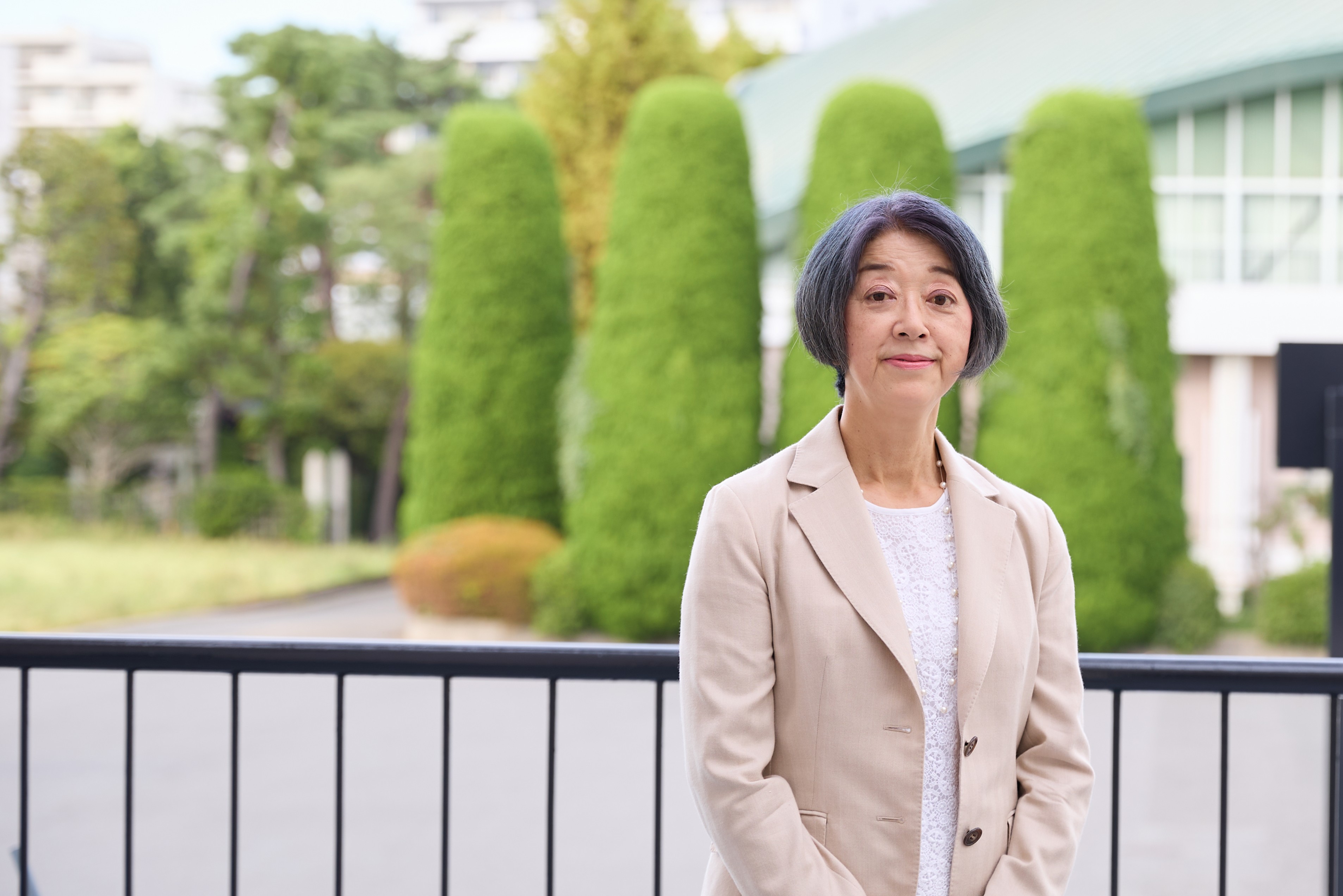
KAKUTA Ieko Professor
Faculty of International Relations Department of International Relations
2025.12.01
In our series "If it's not interesting, it's not academia!", we introduce research content and anecdotes of Asia University faculty members. The 19th installment features Professor KAKUTA Ieko Faculty of International Relations, Department of International Relations.

From admiration for ancient Latin American civilizations to the path of international cooperation
When I was job hunting, I wanted to find a job where I could make use of the cultural anthropology I had learned at university, but the Equal Employment Opportunity Law had not yet been enacted, so job hunting was not easy for a girl like me who was from the countryside, had taken a year off, and had no connections.However, I was lucky enough to pass the recruitment exam for JICA (Japan International Cooperation Agency, now the Japan International Cooperation Agency), and I was able to enter the world of international cooperation.
JICA implements various development projects through Japan's Official Development Assistance (ODA) to support developing countries. In my fourth year as a JICA staff member, I was assigned to agricultural development in developing countries, particularly irrigation development projects. "Irrigation" refers to the artificial supply of water needed for agricultural cultivation from water sources such as rivers and dams to paddy fields and fields through irrigation channels. Irrigation facilities are an important part of Japanese agriculture, but as a JICA staff member, I witnessed irrigation system management problems in developing countries that would be unthinkable in Japan. Many irrigation projects were plagued by problems, such as poor maintenance of irrigation channels (weeding and cleaning), resulting in water shortages downstream, water theft by farmers upstream where water is abundant, resulting in water disputes within irrigation districts, and non-payment of water fees.
While developing countries face problems, Japan's aid providers at the time also lacked consideration for local conditions. While this is no longer the case, Japan's aid at the time was based on a concept of "technology transfer," which believed that transferring Japan's "superior" technology to developing countries would solve their problems. For this reason, even in irrigation projects, it was believed that introducing Japanese irrigation system facilities would ensure the successful operation of irrigation systems in developing countries. Modern irrigation facilities were therefore constructed in developing countries through Japanese ODA. However, simply providing the "hard" facilities would not work effectively unless the water users' associations (water users' associations), comprised of local farmers, properly managed the systems. A successful irrigation system requires both the "hard" aspects of irrigation facilities and the "soft" aspects of water users' association management. An irrigation system cannot function effectively without consideration for the "soft" aspects of local organizations and systems, as well as the "hard" aspects of irrigation facility infrastructure. Incidentally, JICA's current aid program involves "appropriate technology development" that takes into account local society and culture.
Exploring the factors behind the success or failure of water users associations through field surveys
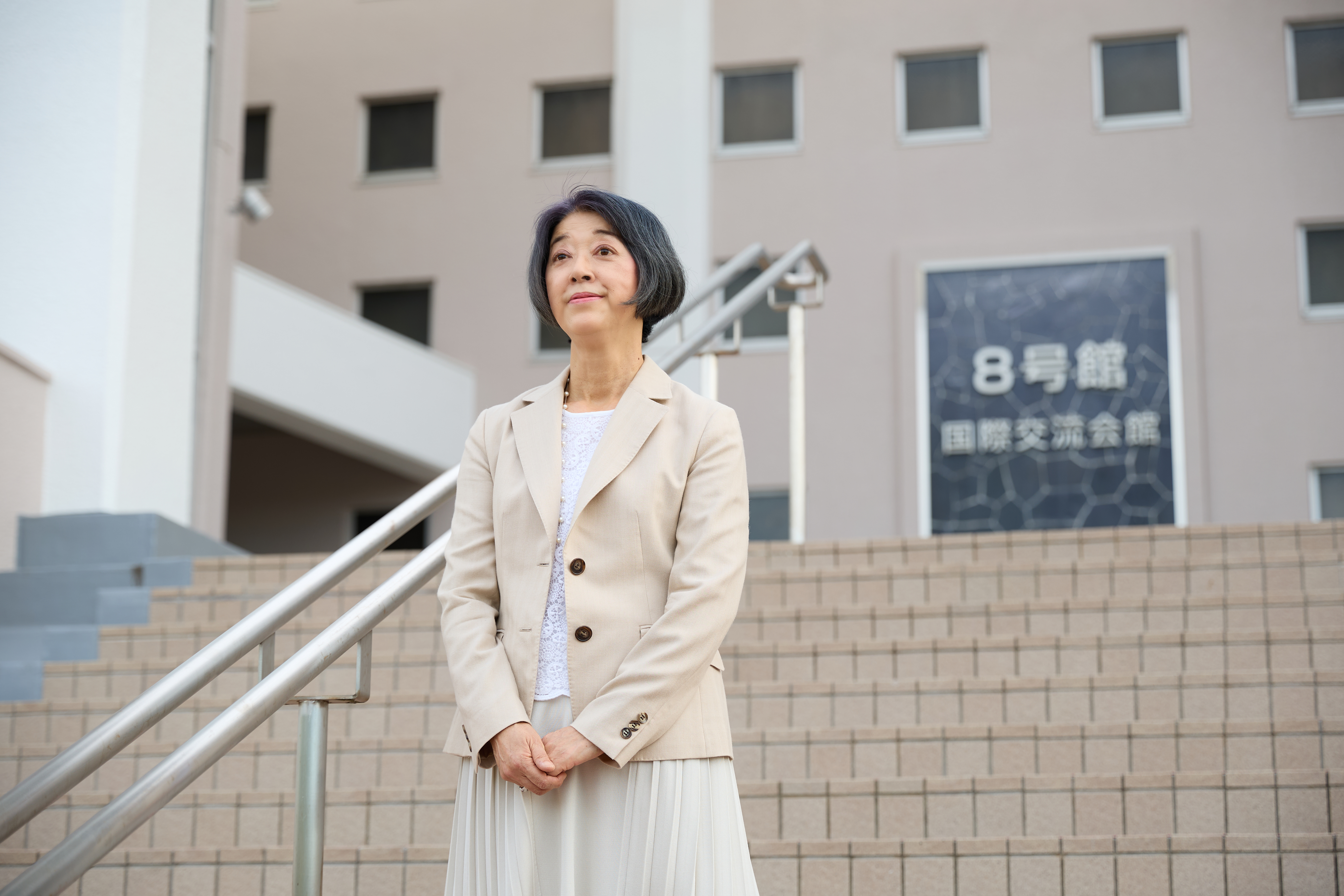
In order to find solutions to various problems related to irrigation systems in developing countries, which I was keenly aware of as a person in charge of JICA, I studied abroad at Boston University in the United States using JICA's long-term overseas training program. I worked on research in developmental anthropology.
After returning to Japan, I worked at JICA's Medical Cooperation Department and Indonesia Office. During that time, I gradually became more and more determined to make developmental anthropology, which I had studied in the United States, my specialty. In 1997, he joined Asia University as a teacher and research. Currently, we are research the factors that contribute to the success or failure of water conservancy cooperatives in irrigation systems in developing countries through field research in Japan and abroad.
The World Bank, which provides loans for the development of developing countries, has been advocating the introduction of Participatory Irrigation Management (PIM) since the 1990s. What is being promoted by PIM is called Irrigation Management Transfer (IMT), in which the dams and main waterways of the water source are managed by government agencies, and the waterways below the secondary waterways that branch off from them are water conservancy associations organized by farmers who actually use water. WUA). However, many WUAs have internal problems, and only a few PIMs are able to operate well. In the two WUAs in Bohol, Philippines, where I conducted field research, one was doing very well, but the other had a lot of problems. "Even though they are in the same Bohol province, why are these two water conservancy associations operating so differently?" In 2007, I went to the United States again to address this question, which I could not find an answer to despite repeated field research. This time, I will spend a year as a visiting research Research Student at Colorado State University under Dr. David Freeman, an irrigation sociologist.
After returning to Japan, I worked at JICA's Medical Cooperation Department and Indonesia Office. During that time, I gradually became more and more determined to make developmental anthropology, which I had studied in the United States, my specialty. In 1997, he joined Asia University as a teacher and research. Currently, we are research the factors that contribute to the success or failure of water conservancy cooperatives in irrigation systems in developing countries through field research in Japan and abroad.
The World Bank, which provides loans for the development of developing countries, has been advocating the introduction of Participatory Irrigation Management (PIM) since the 1990s. What is being promoted by PIM is called Irrigation Management Transfer (IMT), in which the dams and main waterways of the water source are managed by government agencies, and the waterways below the secondary waterways that branch off from them are water conservancy associations organized by farmers who actually use water. WUA). However, many WUAs have internal problems, and only a few PIMs are able to operate well. In the two WUAs in Bohol, Philippines, where I conducted field research, one was doing very well, but the other had a lot of problems. "Even though they are in the same Bohol province, why are these two water conservancy associations operating so differently?" In 2007, I went to the United States again to address this question, which I could not find an answer to despite repeated field research. This time, I will spend a year as a visiting research Research Student at Colorado State University under Dr. David Freeman, an irrigation sociologist.
The importance of "fairness" learned from my American teacher
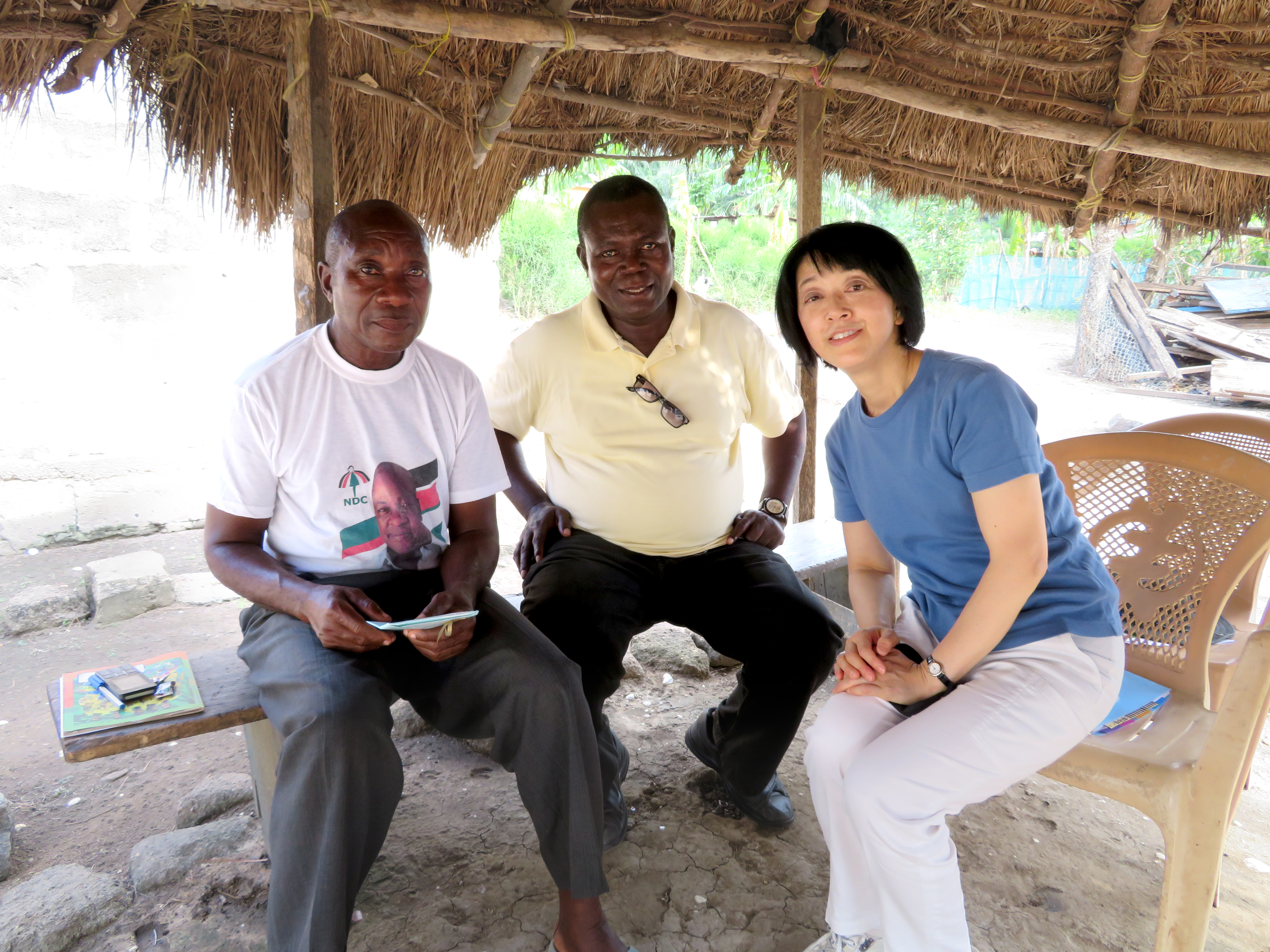
As soon as I arrived at Colorado State University, I explained to Professor Freeman the various problems facing the irrigation systems in the Philippines, where I work. He simply laughed, saying, "It's a common problem!" He continued, "There are successful irrigation systems around the world. Successful irrigation systems have certain conditions. If an irrigation system does not meet these conditions, it will not be successful." When I asked, "What conditions are those?" he replied, "It's too early for me to tell you that. First, you need to study irrigation management yourself," and introduced me to reference materials, including his own books.
So I read these references and organized my field notes, and it became clear once again that the Philippine irrigation system was plagued by many problems. But I couldn't figure out why. So I turned to Professor Freeman again, and he told me about the "Water Share Distributional System" (also known as the Distributional Share System). My year of Research Student was drawing to a close. According to Professor Freeman, maintaining a sense of fairness among members is essential for a water users' association to be successful. He said that only when water allocation, operational burdens, and voice within the association are coordinated among members, a sense of fairness is fostered and the association's operations are successful. Furthermore, he said that to achieve this, irrigation system water fees must be calculated on a pay-as-you-go basis, meaning that users only pay for the water they use. Being stuck in the conventional thinking that irrigation system water fees are calculated based on the area of farmland, I couldn't help but say, "That's just like a water bill, isn't it?" The teacher responded, "Yes, what's wrong with that? Isn't it fair to only pay for the irrigation water you use?" It was an eye-opener for me.
Now that I think about it, one of the causes of the sense of unfairness that arose in research field in the Philippines was the area-based irrigation fees. This is because the irrigation system in the Philippines does not have enough water, causing water shortages downstream, but with the area-based irrigation fees, downstream members have to pay the same amount of irrigation fees as upstream members, even though they receive less water. In other words, they end up paying relatively higher irrigation fees.
Professor Freeman introduced us to a simple irrigation system in Colorado that uses siphons to draw water. Farmers apply to the water manager in advance for the number of siphons they want inserted into their canals. The number of siphons determines the amount of water they will draw. On the day of the application, the water manager visually checks to ensure that the requested number of siphons is present. I was deeply impressed by this simple system, which satisfies the Coloradoan's sense of fairness: that they only draw what they pay for. For irrigation systems to be successful, whether in a developing or developed country, it is essential to implement a quota system that links water allocation, burden, and voice in a way that is appropriate for each local community, so that water users' association members feel that they are receiving equal amounts and that the system is fair.
By the way, in Japan's land improvement districts, water fees (levies) are generally calculated based on the area, but because there is no water shortage downstream due to advanced irrigation technology, the same amount of water can be taken from both the upstream and downstream areas. This makes it possible to maintain a sense of fairness among members.
Thanks to Professor Freeman, I was able to learn the theory behind successful irrigation system operation and apply it to practical cases. I am still filled with gratitude to Professor Freeman, who was so kind to me both personally and professionally during my year in the United States. I believe that the best way to repay him is to share his theories with the world.
So I read these references and organized my field notes, and it became clear once again that the Philippine irrigation system was plagued by many problems. But I couldn't figure out why. So I turned to Professor Freeman again, and he told me about the "Water Share Distributional System" (also known as the Distributional Share System). My year of Research Student was drawing to a close. According to Professor Freeman, maintaining a sense of fairness among members is essential for a water users' association to be successful. He said that only when water allocation, operational burdens, and voice within the association are coordinated among members, a sense of fairness is fostered and the association's operations are successful. Furthermore, he said that to achieve this, irrigation system water fees must be calculated on a pay-as-you-go basis, meaning that users only pay for the water they use. Being stuck in the conventional thinking that irrigation system water fees are calculated based on the area of farmland, I couldn't help but say, "That's just like a water bill, isn't it?" The teacher responded, "Yes, what's wrong with that? Isn't it fair to only pay for the irrigation water you use?" It was an eye-opener for me.
Now that I think about it, one of the causes of the sense of unfairness that arose in research field in the Philippines was the area-based irrigation fees. This is because the irrigation system in the Philippines does not have enough water, causing water shortages downstream, but with the area-based irrigation fees, downstream members have to pay the same amount of irrigation fees as upstream members, even though they receive less water. In other words, they end up paying relatively higher irrigation fees.
Professor Freeman introduced us to a simple irrigation system in Colorado that uses siphons to draw water. Farmers apply to the water manager in advance for the number of siphons they want inserted into their canals. The number of siphons determines the amount of water they will draw. On the day of the application, the water manager visually checks to ensure that the requested number of siphons is present. I was deeply impressed by this simple system, which satisfies the Coloradoan's sense of fairness: that they only draw what they pay for. For irrigation systems to be successful, whether in a developing or developed country, it is essential to implement a quota system that links water allocation, burden, and voice in a way that is appropriate for each local community, so that water users' association members feel that they are receiving equal amounts and that the system is fair.
By the way, in Japan's land improvement districts, water fees (levies) are generally calculated based on the area, but because there is no water shortage downstream due to advanced irrigation technology, the same amount of water can be taken from both the upstream and downstream areas. This makes it possible to maintain a sense of fairness among members.
Thanks to Professor Freeman, I was able to learn the theory behind successful irrigation system operation and apply it to practical cases. I am still filled with gratitude to Professor Freeman, who was so kind to me both personally and professionally during my year in the United States. I believe that the best way to repay him is to share his theories with the world.
Learn everything from the basics to practical aspects of international cooperation!

As we all know, there are currently widening disparities between countries, regions, and people, both at home and abroad. The Sustainable Development Goals (SDGs), adopted by the United Nations in 2015, are international goals aimed at achieving a better world, including addressing poverty, hunger, climate change, and gender equality, and all member states, including Japan, are working toward these goals under the principle of "leaving no one behind." The recent widening disparities jeopardize the realization of the principles of the SDGs.
"Inequality" is not just an issue for developing countries, but also a problem within Japan, and it is an issue that affects the future of all students. I would like students at Asia University who are interested in development issues in developing countries, such as development aid and poverty, to think seriously about this issue of "inequality."
In my seminar, students in their third year learn basic knowledge through workshops to understand the various challenges facing developing countries, and in their fourth year they write their graduation thesis on a specific research topic related to a country that interests them.
Another subject taught in the department is "Practical International Development," which involves students participating in a five-day practical international cooperation Course at the Tsukuba Center of JICA, my former employer, where they learn about the practical aspects of development aid from Japanese aid practitioners, including JICA staff, experts, former Overseas Cooperation Volunteers (OCV), and Practical Studies in International Development consultants.
I would like to provide students with as many opportunities as possible to learn about the societies of developing countries, and I would also like to give advice on careers related to international cooperation.
I'm sure there are many high school students and those taking entrance exams who are still unsure about what to study at university and what kind of job they want to do in the future. But I'm sure opportunities and goals are right in front of you. As I mentioned at the beginning, my own journey began with a fascination with the ancient civilizations of Central and South America. Later, as I worked on cultural anthropology, international cooperation, irrigation development, and other areas that were right in front of me, I think I began to clarify what I wanted to do.
There are experts in many fields at the university. If you have even a vague desire to do something to make the world a better place, please come to Faculty of International Relations Asia University. Many experts, including myself, will be happy to help you put your dreams into practice.
"Inequality" is not just an issue for developing countries, but also a problem within Japan, and it is an issue that affects the future of all students. I would like students at Asia University who are interested in development issues in developing countries, such as development aid and poverty, to think seriously about this issue of "inequality."
In my seminar, students in their third year learn basic knowledge through workshops to understand the various challenges facing developing countries, and in their fourth year they write their graduation thesis on a specific research topic related to a country that interests them.
Another subject taught in the department is "Practical International Development," which involves students participating in a five-day practical international cooperation Course at the Tsukuba Center of JICA, my former employer, where they learn about the practical aspects of development aid from Japanese aid practitioners, including JICA staff, experts, former Overseas Cooperation Volunteers (OCV), and Practical Studies in International Development consultants.
I would like to provide students with as many opportunities as possible to learn about the societies of developing countries, and I would also like to give advice on careers related to international cooperation.
I'm sure there are many high school students and those taking entrance exams who are still unsure about what to study at university and what kind of job they want to do in the future. But I'm sure opportunities and goals are right in front of you. As I mentioned at the beginning, my own journey began with a fascination with the ancient civilizations of Central and South America. Later, as I worked on cultural anthropology, international cooperation, irrigation development, and other areas that were right in front of me, I think I began to clarify what I wanted to do.
There are experts in many fields at the university. If you have even a vague desire to do something to make the world a better place, please come to Faculty of International Relations Asia University. Many experts, including myself, will be happy to help you put your dreams into practice.
Related Links
- Faculty of International Relations TOP
- Introduction to Faculty of International Relations Department of International Relations
- 4 years of study Faculty of International Relations Department of International Relations
- Introduction to classes in Faculty of International Relations Department of International Relations
- Faculty of International Relations Department of International Relations Seminar
- Faculty of International Relations Department of International Relations Expert English Program
- Faculty introduction Faculty of International Relations Department of International Relations