
A strong leader
Democracy
Should we retreat?
Democracy
Should we retreat?
#Asia University research
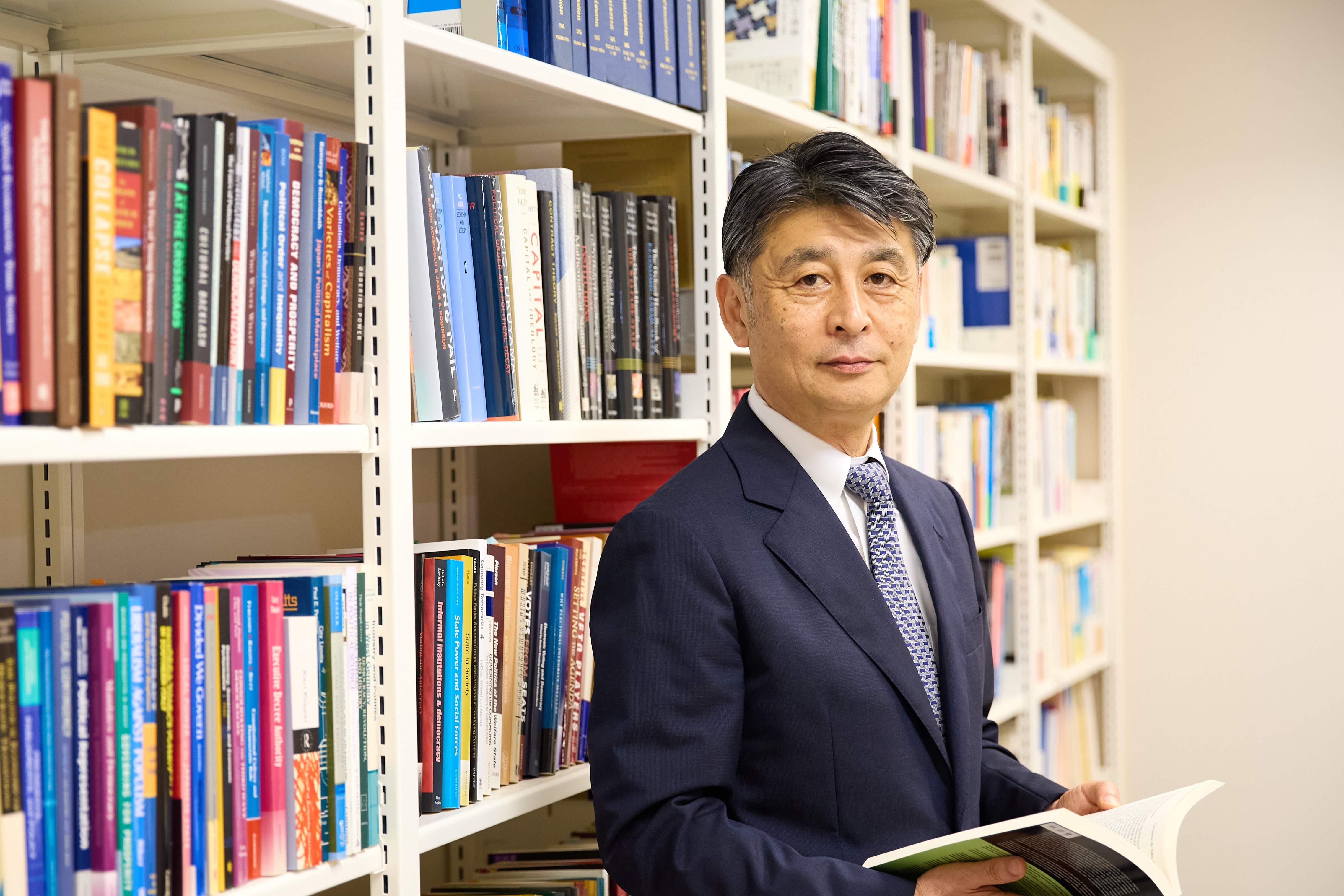
KAWANAKA Takeshi Professor
Faculty of International Relations Department of International Relations
2026.09.01
In our series "If it's not interesting, it's not scholarship!", we introduce research topics and anecdotes of faculty members at Asia University. Our 24th featured professor is Professor Takeshi Kawanaka Faculty of International Relations, Faculty Department of International Relations.

Democratization of the Philippines as its starting point
Around 1989, when I graduated from university, the world was undergoing dramatic changes. The Berlin Wall fell, the Tiananmen Square incident occurred in China, and communist regimes in Eastern Europe collapsed one after another.
After that, I entered Graduate School, but I felt I wanted to learn more deeply about the real events happening, so I studied abroad at a university in the Philippines. It was about three years after democratization in the Philippines, but there were times when coup attempts had repeatedly occurred, and there were times when classes were too much to attend. Witnessing such circumstances, I began to wonder what it means for chaos to persist despite democratization, and began to think about how democracy can stabilize.
After returning to Japan and completing my master's program, I joined the Asian Economic research of a government-affiliated agency and began my career as a research member. In the end, I stayed at the Asian Economic research for 30 years. A few years after joining, I was dispatched to the Philippines, where I conducted empirical research on Philippine politics, focusing on fieldwork. I believed that politics builds up from everyday local movements, so I chose a regional city, stayed there for a long period, accompanied candidates on campaign campaigns during elections, frequented city halls to talk with staff and visitors, and visited district leaders to listen to them. Being in the midst of local politics in action made me realize once again how complex and fascinating democracy is.
Since then, focusing on research activities at Asian economic research, I have interacted with local research as a visiting research at a university in the Philippines, and studied cutting-edge political science theories and methods in overseas research at Stanford University, continuing research centered on "Stability of Democracy in Southeast Asia."
The approach of "comparative politics"
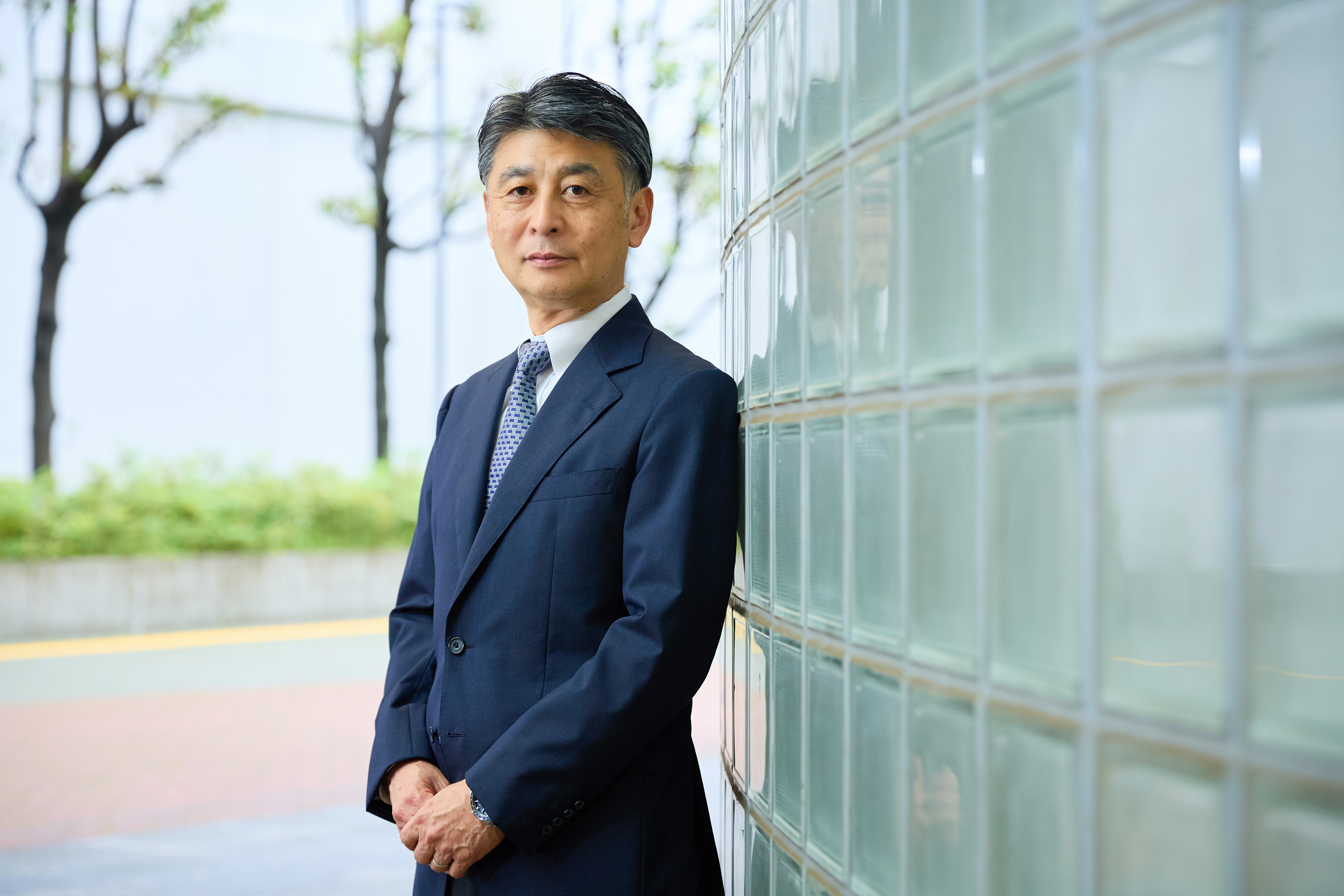
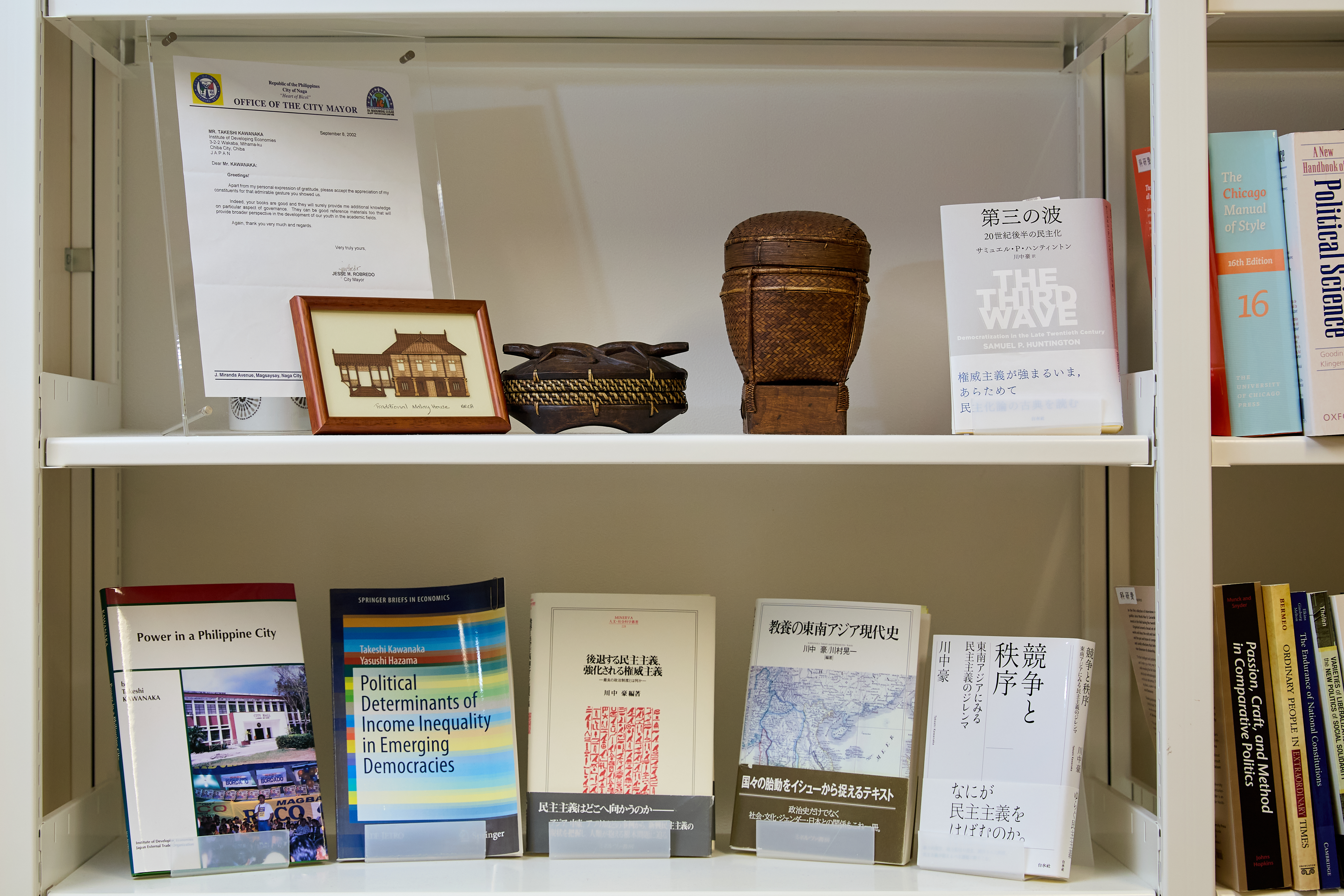
My area of expertise is comparative politics. Comparative politics is a field research that primarily analyzes domestic politics, comparing diverse forms of political institutions such as electoral systems and parliamentary/presidential systems, and unraveling changes such as democratization processes, in order to explore the factors that give rise to differences in political patterns. Southeast Asian countries are geographically close, so many similar phenomena can be observed, but at the same time, the circumstances of each country differ, which is why I believe it is a suitable region for comparing and exploring the factors that create differences in political patterns. Furthermore, the dynamic political changes in the region also make chronological comparisons possible. And, above all, the fact that various events occur is fascinating. My research, aimed at a general audience, is published in "Competition and Order: The Dilemma of Democracy in Southeast Asia" (Hakusuisha, 2022).
Samuel P. Huntington's "The Third Wave: Democratization in the Second Half of the 20th Century" (hereinafter, "The Third Wave"), by the American political scientist, is one of the leading works in democratization research, and I undertook its translation because it is closely related to my own research. Huntington argues that there were three major waves in the historical spread of democracy throughout the world, and he particularly sheds light on the third wave, a global movement that began with the Portuguese Revolution of 1974 and spread to Southern Europe, Latin America, Asia, and Eastern Europe.
What he presented was a general overview of the mechanisms and transition patterns of democratization, but I have been testing these general theories by comparing them with the political landscape of Southeast Asia—the fervor of election campaigns and the raw actions of the people. General theories that explain diverse countries, and empirical evidence based on fieldwork and data. By moving back and forth between these two, I am unraveling why democracy takes root in a particular country, or why it regresses and becomes unstable. This is my research on democracy in the field of comparative politics.
Samuel P. Huntington's "The Third Wave: Democratization in the Second Half of the 20th Century" (hereinafter, "The Third Wave"), by the American political scientist, is one of the leading works in democratization research, and I undertook its translation because it is closely related to my own research. Huntington argues that there were three major waves in the historical spread of democracy throughout the world, and he particularly sheds light on the third wave, a global movement that began with the Portuguese Revolution of 1974 and spread to Southern Europe, Latin America, Asia, and Eastern Europe.
What he presented was a general overview of the mechanisms and transition patterns of democratization, but I have been testing these general theories by comparing them with the political landscape of Southeast Asia—the fervor of election campaigns and the raw actions of the people. General theories that explain diverse countries, and empirical evidence based on fieldwork and data. By moving back and forth between these two, I am unraveling why democracy takes root in a particular country, or why it regresses and becomes unstable. This is my research on democracy in the field of comparative politics.
The decline of democracy and the desire for a "strong leader"
In "The Third Wave," Huntington pointed out that after the wave of democratization, there was a period of "backlash" that pushed it back. At the time of the book's publication, the third wave was still ongoing, and the third backlash was only suggested as a possibility, but in the 2000s, it became a reality. And now, the decline of democracy has become a major global problem, with the consolidation of power by those in power in Russia, Turkey, India, and other countries, as well as the rise of populism in Europe and the United States.
While the previous "first wave" and "second wave" eras saw clear backlashes (the collapse of democracy), the current new type of backlash is not a clear collapse, but a slow, eroding retreat. The quality of democracy gradually deteriorates as presidents and prime ministers slowly expand their powers while restricting the power of the judiciary.
Why does democracy regress? There are two main reasons:
Social polarization: This is a phenomenon where society is divided into two incompatible poles, hindering dialogue. Both sides believe they are in the right and the other is wrong, leading to extreme thinking where they must suppress the other by any means necessary. They refuse to accept the results, even if they lose an election.
Dissatisfaction with the existing elite: Dissatisfaction builds up with the feeling that "even with democracy, it hasn't had the expected effect, and in the end, a small elite class continues to win, and politics is corrupt through corruption and other means." As a result, a desire arises for "a strong leader who will fight for us."
An example of the latter is former Philippine President Rodrigo Duterte. He was a fairly authoritarian leader, but while previous presidents saw their approval ratings decline towards the end of their terms, he maintained high approval ratings until the very end of his term. I believe that this demand for strong leadership that will punish the existing elite, and the sense of stagnation, is a phenomenon that can be seen not only in the United States and the Philippines, but also widely internationally.
While the previous "first wave" and "second wave" eras saw clear backlashes (the collapse of democracy), the current new type of backlash is not a clear collapse, but a slow, eroding retreat. The quality of democracy gradually deteriorates as presidents and prime ministers slowly expand their powers while restricting the power of the judiciary.
Why does democracy regress? There are two main reasons:
Social polarization: This is a phenomenon where society is divided into two incompatible poles, hindering dialogue. Both sides believe they are in the right and the other is wrong, leading to extreme thinking where they must suppress the other by any means necessary. They refuse to accept the results, even if they lose an election.
Dissatisfaction with the existing elite: Dissatisfaction builds up with the feeling that "even with democracy, it hasn't had the expected effect, and in the end, a small elite class continues to win, and politics is corrupt through corruption and other means." As a result, a desire arises for "a strong leader who will fight for us."
An example of the latter is former Philippine President Rodrigo Duterte. He was a fairly authoritarian leader, but while previous presidents saw their approval ratings decline towards the end of their terms, he maintained high approval ratings until the very end of his term. I believe that this demand for strong leadership that will punish the existing elite, and the sense of stagnation, is a phenomenon that can be seen not only in the United States and the Philippines, but also widely internationally.
A message to the younger generation who will live in the coming era

At the university, I teach political science-related courses such as "Introduction to Political Science" and "Comparative Politics," as well as courses where we discuss international issues in English with International Student. In my seminars, in addition to central issues in comparative politics such as democracy, authoritarianism, and electoral systems, I guide students to research topics of interest to them, such as the gender gap and immigration issues, from a comparative political perspective.
Today's university students have grown up in a Japan that has been in economic decline since they were old enough to understand things, and they don't know the era of economic growth that our generation experienced. As a university professor, I try to make my lectures as easy to understand as possible, taking into account the generation gap between myself and my students.
What I always tell young people living in these uncertain times is how to deal with organizations, based on the arguments of German economist Albert O. Hirschman ("Exit, Voice, Loyalty"). According to Hirschman, when an organization a person belongs to starts to fail, there are broadly two possible reactions: "exit," where they cut their losses and leave, or "voice," where they stay, raise their voice, and try to change things from within. He summarized that the stronger a person's "loyalty" to the organization, the more likely they are to speak out rather than leave.
From an individual's perspective, what's important here is whether you have "leaving" as a realistic option. If you have the power to move to another place at any time, you can leave, and it is precisely because of that possibility that your "speak" gains weight if you stay and raise your voice. Conversely, if you lack that power, you have no choice but to stay against your will. That's why I want you to not entrust everything to one organization, but to acquire at least one skill that will allow you to move at any time.
In this age where information is so easily accessible, we tend to lose interest in what's happening around us and overlook events in distant countries as "someone else's problem." However, behind changes in our immediate surroundings (for example, rising prices of chocolate or coffee) there are often conflicts or policy changes in faraway countries. I hope you will recognize these connections and consider what's happening in the world as "your own problem."
In this era where people tend to become inward-looking, I sincerely hope that you will broaden your horizons to the outside world and cultivate the ability to think for yourselves.
Today's university students have grown up in a Japan that has been in economic decline since they were old enough to understand things, and they don't know the era of economic growth that our generation experienced. As a university professor, I try to make my lectures as easy to understand as possible, taking into account the generation gap between myself and my students.
What I always tell young people living in these uncertain times is how to deal with organizations, based on the arguments of German economist Albert O. Hirschman ("Exit, Voice, Loyalty"). According to Hirschman, when an organization a person belongs to starts to fail, there are broadly two possible reactions: "exit," where they cut their losses and leave, or "voice," where they stay, raise their voice, and try to change things from within. He summarized that the stronger a person's "loyalty" to the organization, the more likely they are to speak out rather than leave.
From an individual's perspective, what's important here is whether you have "leaving" as a realistic option. If you have the power to move to another place at any time, you can leave, and it is precisely because of that possibility that your "speak" gains weight if you stay and raise your voice. Conversely, if you lack that power, you have no choice but to stay against your will. That's why I want you to not entrust everything to one organization, but to acquire at least one skill that will allow you to move at any time.
In this age where information is so easily accessible, we tend to lose interest in what's happening around us and overlook events in distant countries as "someone else's problem." However, behind changes in our immediate surroundings (for example, rising prices of chocolate or coffee) there are often conflicts or policy changes in faraway countries. I hope you will recognize these connections and consider what's happening in the world as "your own problem."
In this era where people tend to become inward-looking, I sincerely hope that you will broaden your horizons to the outside world and cultivate the ability to think for yourselves.
Related Links
- Faculty of International Relations TOP
- Introduction to Faculty of International Relations Department of International Relations
- 4 years of study Faculty of International Relations Department of International Relations
- Introduction to classes in Faculty of International Relations Department of International Relations
- Faculty of International Relations Department of International Relations Seminar
- Faculty of International Relations Department of International Relations Expert English Program
- Faculty introduction Faculty of International Relations Department of International Relations
#Asia University research