
Resilient to event risks
Airline business
What are the possibilities of new business models?
Airline business
What are the possibilities of new business models?
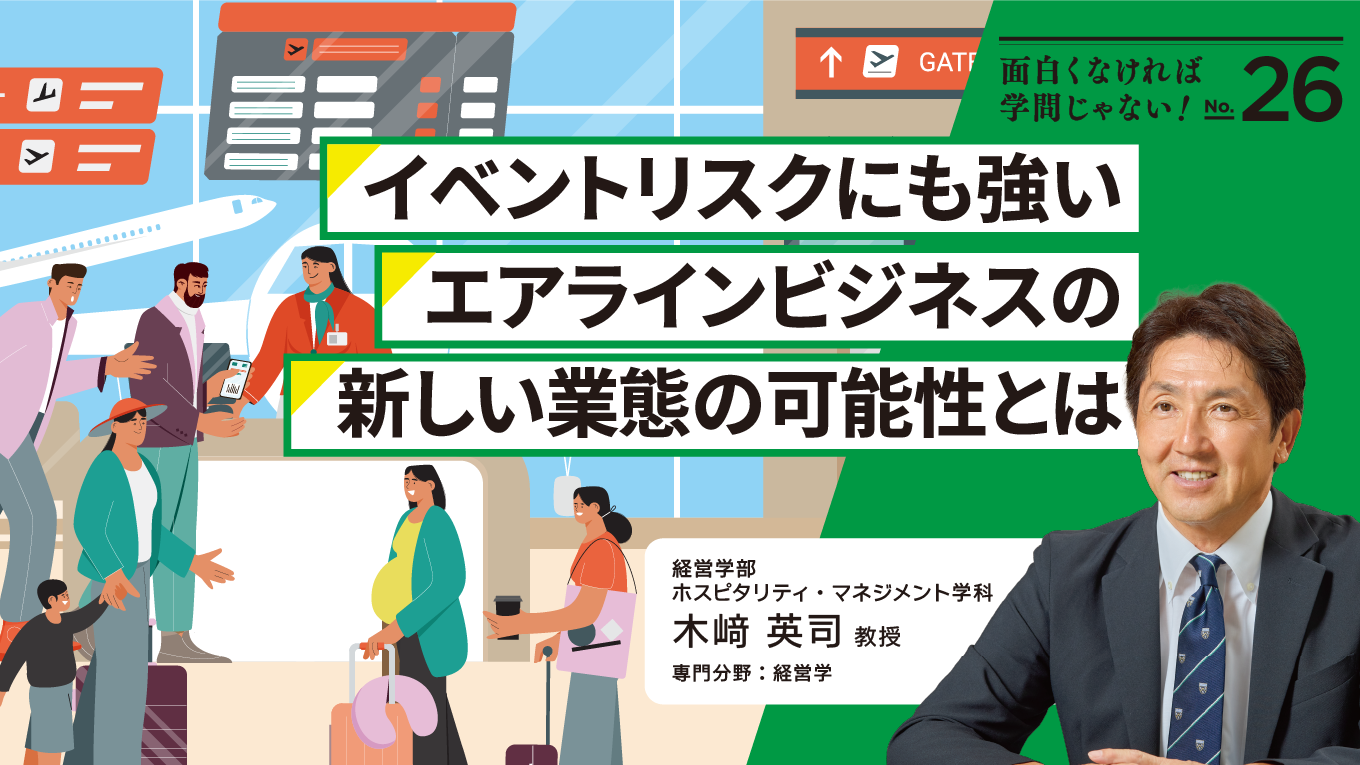
#Asia University research
KIZAKI Eiji Professor
Faculty of Business Administration Administration, Department of Hospitality Management
2026.11.01
In our series "If it's not interesting, it's not scholarship!", we introduce research and anecdotes of faculty members at Asia University. Our 26th featured professor is Professor KIZAKI Eiji of the Department of Hospitality Management, Faculty Faculty of Business Administration Administration.
"Work that supports people" - what I learned on the front lines at an airline.
One particularly memorable experience was when I welcomed an elderly passenger who was taking an international flight for the first time. They didn't like the Western-style in-flight meal and ate very little. After hearing their story, I offered them some sushi rolls that I had brought for the crew, and they were very pleased. Later, they wrote a letter to the president, who praised me directly. It made me so happy.
What I learned from this experience is that service isn't just about doing what you're told. It's about thinking about what the customer in front of you wants and taking proactive steps. I realized that this kind of attitude is what leads to service that makes people happy.
While working for Japan Airlines, I was also responsible for managing the service quality of cabin crew. Through researching the practices of other companies, I gained a great deal of knowledge about service and human resource development. I was asked to teach this knowledge at a university, which led to my secondment to the university.
The experience of teaching students contributed to my own personal growth, and afterwards, I decided to leave my company to dedicate myself fully to research and education as a university professor. Believing that academic research was necessary if I were to make university teaching my full-time job, I also enrolled in Graduate School. Currently, drawing on my experience in the aviation industry, I primarily research career support, human resource management, and the work of professionals in the hospitality industry.
Instead of giving them the answers, let them create their own answers.
What I strive for in my classes is the "integration of Lecture and practical learning." Therefore, I use topics based on challenges I actually faced during my time working for an airline. However, I don't simply teach students the answers I came up with back then.
Students are first asked to analyze the facts of the given task, consider what the problem is, and then devise a solution. There isn't necessarily just one right answer. They work in groups, discussing and incorporating various opinions to create a better solution themselves.
For example, how can we streamline the way in-flight meals are served? Simply put, by changing the equipment to improve efficiency and using the freed-up space to add more seats, revenue can be increased. However, this then raises another problem: "What about the meals for the increased number of passengers?"
I want my students to develop the ability to think beyond simply finding one answer and being done with it, and to consider "what will happen next."
Many students, based on their experiences up to high school, believe that "classes are about getting the answers from the teacher." However, if I deliberately refrain from giving them my answers and instead let them think for themselves, they eventually manage to find their own solutions. The flexibility of young people is amazing.
In my seminar, we also place great importance on "creating something from nothing." My seminar participates in community revitalization projects in Nishitokyo City, a neighboring area of our campus, where we plan events with local residents and brainstorm ways to liven up shopping streets. In fact, current flight attendants at airlines are seconded to local tourism bureaus as tourism ambassadors for their hometowns, promoting the charms of their local areas and stimulating tourism demand, which is a valuable experience for students. Through these activities, students also get to interact with working professionals they wouldn't normally meet within the university, such as city hall officials, shopping district representatives, and bankers. There, they gradually learn how to behave as professionals and how to communicate with others. Of course, they make mistakes, but even if they make mistakes, they can use those mistakes to grow in the future.
Future changes and possibilities for the airline business
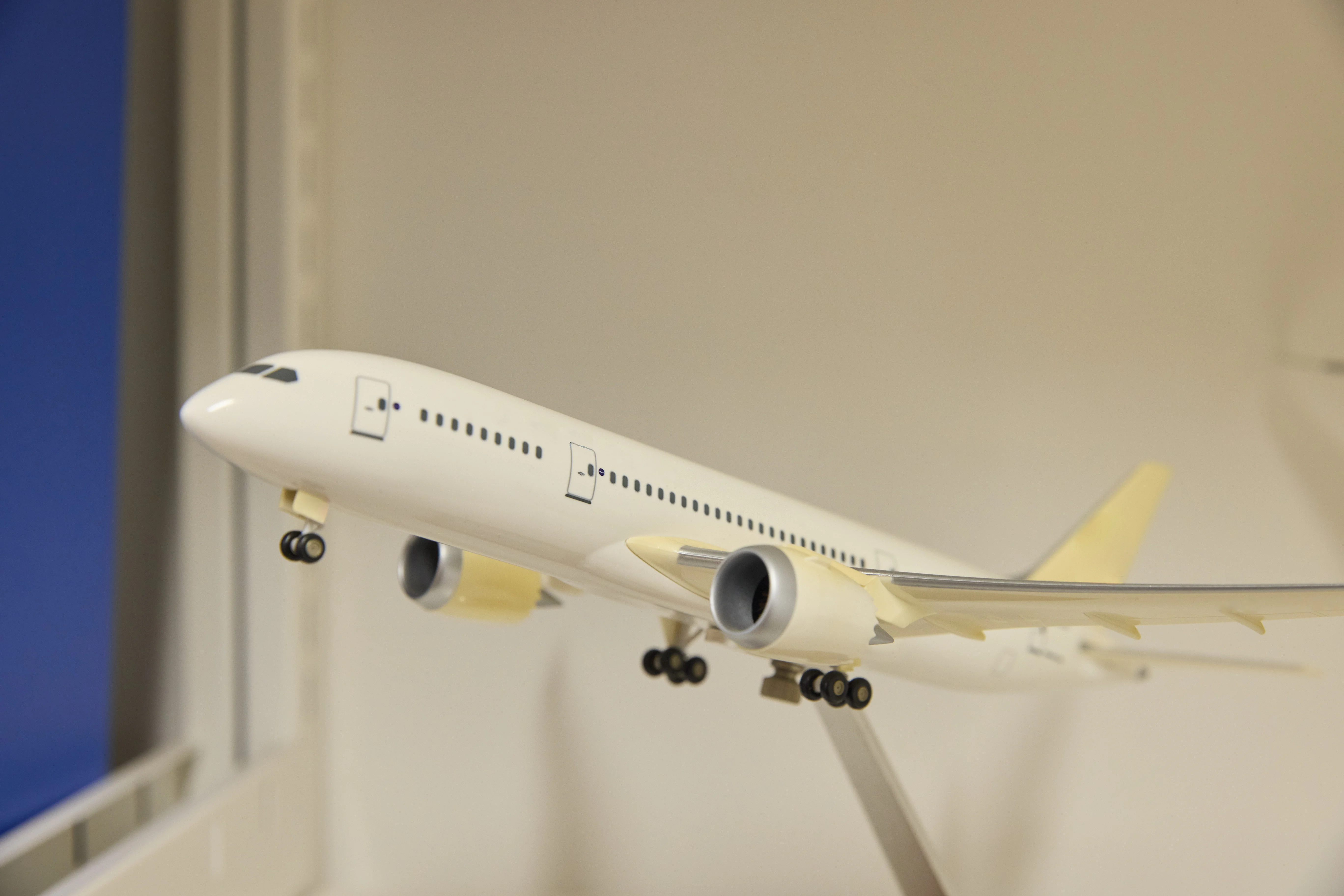
One of my research themes is "the potential for changes in the airline business model." The aviation industry is currently undergoing significant changes. The aviation industry has faced various "event risks" in the past, such as the COVID-19 pandemic in 2020, earthquakes, wars, and economic crises. And it is likely that such risks will continue to occur in the future. That is why airlines need to make efforts to diversify their risks by utilizing the resources they have cultivated so far, such as human resources and know-how, in diverse fields. Specifically, this could include new businesses using drones or new merchandise sales businesses, but I believe that in order for airlines to continue their business, they must move away from being solely reliant on aviation operations.
Furthermore, with AI and automation, airport check-in and other processes are increasingly becoming unmanned. From now on, simply being able to provide customer service by humans will not be enough. The ability to judge how much should be entrusted to machines and how much should be handled by humans, and to manage this as a system, will be necessary. That is why we want students to acquire the ability to "create something from nothing." In addition to being able to provide customer service themselves, we want them to become individuals who can think about "how to make things more efficient" and "how to create new value." Now that generative AI that utilizes vast amounts of existing knowledge has become commonplace, individuals who can create things and ideas that have never existed before will be welcomed in any industry.
Furthermore, I am also research the characteristics of people who are highly regarded in the hospitality industry, such as airlines. For example, when I looked at flight attendants who are highly rated by customers at airlines, I found a common thread: they are good listeners. When we think of service, we might think that speaking skills such as English ability, communication skills, and presentation skills are what are valued. However, to truly connect with someone, it is essential to first have the ability to listen—to listen carefully to what the other person has to say and understand their feelings.
Thus, I believe that the airline business going forward will require reviewing existing facilities and services, as well as considering the possibilities of new businesses.
A path that makes you think, "I'm glad I did this."
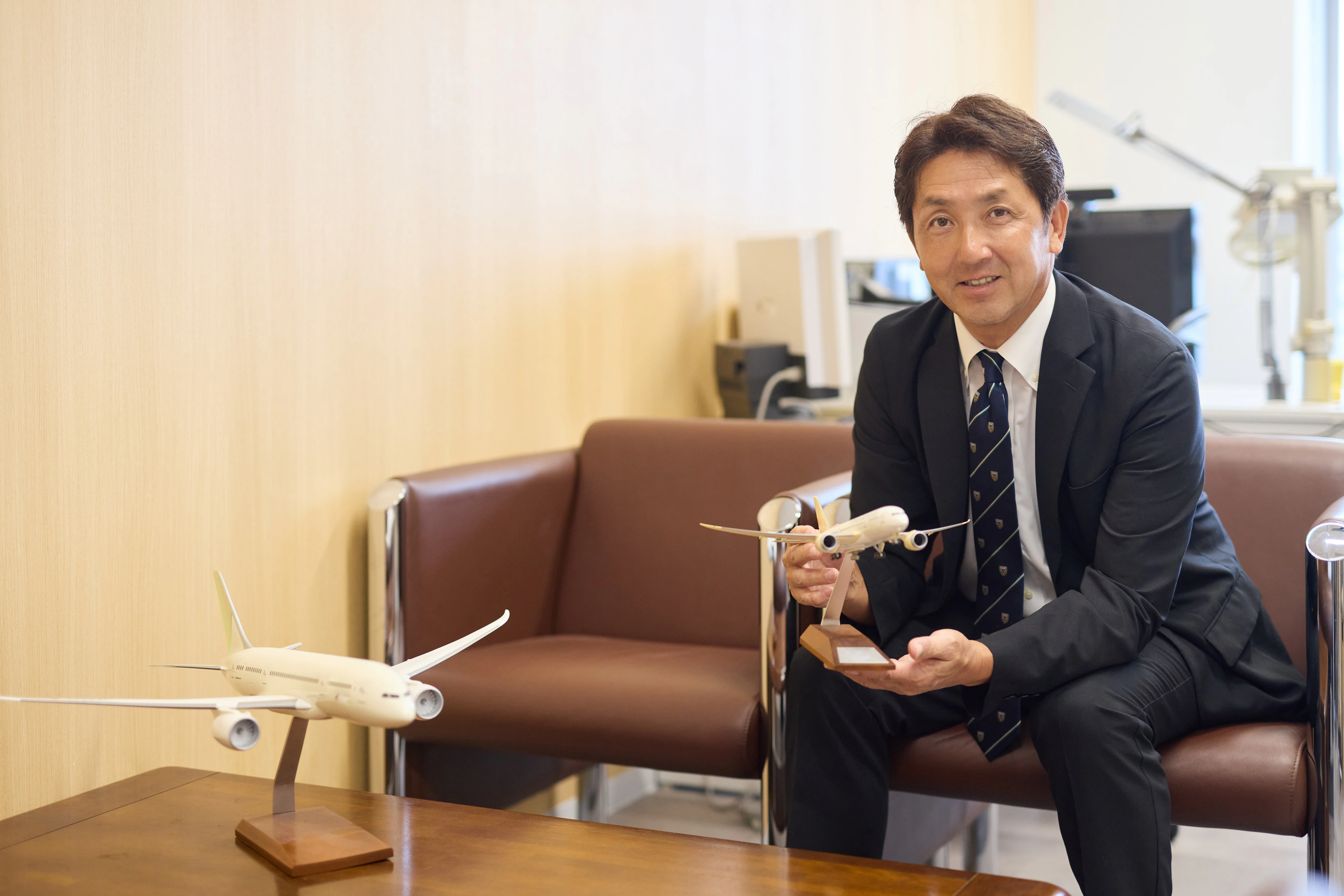
To all high school students aiming for university, I hope you won't try too hard to find the "right answer" when thinking about your future career. Everyone experiences different moments that make them feel "it was worth it." Some find fulfillment in studying at a desk, while others find joy in being kind to others and receiving their thanks. The important thing is to figure out what makes you feel "it was worth it" and "I want to continue doing this because I enjoy it." Please think about what kind of career options will give you that feeling.
At university, you are expected to solve problems using not only the knowledge you acquired in high school, but also all of your previous experiences, such as club activities, part-time jobs, and interpersonal relationships. Asia University has a diverse student body and faculty, creating an environment where everyone can inspire each other and grow together.
The aviation industry, where I worked for many years, is also a very appealing field. You can meet diverse cultures and people both domestically and internationally, and talk to people you wouldn't normally interact with on board. You can also connect with the individual needs of everyone, from babies to the elderly. If you find this kind of work appealing, I encourage you to aim for a career in the aviation industry. I will do my best to support you.
Related Links
- Faculty of Business Administration TOP
- Faculty of Business Administration Department of Hospitality Management
- Faculty of Business Administration Four Years of Hospitality Management
- Faculty of Business Administration Administration, Department of Hospitality Management Course Introduction
- Seminar, Faculty of Business Administration Administration
- Faculty Faculty of Business Administration, Department of Hospitality Management
#Asia University research